
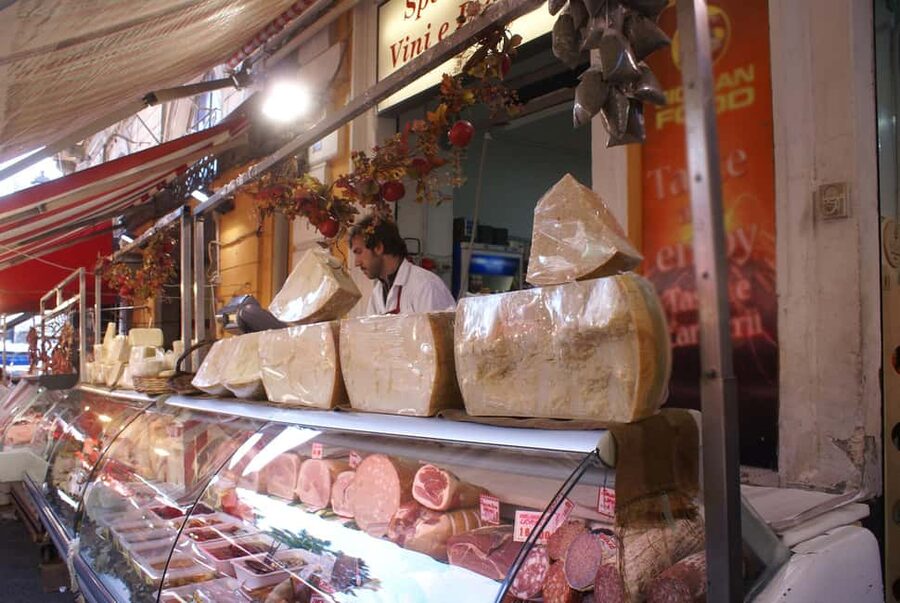
Reviewed · CATANIA STREET FOOD & FISH MARKET WALKS
Catania: Guided Street Food Tour with Tastings
Catania tastes better on foot. This 3-hour street food tour lines up real local stops—starting in Piazza Duomo, then moving into the fish market and classic eating spots—so you get the city’s rhythm with every few steps. I love the mix of seafood, street snacks, and dessert, and I also like that you’re with a local guide who keeps you moving with context, not just food in your hands.
One thing to plan around: gluten-free dishes aren’t available. If you have allergies or intolerances, you’ll need to specify them when booking, and the best choice is to manage expectations ahead of time.
In This Review
- Key things to know before you go
- Piazza Duomo start: orientation with real street-food energy
- Fish market and fried fish: the first big flavor hit
- Via Crociferi and Via Etnea: churches and a main-street contrast
- Piazza Stesicoro and the Amphitheater: a quick sight stop that matters
- Bar Savia arancini: when the snack is the main event
- Panetteria Pacini and cipollina: Catania’s signature specialty
- Chiosco Costa and the Selz fizzy drink: a Sicilian break from the bites
- By the harbor: horse meatballs and cipollata for the adventurous
- Dessert finale: cannolo, cassatella, almond paste, or granita
- The souvenir postcard: your quick map back through the flavors
- Price and value: does $80 for 3 hours make sense?
- Who this tour suits best (and who should think twice)
- Should you book Catania’s guided street food tour?
- FAQ
- How long is the Catania guided street food tour?
- Where does the tour start?
- What types of food are included?
- Is a local drink included?
- Are gluten-free dishes available?
- What should I do if I have allergies or intolerances?
- What languages is the guide offered in?
- Is the tour cancelled for refunds if I change plans?
- Is there a souvenir included?
Key things to know before you go
- Piazza Duomo kickoff with a guided start right at the Cathedral area in the city’s heart
- Catania fish market + fried fish as an early, high-reward stop
- Iconic streets on the route including Via Crociferi and Via Etnea
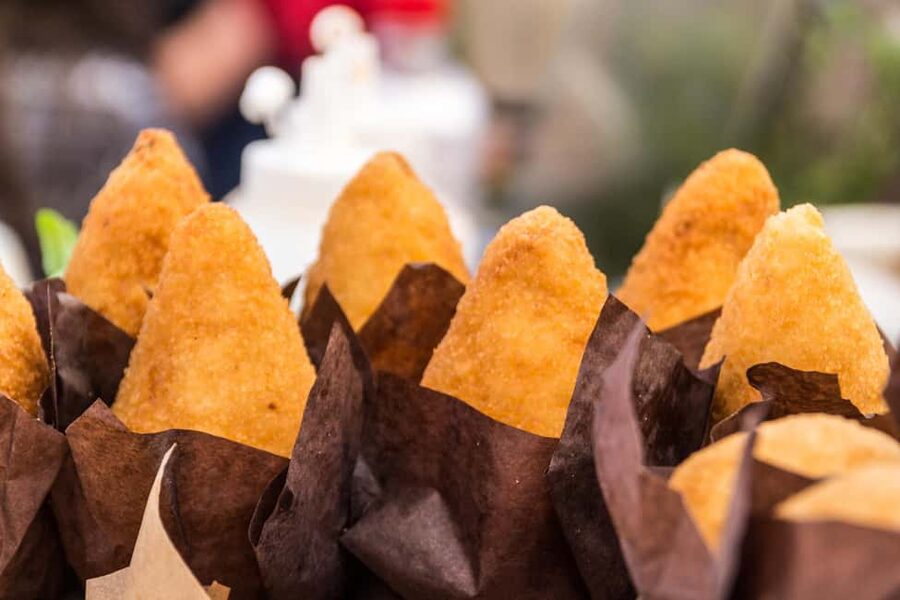
- Classic bites at Bar Savia and Panetteria Pacini (arancini and cipollina)
- Chiosco Costa drink break with a fizzy Sicilian mix made with Selz and syrups
- Seasonal dessert finale: cannolo/cassatella/almond paste or granita depending on the time of year
Piazza Duomo start: orientation with real street-food energy
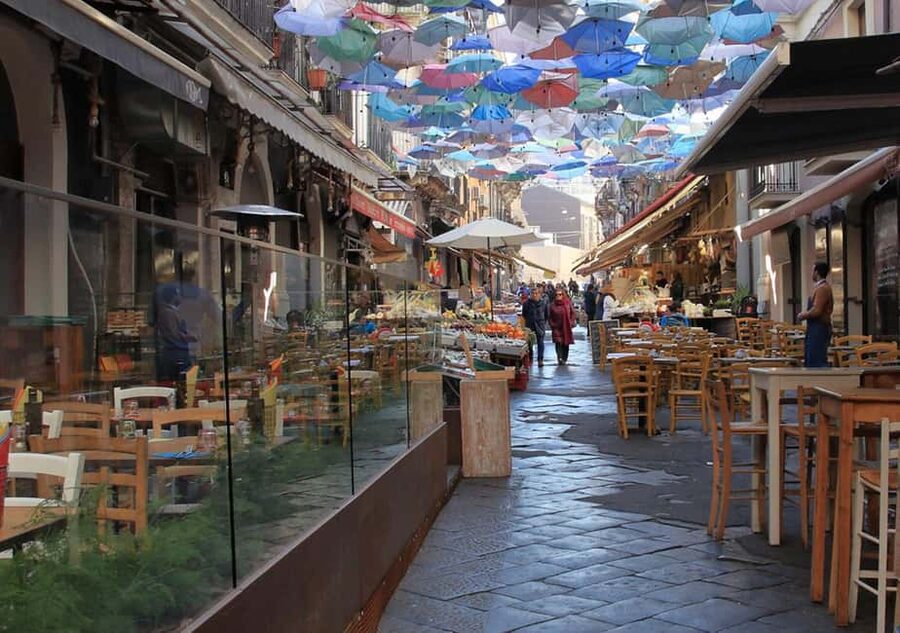
The tour begins near the Cathedral in Piazza Duomo. That’s a smart start point because you immediately get your bearings in the center of town, and you’re not spending the first chunk of time hunting for your group. Plus, being in the Duomo area sets a tone: this isn’t a museum tour; it’s a walking route where the sights and the snacks talk to each other.
Expect your guide to set up the plan and help you understand what you’re about to eat and why it belongs in Catania. It’s not just what’s on the menu—it’s when and where locals go for it. For me, that’s one of the best parts of any food tour: you learn the logic behind the choices, so you can keep eating well after the tour ends.
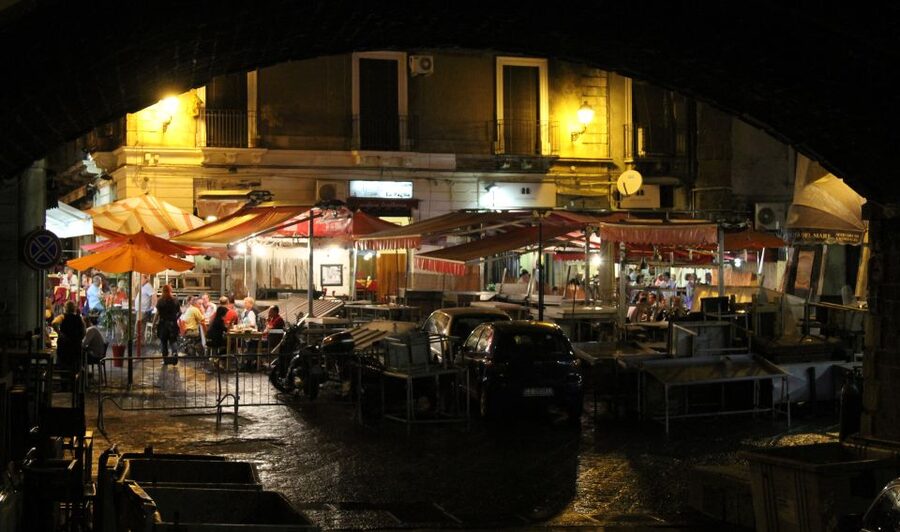
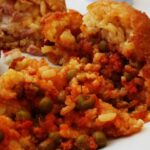
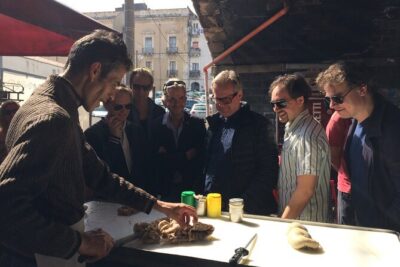
Back into the Pescheria fish market for arancini and street food.

Fish market and fried fish: the first big flavor hit
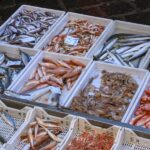
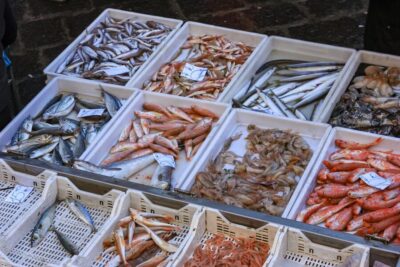
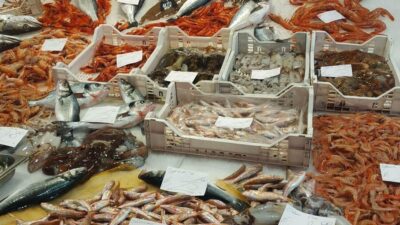
Next you head into Catania’s fish market, where the focus is typical local products—and yes, the tour includes the best fried fish in town. This is the kind of stop you can’t easily reproduce on your own without knowing where to look. A market can be intimidating if you don’t have a plan, and a guided tasting turns it into a focused experience instead of wandering.
A fish market also makes the rest of the walk make more sense. Once you’ve tasted something fried and straightforward from the sea, you’ll notice how the city’s food culture keeps repeating certain themes: comfort, simplicity, and big flavors that don’t wait around for you to catch up.
Practical note: markets can be lively and uneven underfoot. Wear comfortable shoes—this is a walking tour with multiple stops, so your feet become part of the itinerary.
Via Crociferi and Via Etnea: churches and a main-street contrast
After the market, the route shifts from the food center of town to the streets that define Catania’s look. You’ll walk along Via Crociferi, a street known for its churches. This isn’t a long detour. It’s a quick palate cleanser—visually and mentally—so you keep moving while still seeing something that feels tied to the city’s identity.
Then you reach Via Etnea, Catania’s main street. This is where you’ll feel the city open up. It’s a good stretch because it gives your group a chance to regroup, and it helps you connect the earlier market energy with the more central, daytime feel of the city. If you’ve only seen a few photos of Catania, this kind of guided route helps you understand how the different neighborhoods connect in real life.
Piazza Stesicoro and the Amphitheater: a quick sight stop that matters
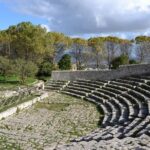
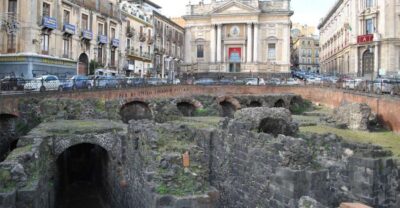
The next arrival is Piazza Stesicoro, where the Amphitheater is located. This stop is one of those “short but memorable” moments. You don’t linger for long, but you get a landmark that anchors Catania beyond food and busy street corners.
I like these kinds of sight breaks because they prevent the tour from feeling like a nonstop snack run. You get a visual reset, you take a few photos, and then you’re back at the next bite with more awareness of where you are.
Bar Savia arancini: when the snack is the main event
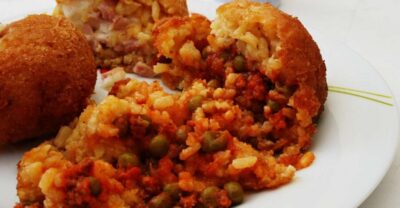
After the walking and sight sections, you’ll reach Bar Savia, a historic spot where you can taste what’s described as the best arancini in town. Arancini are one of Sicily’s iconic comfort foods, but the real difference is often in the details: the crust, the stuffing, and how fresh it tastes in your hands when you bite in.
This stop also shows you how street food works at its best. You’re not waiting for a formal course. You’re getting a hot, local specialty right at the moment it makes sense to eat it—fast, satisfying, and designed for people walking through the city.
If you’re the type who normally orders one thing and calls it a day, arancini here might be the kind of decision that makes you rethink the whole “just one snack” strategy.
More Catania food and drink to seek out.



Panetteria Pacini and cipollina: Catania’s signature specialty
Next is Panetteria Pacini, where you’ll taste cipollina, a unique specialty of Catania cuisine. This is one of the reasons I think this tour is good value: it doesn’t only give you the famous regional standards. It also pushes into a Catania-specific item, which is harder to find and easier to miss if you’re self-guided.
What makes a stop like this useful for you isn’t only the food itself—it’s the takeaway. After tasting cipollina, you’ll have a better instinct for what local bakeries and snack counters are known for. That helps you keep eating well after the tour finishes.
Chiosco Costa and the Selz fizzy drink: a Sicilian break from the bites
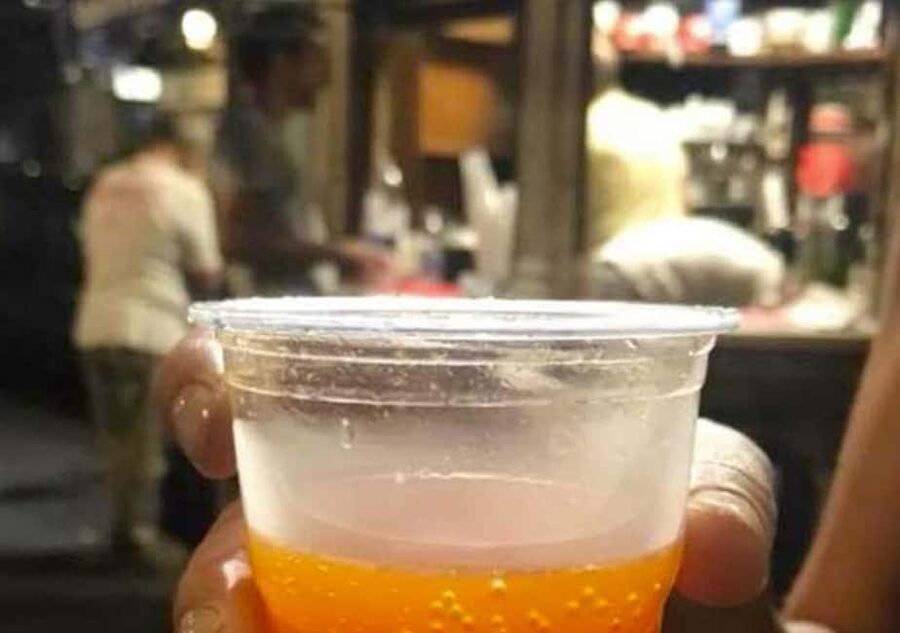
Then you’ll visit Chiosco Costa, described as Catania’s most important kiosk. Here the tour includes a typical Sicilian fizzy drink made with Selz and syrups.
This stop is smart because it adds variety. You’re not just bouncing from hot fried foods to more hot fried foods. The drink helps reset your palate and keeps the experience from becoming heavy. It also shows how street food in Sicily isn’t only about what’s eaten—it’s also about what’s sipped while you eat.
If you like trying local beverages, this is the moment to pay attention. Selz-style drinks are part of the old-school drinking culture in many Southern Italian places, and this one is framed as a key kiosk experience rather than an optional extra.
By the harbor: horse meatballs and cipollata for the adventurous
Opposite the harbor is the penultimate stop, where you’ll enjoy a mixed meat dish featuring horse meatballs and Cipollata. This is the most “adventurous” part of the tour based on what’s included, and it’s also a useful data point for you if you want to understand Sicilian food culture beyond seafood and standard snacks.
You don’t have to force yourself into discomfort, but if you’re open-minded, this is exactly the kind of tasting that makes a guided street food tour worthwhile. It shows the less touristy side of local eating—something you might not pick confidently on your own.
For practical planning: if you’re unsure about horse meat, treat this as a moment to decide. The tour includes this dish, so if that ingredient is a dealbreaker, you should factor that into whether this experience is right for you.
Dessert finale: cannolo, cassatella, almond paste, or granita
At the last stop, you’ll have a reserved dessert. Depending on the time of year, it’s either Sicilian ricotta cannolo plus options like cassatella and almond paste, or Sicilian granita. I like that the tour builds the finale around the season. It means you’re more likely to get something that feels “right now” rather than a fixed menu that ignores weather and timing.
Dessert on a walking tour can be tricky—too early and it ruins the fun, too late and you’re already stuffed. Here, the structure works: you end with something sweet after the harbor stop, so you’re satisfied but not overwhelmed.
And because this tour also includes earlier tastings across fish, meat, and snacks, the dessert doesn’t feel like a random afterthought. It feels like the finish line.
The souvenir postcard: your quick map back through the flavors
To conclude, you’ll receive a souvenir postcard called The Elephant’s Way, with the stops and different foods tasted during the tour marked. I love little take-home tools like this because they turn an enjoyable afternoon into a reference you can use later.
It’s especially helpful if your photos don’t quite match what you ate, or if your memory needs a nudge on day two. Having the route and food list in one place is a small detail, but it’s practical—and it keeps the tour from vanishing the second you’re back in your hotel.
Price and value: does $80 for 3 hours make sense?
At $80 per person for a 3-hour guided walk, you’re paying for three things: a local guide, multiple tastings, and access to specific food stops (including the market and key counters/kiosks).
Here’s how I’d judge value:
- You’re not just sampling one or two items. The tour includes a spread that moves from fish market tastes to arancini and cipollina, a kiosk drink, a mixed meat dish, and a reserved dessert.
- You also get guided context as you walk major streets like Via Crociferi and Via Etnea, plus a landmark at Piazza Stesicoro.
- The included tastings cover both savory and sweet, and even include local soft drinks.
If you were to pay for those foods one-by-one on your own, the biggest “cost” isn’t only money—it’s time and knowledge. A guide compresses the learning and helps you hit the right places faster. That’s where the $80 starts to feel less like a fee and more like buying time plus local expertise.
Who this tour suits best (and who should think twice)
This tour fits best if you:
- want a focused food route in a short window
- enjoy trying local specialties you might not order confidently on your own
- like walking city streets with a guide who explains what you’re tasting
It may be less ideal if you:
- need gluten-free options (none are available)
- have strong restrictions around specific ingredients, especially since the meat course includes horse meatballs
- prefer a slower pace with fewer stops (this is built around frequent tastings and movement)
Also, if you like to plan your eating, you’ll probably appreciate the structure. It’s not random snacks; it’s a sequence designed to keep flavors changing.
Should you book Catania’s guided street food tour?
I’d book it if you want a high-impact introduction to Catania food culture in a single afternoon. The strongest reason is the lineup: fish market tasting plus fried fish, classic arancini at Bar Savia, the Catania-specific cipollina at Panetteria Pacini, a kiosk drink at Chiosco Costa, and a true local meat dish near the harbor, ending with dessert.
Skip it only if gluten-free needs are a must for you or if you’d rather avoid the horse meat course. If those points don’t apply, this tour is a smart way to get both city orientation and real street food without spending your limited time guessing.
FAQ
How long is the Catania guided street food tour?
The tour lasts 3 hours.
Where does the tour start?
It starts at the Cathedral in Piazza Duomo, with a local guide.
What types of food are included?
You’ll get a variety of street food samples, from meat to fish, and also desserts.
Is a local drink included?
Yes. The tour includes local soft drinks, and it also includes a Sicilian fizzy drink made with Selz and syrups at Chiosco Costa.
Are gluten-free dishes available?
No. Gluten-free dishes are not available.
What should I do if I have allergies or intolerances?
When booking, you should specify any allergies or intolerances.
What languages is the guide offered in?
The live guide is available in English and Italian.
Is the tour cancelled for refunds if I change plans?
The tour offers free cancellation up to 24 hours in advance for a full refund.
Is there a souvenir included?
Yes. At the end, you receive a souvenir postcard called The Elephant’s Way with the tour stops and foods marked.
More Tours in Catania





More Tour Reviews in Catania


More Catania Street Food Walks

After something different? More tours and day trips around Catania and eastern Sicily








Catania Street Food & Fish Market Walks, compared.
 ★ 5.0The Original Catania Street Food and Market Tour by StreatyFrom $71345 reviews
 ★ 4.9Street Food Guided Walking TourFrom $56326 reviews
 ★ 4.7Guided Street Food Walking TourFrom $58300 reviews
 ★ 4.9Catania Street Food Tour: Fish Market & City CentreFrom $55104 reviews
 ★ 4.9From Taormina: Private 3 Etna Wineries with Food & WineFrom $29671 reviews
 ★ 4.7Street Food Walking TourFrom $5060 reviews
 ★ 4.7Underground and Street Food Walking Tour56 reviews
 ★ 5.0Market Tour and Cooking Class with Chef RiccardoFrom $16940 reviews
Browse the lists this tour appears in