
Reviewed · CATANIA OLD TOWN WALKING TOURS
Catania: Underground and Street Food Walking Tour
Catania has a whole second city under it. This 2.5-hour underground and street food walking tour mixes secret passages, Etna-linked cave stops, and a guided walk that ends with real local bites at the open-air market. I love the way guides like Oreste (an archaeologist in some departures) turn ruins, chapels, and underground water routes into a story you can picture. I also love the food payoff: the stop at Piazza Carlo Alberto is loud, crowded, and actually delicious. One drawback to weigh up: it’s not for claustrophobia, wheelchairs, or anyone who hates a few irregular steps.
The vibe here is part history class, part Sicilian street life. You’ll stay in a small group (up to 10), walk between key squares, and hear the explanations in Italian, French, Spanish, or English, depending on your guide.
In This Review
- Key highlights you’ll feel fast
- Meeting at the Roman Black Amphitheater: how the tour starts
- Catania Underground: Etna caves, Roman funeral chapels, and Amenano
- Piazza Carlo Alberto market break: street food and a very Sicilian rhythm
- Ruins, steps, and the hidden passages side of Catania
- Via Etnea and Piazza del Duomo: baroque churches and lava stone symbolism
- Value in 2.5 hours: small-group access and included tastes
- Thermal baths finale and the mandarino e limone kiosk stop
- Pace, comfort, and who this tour really fits
- Should you book the Catania Underground and Street Food Walking Tour?
- FAQ
- How long is the Catania Underground and Street Food Walking Tour?
- Where do I meet the guide?
- What does the tour include besides the underground sites?
- Is the tour underground or does it include walking above ground too?
- Is it wheelchair accessible or suitable for mobility impairments?
- Does the tour run in bad weather?
Key highlights you’ll feel fast
- Amenano underground river route to the thermal baths for a cool, grounded sense of how the city works
- Etna power in a prehistoric cave stop, tied to eruptions and ancient religious use
- Roman layers up close, including an ancient Roman funeral chapel
- Piazza Carlo Alberto market break with street food and short tasting moments
- A local drink called mandarino e limone at a kiosk, the kind locals sip without making a fuss
- Small-group access to underground spaces that are often not open to everyone
Meeting at the Roman Black Amphitheater: how the tour starts
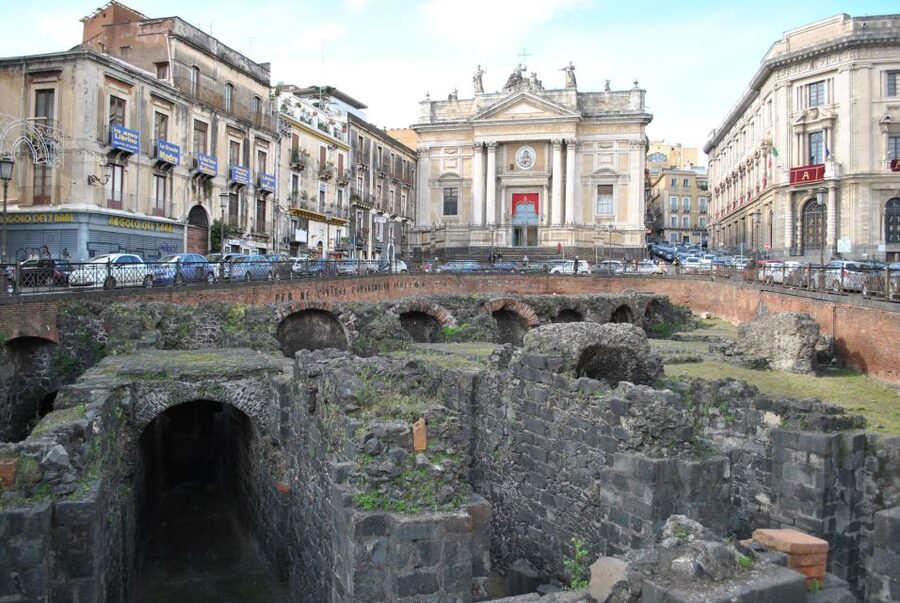
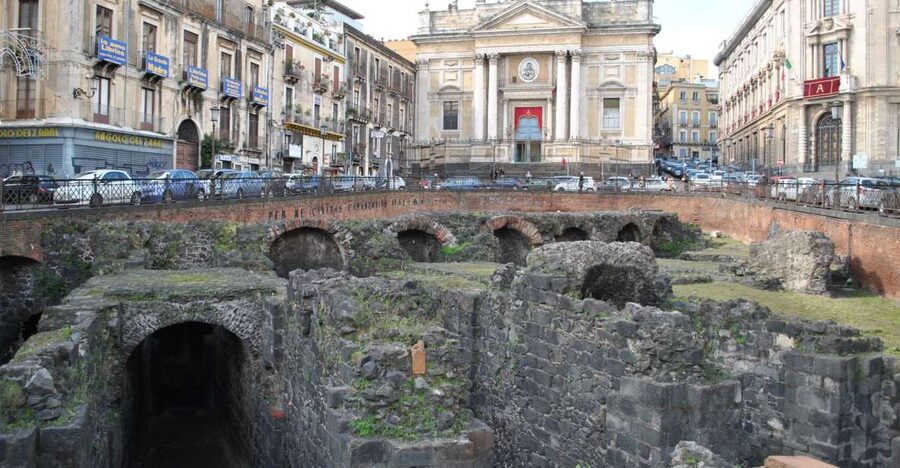
You begin at Piazza Stesicoro, standing at the entrance with two columns of the Roman black amphitheater. The key detail is easy to miss if you’re rushing: look for your guide’s nameplate right there, at street level, before you head underground. This matters because the whole tour runs on momentum. Once you start walking, you’ll keep moving between squares, then sink into the city’s underworld.
The amphitheater setting is a smart first move. You get a visual anchor for what comes next: Catania wasn’t built from scratch. It grew over older layers—Roman, medieval, and volcanic—until today’s streets sit right above things you can’t see without help. Even the photo stop (about 15 minutes) gives you time to orient yourself. You’ll be glad you did, because later you’ll be looking down at spaces that used to function like major public areas.
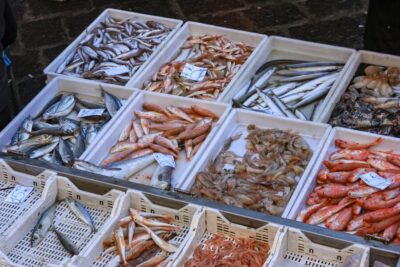
Back into the Pescheria fish market for arancini and street food.


Catania Underground: Etna caves, Roman funeral chapels, and Amenano
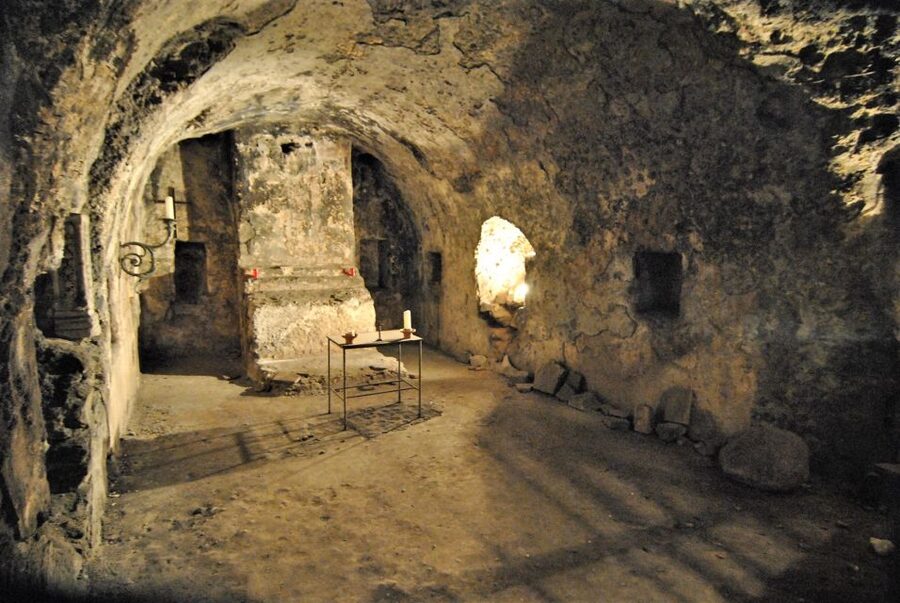
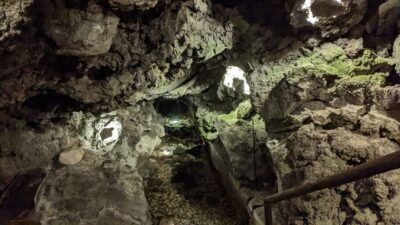
This tour’s “main character” is what’s underneath. You’ll spend around 30 minutes on the underground visit, guided the whole way. The big idea is that Catania is shaped by volcano, war, and devotion—and those forces carved out places where people prayed, moved, and lived long before modern streets existed.
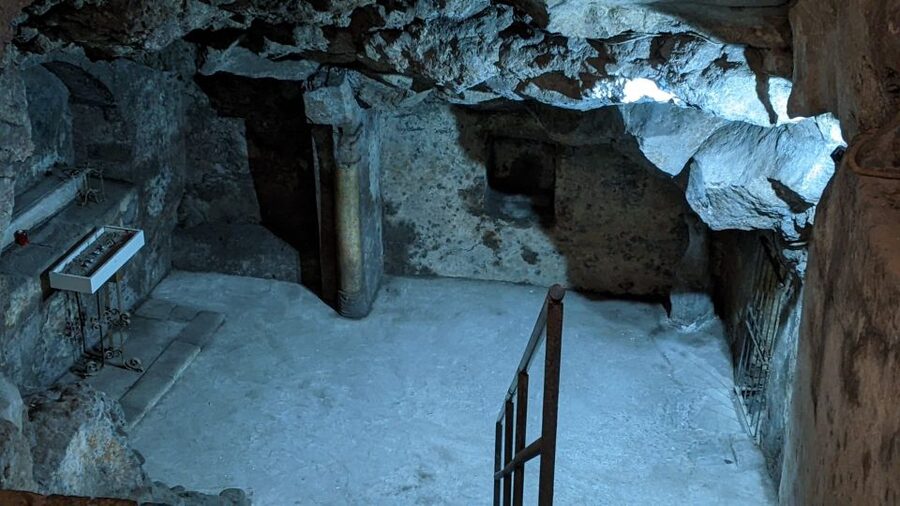
One of my favorite themes is the Etna-to-underground connection. You’ll see stops linked to Etna’s eruptions inside a prehistoric cave setting. The effect is less “wow, lava” and more “wow, scale.” Sicily’s geography isn’t scenery here. It’s the reason these underground spaces exist and why certain religious sites ended up where they did.
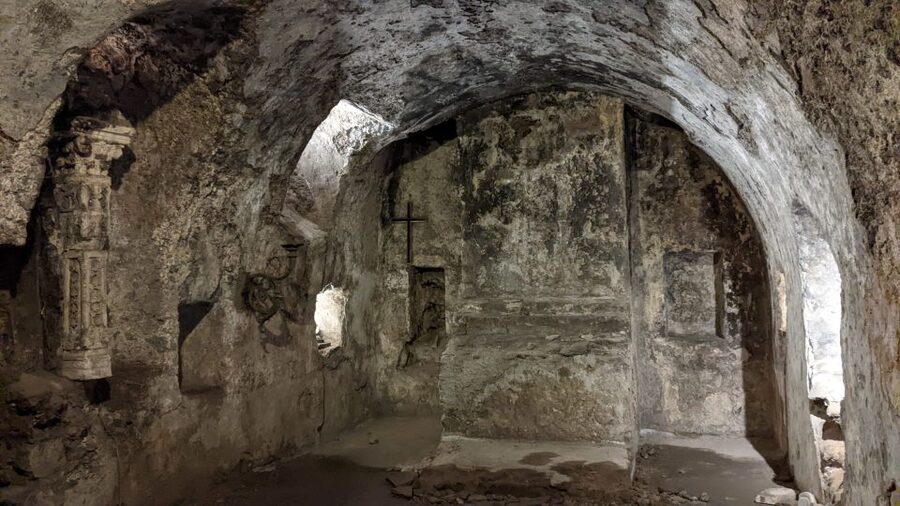
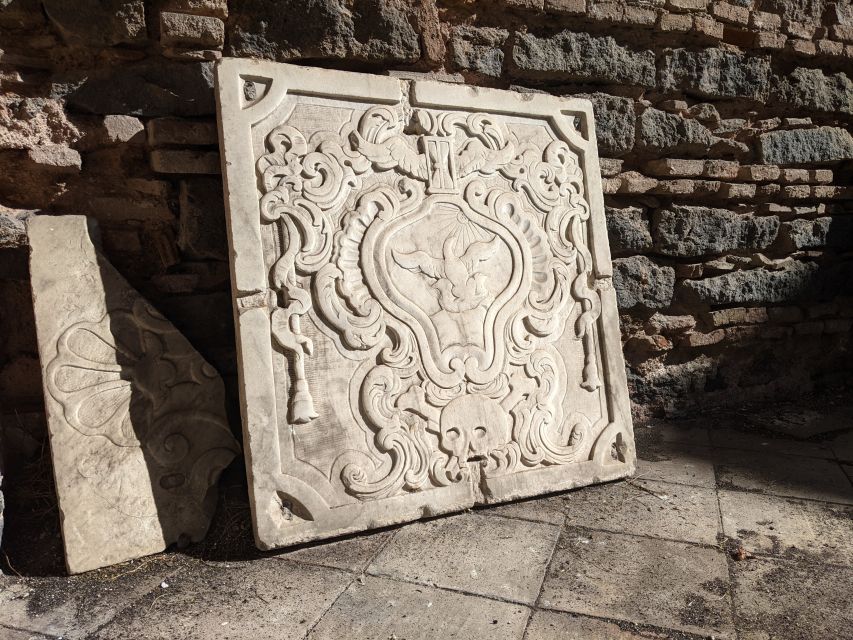
You’ll also encounter Roman-era storytelling. The tour includes an ancient Roman funeral chapel, which is a striking contrast to the later religious uses of underground rooms. That contrast is exactly why this kind of guided access is valuable. Without a guide, it’s easy to treat these spaces like decoration. With the right context, you understand the function: a place for rituals, for commemoration, and for belief—hiding in the same dark corridors that today feel mysterious.
And then there’s the water route. The itinerary is built around following the underground river Amenano toward the thermal bath. Even if you’ve seen underground rivers in other cities, Amenano has a Catania-specific feel because it connects directly to the thermal finale. You’re not just walking through “cool tunnels.” You’re tracking a working system—water moving where it always has.
Piazza Carlo Alberto market break: street food and a very Sicilian rhythm
After the underground portion, you pop back into the daylight around Piazza Carlo Alberto for a long market stretch (about 30 minutes). This is where the tour stops being all stone and mortar and turns into noise, smell, and quick tastings.
Expect a guided walk through the open-air market atmosphere. The point isn’t fine dining. The point is seeing how Catania actually eats during a normal day. You’ll have food tasting and local snack moments here, with a short break built into the plan. The tour keeps this portion structured so you don’t end up standing in the market wondering what to order.
What I like most about this market segment is that it teaches you the logic of choosing. Your guide’s role is practical: they point out what’s worth trying, and you’ll come away with names and habits you can repeat later on your own. Several guides have also offered extras like food tips after the official stops, and that helps you keep the street-food momentum after the tour ends.
If you’re hungry (and you will be), this market break is timed well. You’re not forced to eat right before more walking. You get a real chance to refuel, then continue to the next set of sights.
Ruins, steps, and the hidden passages side of Catania
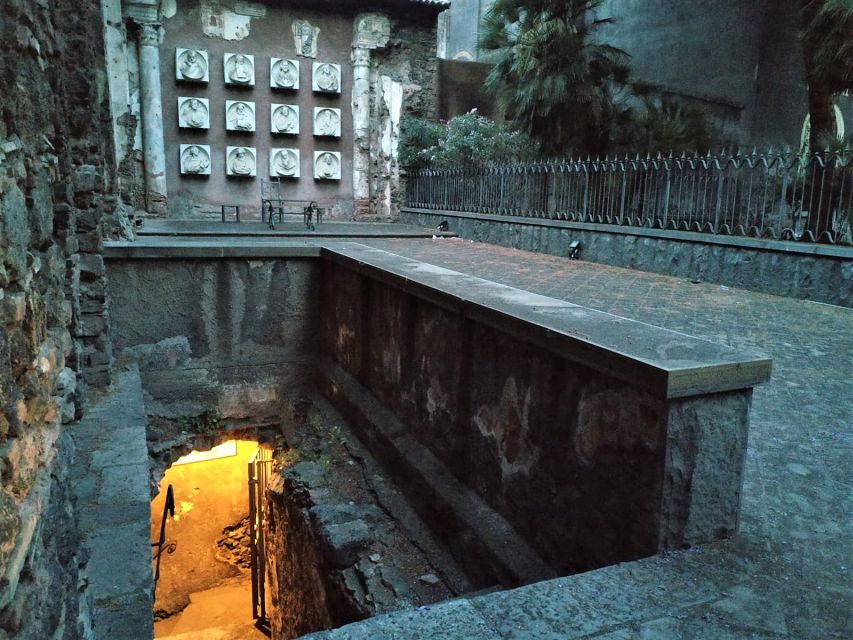
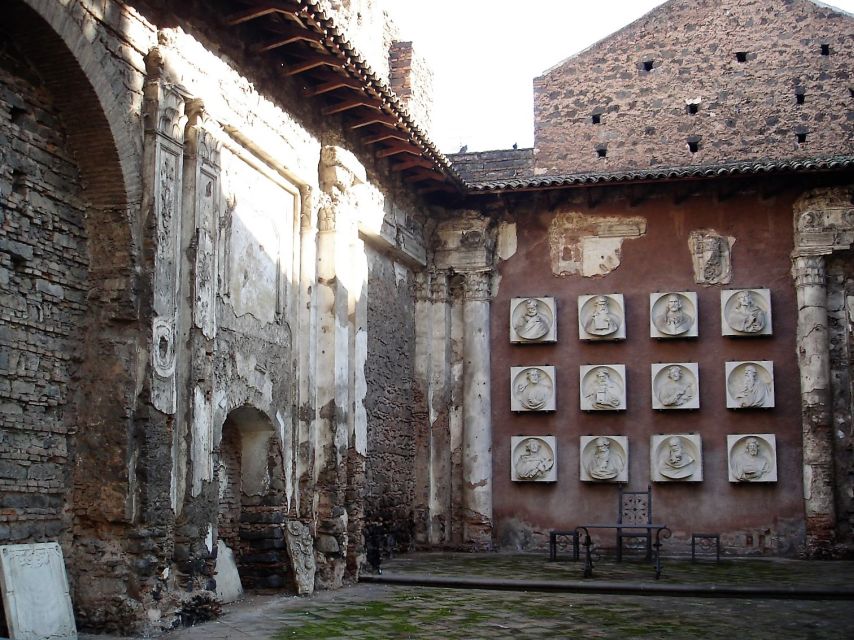
Between the market stop and the later major landmarks, you’ll visit a more “underground mystery” style stop (around 25 minutes). This is where you’ll get time in spaces connected to the city’s layered past, including ruins of bombed churches and prehistoric caves that hide ancient religious places.
This is also the point where you need to mentally switch gears. Underground spaces change your pace. You’ll move through areas that can feel uneven and tight. The tour notes that you’ll climb a few steps, and some of them may be irregular. That doesn’t mean it’s slow or miserable, but it does mean you shouldn’t wear shoes you only like in theory.
There’s another reason these steps matter: they control access. Some sites aren’t usable if conditions get bad. The tour also states that if a site isn’t accessible, it will be replaced by another underground site chosen by the organization. In practice, that makes your day more reliable than you might expect—without pretending every hidden room is guaranteed.
Via Etnea and Piazza del Duomo: baroque churches and lava stone symbolism
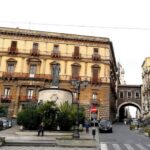
Once you’re out of the underground network, the tour goes back into Catania’s visible “storytelling.” You’ll admire aristocratic palaces and late baroque churches along via Etnea, then continue toward Piazza del Duomo. This section is short, but it helps you connect the dots between what you saw underground and what you see above ground.
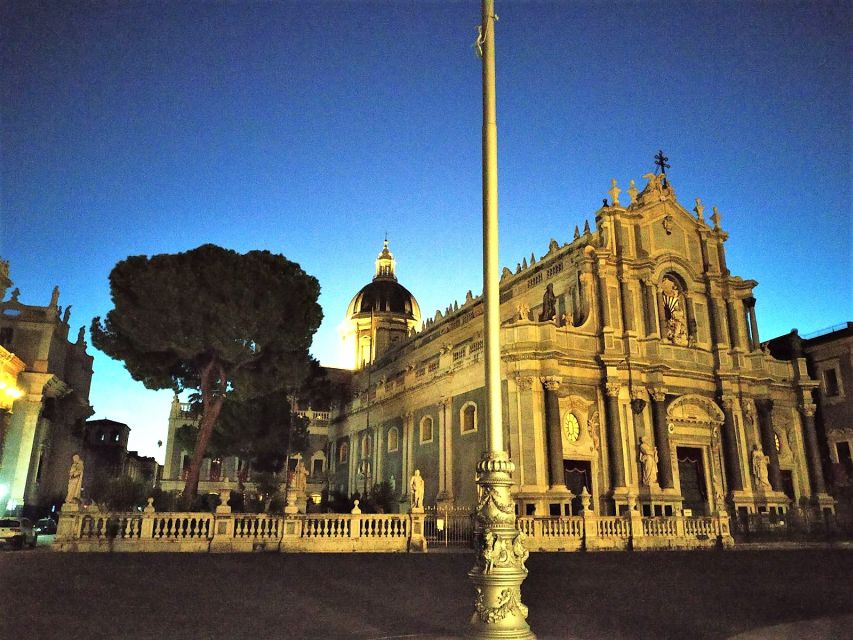
The Duomo area has a signature visual moment: the enigmatic black lava stone elephant. It’s one of those details that’s hard to appreciate from a distance, because you’re busy watching people and traffic. A guided walk slows that down just enough for you to notice what Catania is doing with its volcanic identity.
You’ll also discover the basement of the cathedral during the tour flow. That’s another key value point. The underground theme isn’t just “tunnels.” It’s also about how religious and civic buildings were shaped by what was above and below them. Seeing basement access changes your mental map of the city.
More of baroque Catania on foot, from Via Etnea to the Duomo.



Value in 2.5 hours: small-group access and included tastes
This isn’t a full-day crawl. It’s a focused sprint: Roman amphitheater start, underground network, one major market stop, then more underground/cave/chapel style moments, a local drink, and finally the thermal baths before ending at Piazza del Duomo.
For your time, the value is the combination:
- Underground access with a guide (not just a general sightseeing walk)
- A structured market break with tastings, so you don’t waste time guessing what to try
- A local drink moment built into the route
Small group size (limited to 10) also matters here. Underground spaces can feel cramped, and markets are dense. When the group is small, you keep the experience moving without losing everyone every few minutes. That translates into less stress and more actual viewing.
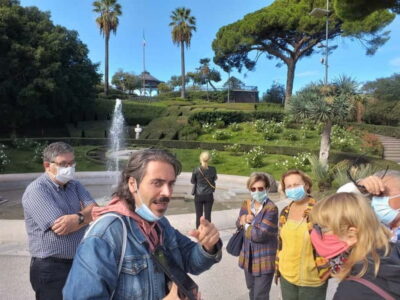
On the guide quality side, the reviews strongly highlight the kind of explanations you want: clear, engaging answers, and guides with real backgrounds. Names like Oreste and Matilde show up in past departures, and that’s a good sign if you’re the type who likes why-not-how questions.
Thermal baths finale and the mandarino e limone kiosk stop
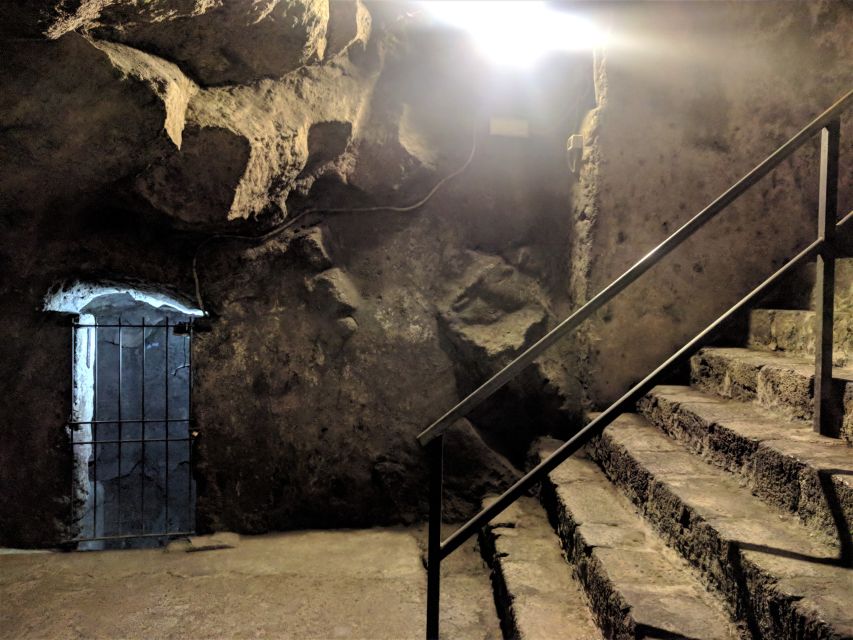
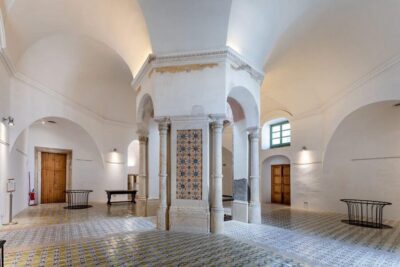
The tour ends with the thermal bath visit (about 30 minutes) after a short on-foot transfer. The structure is smart: you follow Amenano underground, then you finish where the city turns water into comfort and ritual again. Even if you don’t care about history, this link makes the underground feel practical instead of just spooky.
Before the thermal portion, you’ll stop for a drink at a kiosk at Via S. Gaetano alla Grotta, 5 for about 10 minutes. The local drink is mandarino e limone—mandarin and lemon. This is the kind of detail I love because it’s specific. It’s not just “have a drink.” It’s a local combo tied to the culture and timing of the day.
One last tip: treat this drink moment as part of pacing, not just a snack. After the final walk and underground heat variation, you’ll want something refreshing. Mandarino e limone is sweet-citrus, and it helps you reset before the thermal stop.
Pace, comfort, and who this tour really fits
This tour can be a great fit if you like three things: history that you can see with your own eyes, food that tastes like the city, and a guided flow that keeps you from wandering in the wrong direction.
It’s less of a fit if you:
- have claustrophobia (underground spaces are part of the core experience)
- use a wheelchair or need mobility support (it’s not suitable for people with mobility impairments, and wheelchairs aren’t part of the setup)
- get motion sickness (the tour flags this)
- are sensitive to uneven conditions (you’ll climb a few steps, sometimes irregular)
- are bigger than the tour’s limit (over 280 lbs / 127 kg)
Also, plan for weather. The tour runs rain or shine, with cancellations only if conditions are prohibitive enough to make sites unusable. If that happens, sites may be replaced by other underground areas.
Should you book the Catania Underground and Street Food Walking Tour?
Book it if you want a shortcut to Catania’s “under-the-under” side—real access to underground spaces, guided context that makes the layers click, plus a market stop where you’ll actually eat something local (not just look). It’s ideal for a first visit or for anyone who feels like Catania is more than the cathedral photo and a quick pasta meal.
Skip it if underground spaces feel uncomfortable for you, or if you need fully accessible routes and smooth surfaces. Also, if your idea of value is long time at one big landmark, this is the wrong style; it’s a mix-and-move tour built for variety in a short window.
If you’re on the fence, think of it like this: you’re buying one guide, one small group, and one smart route that turns darkness, food, and thermal water into a single afternoon. That’s a lot to pack into 2.5 hours—and it’s exactly why this tour tends to land with strong reviews.
FAQ
How long is the Catania Underground and Street Food Walking Tour?
The tour duration is 2.5 hours.
Where do I meet the guide?
Meet at the Roman black amphitheater entrance in Piazza Stesicoro. The guide waits at the entrance (two columns) with a nameplate.
What does the tour include besides the underground sites?
You’ll also visit an open-air market in Piazza Carlo Alberto for street food and local snack tastings, drink a mandarino e limone at a kiosk, and finish with a visit to the thermal baths.
Is the tour underground or does it include walking above ground too?
Both. You’ll spend time underground, then walk through central Catania areas including via Etnea and end at Piazza del Duomo.
Is it wheelchair accessible or suitable for mobility impairments?
No. The tour is not suitable for people with mobility impairments and wheelchair users.
Does the tour run in bad weather?
Yes, it runs rain or shine. If sites can’t be used due to prohibitive conditions, the tour may be canceled. If a specific site isn’t accessible, it will be replaced by another underground site chosen by the organization.
More Tour Reviews in Catania






More Catania Old Town Walks

More Catania Street Food Walks


After something different? More tours and day trips around Catania and eastern Sicily








Catania Old Town Walking Tours, compared.
 ★ 4.6Heart of the City Guided Walking TourFrom $23708 reviews
 ★ 4.7City Highlights Walking TourFrom $14666 reviews
 ★ 4.6Underground Catania Tickets and Guided TourFrom $29536 reviews
 ★ 4.8Benedictine Monastery of Catania – English Guided TourFrom $11434 reviews
 ★ 4.9Street Food Guided Walking TourFrom $56326 reviews
 ★ 4.7Guided Street Food Walking TourFrom $58300 reviews
 ★ 5.0Syracuse, Ortigia and Noto walking tour from CataniaFrom $129273 reviews
 ★ 4.8The heart of the City – Tour guidato in ItalianoFrom $23171 reviews
Browse the lists this tour appears in