
Reviewed · CATANIA OLD TOWN WALKING TOURS
Benedictine Monastery of Catania – English Guided Tour
Two thousand years in one stairwell. The Benedictine Monastery of Catania is a late baroque monument that still works today, with parts repurposed for students and a library you’d never find on your own. You’ll move from the monastic world into Roman remains and then into the present-day life of the complex.
What I like most is the access: you’re let into areas that are not normally open, including spaces under the monastery and the extraordinary cellar built on lava. I also really appreciate the English guiding—guides such as Carmen, Giovanni, and Nicola are described as clear, lively, and patient with questions, so the whole place makes sense in an hour-plus.
One thing to keep in mind: a couple of people have noted that a viewing platform wasn’t accessible during their specific time slot. If that top-view moment matters to you, consider asking ahead or planning a bit of flexibility.
In This Review
- Key highlights worth your hour
- Your first stop: Piazza Dante and San Nicolò l’Arena
- Why the monastery feels like time travel (not a museum lecture)
- Cloisters: the calm center of a very powerful complex
- Roman houses under a mezzanine: the part you might miss alone
- The lava cellar and the library connection
- Kitchen, novices’ garden, dining rooms: how the monks actually lived
- Vaccarini’s work, De Carlo’s refurbishment, and a restoration that took decades
- A quick walk through the full 75-minute flow
- Price and value: about $11 for access you’d otherwise miss
- Who should book this English guided tour
- Should you book? My practical take
- FAQ
- How long is the Benedictine Monastery of Catania English guided tour?
- What does the tour cost?
- Where do I meet the guide?
- Is the tour in English?
- Can I get translations if English isn’t my main language?
- What areas can I access during the tour?
- Is it possible to skip the ticket line?
- Is the tour wheelchair accessible?
- Is there baggage storage at the meeting point?
- What if I need to change my plans?
Key highlights worth your hour
- Skip the line, then go where others can’t with built-in access to normally restricted rooms
- Lava cellar now used as a library—a very Sicilian kind of continuity
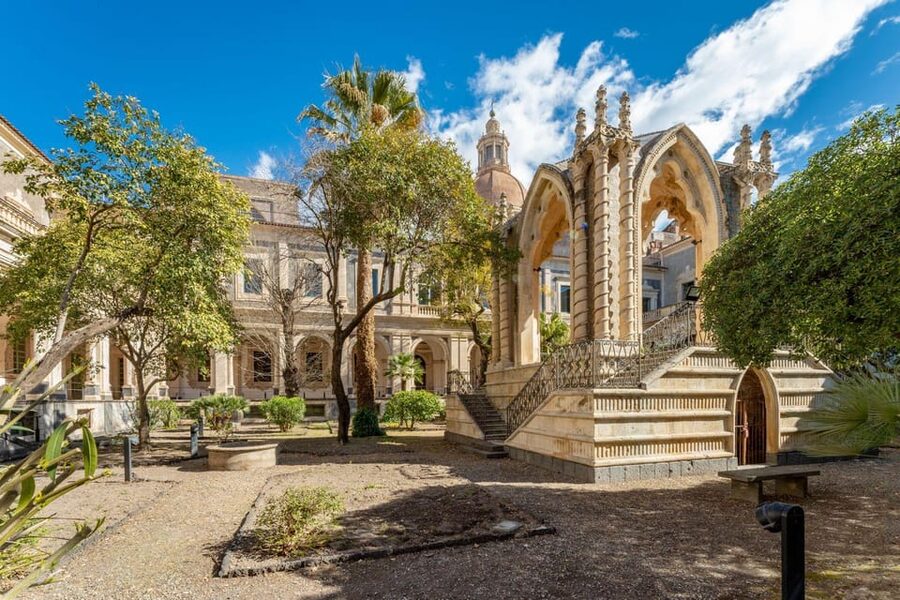
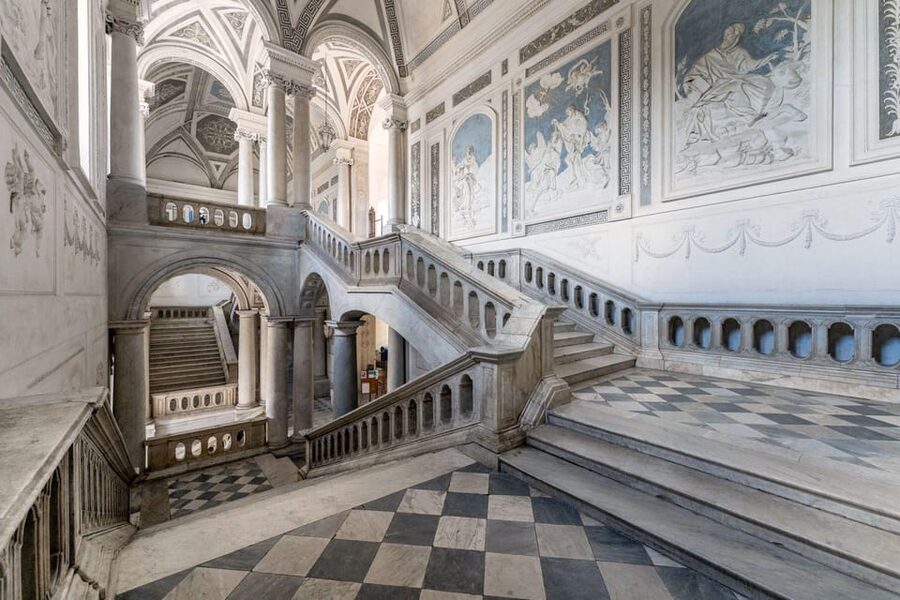
- Two cloisters and a monumental staircase that show how big the monastery really is
- Roman houses under modern student space via a mezzanine and library areas
- Kitchen and cellars that help you understand monastic life beyond the church façade
- A restoration story that took decades, including work linked to architect Vaccarini and later refurbishment by Giancarlo De Carlo
Your first stop: Piazza Dante and San Nicolò l’Arena
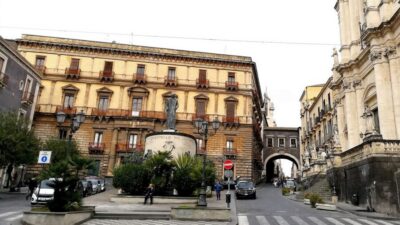
This tour starts at the Benedictine Monastery of San Nicolò l’Arena. Your meeting point is easy to miss if you rush: as soon as you pass the main gate on Piazza Dante, go to the info point in the courtyard on the right. You’ll have a guide, and you’ll also get baggage storage at the meeting spot—handy if you’re moving between sights in Catania.
The visit lasts 75 minutes, which is just long enough to give you the layout and the meaning of what you’re seeing. It’s not a half-day “wander and hope” plan. It’s more like: follow the route, look where the guide points, and you’ll come away with a map in your head.
Accessibility is also a plus. The tour is wheelchair accessible, so it’s a strong pick if you want structure without giving up mobility.
More of baroque Catania on foot, from Via Etnea to the Duomo.

Why the monastery feels like time travel (not a museum lecture)
The Benedictine Monastery of Catania is one of Europe’s biggest monastery complexes, and the scale hits you early. The late baroque architecture is the headline, but the real magic is that you’re not just seeing a style—you’re seeing a timeline.
You’ll get a guided walk through areas that connect:
- Roman-era remains (right under the complex in places you might not expect)
- the Benedictine monastic world with its daily routines and wealth
- and then the modern university use, where parts of the site function as learning space
That “from Roman age to present day” story matters because it changes how you look at everything. A corridor isn’t only pretty. It’s a route used by different communities, for different purposes, across centuries.
Cloisters: the calm center of a very powerful complex
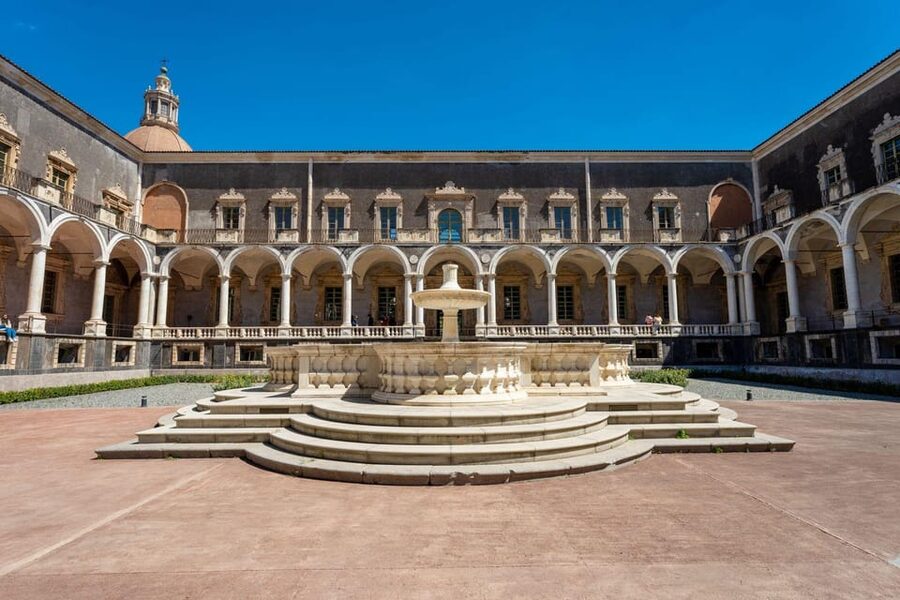
You’ll spend time in the monastery’s two cloisters. Cloisters are often described as quiet, but in a place this large, they also feel strategic. They’re where you can sense how monastic life was designed around movement, routine, and enclosure.
Look closely at proportions and light. In baroque religious complexes, the architecture often plays with drama—yet cloisters bring you back to order. On this tour, the cloisters aren’t treated like set dressing. They help you understand how space controlled daily life.
If you only visit one major internal space in Catania that’s not a church façade, make it this tour. The cloisters show you why the monastery was powerful enough to reshape the city around it.
Roman houses under a mezzanine: the part you might miss alone
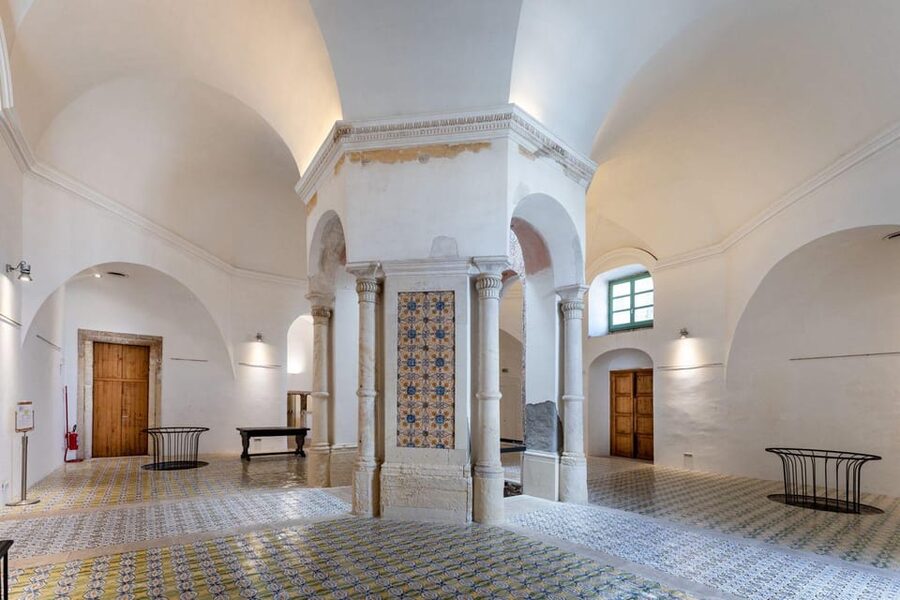
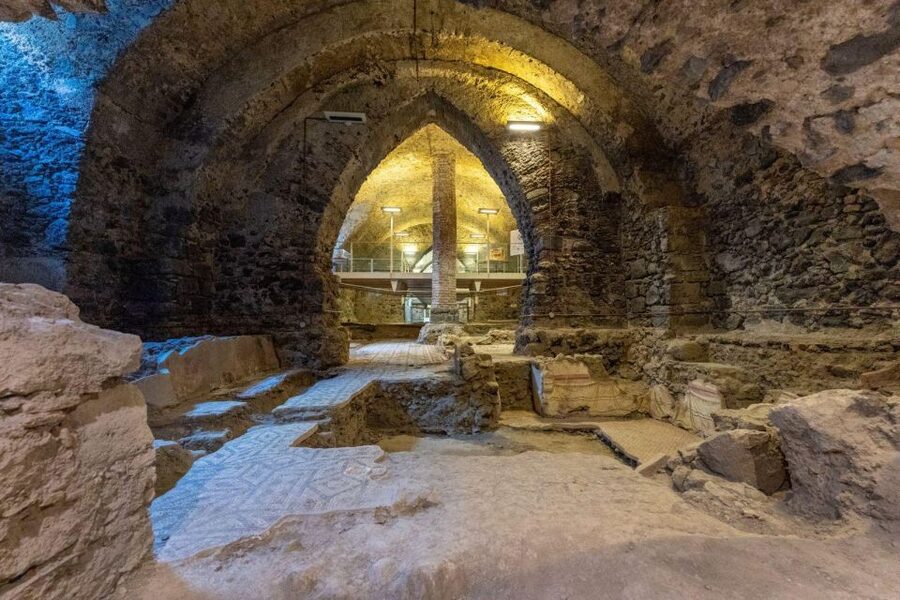
One of the most compelling moments is the Roman House visible just under a modern mezzanine. That mezzanine ties into the fact that the complex is now used as part of the university library.
This is a great example of why guided visits pay off. You’re not guessing where ancient layers sit under modern ones. You’re guided to the exact spots and given context as you look. It turns the site from old stones into a story you can follow.
Also, the Roman portions make the monastery feel less like a single era and more like a continuous occupation of place. You’re seeing the same ground, reused and repurposed—again and again.
The lava cellar and the library connection
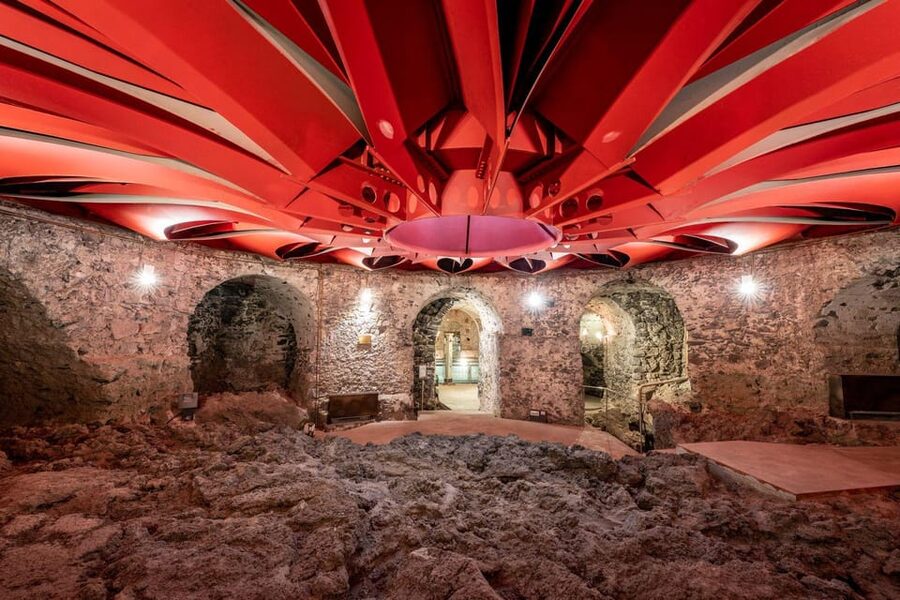
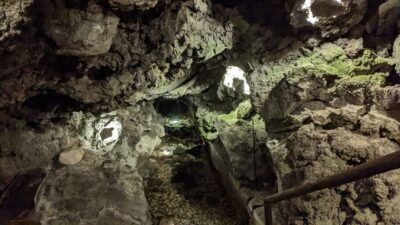
Then comes the cellar that’s built on lava—a detail that’s uniquely Catania. Volcanic rock isn’t just scenery in this region; it shows up in the way buildings stand and survive.
In this tour, the cellar is one of the key stops because it’s now used as part of a library connected to the Department of Humanities (UNICT). That’s a big deal. Instead of the cellar becoming a sealed-off relic, it has a working role. You get to stand in a space shaped by the earth itself and understand how the monastery’s later years found a modern purpose.
This stop also tends to feel comfortable in warm weather. Some guides lead you into the lower areas where the air is cooler than outside, which makes the whole schedule more pleasant on hot Sicilian days.
More Catania days out with a local guide.

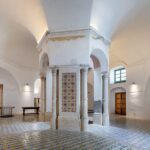
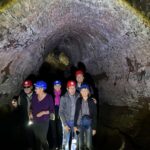


Kitchen, novices’ garden, dining rooms: how the monks actually lived
The monastery isn’t only about grandeur. You’ll also visit the famous 18th-century kitchens and related cellars, plus the Garden of the Novices and other internal rooms such as dining areas.
Here’s what to watch for. Kitchens and dining spaces tell you about labor, routine, and organization. They show how a monastery could be both spiritual and intensely practical. When you’re standing in a kitchen built for monastic life, you understand the scale of supply chains and daily scheduling required to feed a community.
The novices’ garden adds another layer. It’s a reminder that monastic life included training and transition, not only worship. Even if you’re not religious, it’s fascinating to see how education and preparation were built into the site’s physical design.
Vaccarini’s work, De Carlo’s refurbishment, and a restoration that took decades
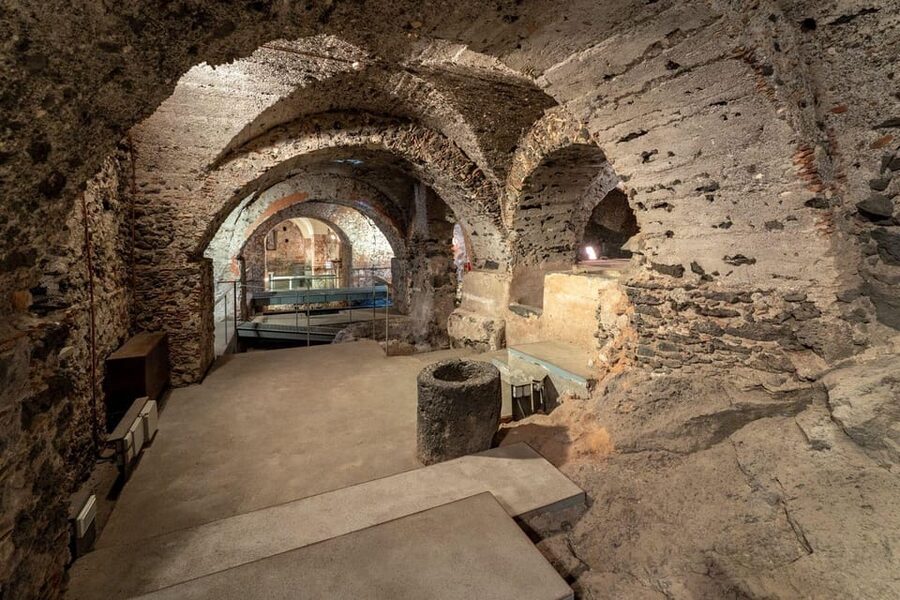
The tour doesn’t treat restoration like a footnote. You’ll hear how the project stretched for more than 30 years, and you’ll connect that work to major design names tied to different phases of the building.
You’ll also learn about:
- the architect Vaccarini (associated with the monastery’s key architecture)
- and the contemporary refurbishment linked to Giancarlo De Carlo
Why does this matter to you as a visitor? Because it changes your attention. When you understand that restoration is a long, careful process—especially for structures of this age and complexity—you stop looking only at “what looks good” and start noticing how spaces have been stabilized, opened, and interpreted.
And yes, you’ll walk through labyrinthine corridors and majestic architecture. That’s part of the point: the monastery’s layout is large enough that without a guide, you’d struggle to connect the dots.
A quick walk through the full 75-minute flow
This is the kind of tour where the pacing feels intentional. You start at the monastery grounds, then move through the key internal areas in a route that builds understanding rather than randomness.
A typical flow includes:
- cloisters (to frame the scale and layout)
- the kitchen and related functional spaces (to understand daily life)
- the novices’ garden (to show the human side of monastic training)
- the library areas and the lava cellar
- Roman remains visible under modern university structures
- the monumental staircase and the bigger architectural moments that help you get oriented
Because it’s structured, it’s also easier to ask questions. And the guiding style matters here: people repeatedly mention guides like Carmen, Giovanni, and Nicola for clarity and humor—so you’re not stuck with a dry lecture while you stand in beautiful rooms.
Price and value: about $11 for access you’d otherwise miss
At around $11 per person, this is strong value in Catania. The price isn’t just paying for someone to walk with you. It’s paying for:
- access to sections that aren’t usually open
- a route that connects the Roman layer, monastic life, and modern university use
- skip-the-ticket-line convenience
- and time saved compared to trying to piece together the site by yourself
If you only have limited time and you want one “real Catania” experience that isn’t just another church exterior photo, this tour is one of the best bets. It’s also a good stop if you like architecture but don’t want to spend hours reading plaques.
Who should book this English guided tour
This tour fits best if you:
- want to understand how a site evolves over 2,000 years
- care about architecture but also want the human story behind it
- prefer guided direction so you don’t feel lost in a huge complex
- are traveling with mixed ages and want something that’s interesting without being overly long
It’s also a great option if you’ll be in Catania during warmer months. The underground and lower areas can feel like a welcome break.
If you’re the type who reads every sign and plans a two-hour self-guided loop, you might feel the time limit a bit. But that’s why the guide exists: you’ll leave with a coherent understanding even in 75 minutes.
Should you book? My practical take
Book it if you want real access and a story that turns stones into context. At about $11 and for a 75-minute guided route, you get plenty of payoff—cloisters, kitchen spaces, Roman layers, and the lava cellar library connection—without needing hours of guesswork.
Skip it only if you already know the site well, or you’re strongly focused on outdoors-only sightseeing. This is an indoor, structure-focused tour, and the best moments are inside the complex.
If you’re considering it, do it sooner rather than later. The monastery is active in modern life, so an organized visit with a guide is usually the smoothest way to see how everything fits together.
FAQ
How long is the Benedictine Monastery of Catania English guided tour?
The tour lasts 75 minutes.
What does the tour cost?
The price is $11 per person.
Where do I meet the guide?
Meet at the monastery of San Nicolò l’Arena. Once you pass the main gate on Piazza Dante, the info point is in the courtyard on the right.
Is the tour in English?
Yes, the live tour guide is in English.
Can I get translations if English isn’t my main language?
If English is not your main language, written translations in French or Spanish can be provided.
What areas can I access during the tour?
You’ll visit key areas such as the cloisters, kitchen, novices’ garden, dining rooms, one of the monastery’s major libraries, and the cellar built on lava (used as part of the library). You can also see Roman houses under a modern mezzanine tied to student library space.
Is it possible to skip the ticket line?
Yes, skip-the-ticket-line access is included.
Is the tour wheelchair accessible?
The tour is wheelchair accessible.
Is there baggage storage at the meeting point?
Yes, baggage storage is included at the meeting point.
What if I need to change my plans?
There’s free cancellation up to 24 hours in advance for a full refund, and you can reserve now and pay later.
More Tours in Catania





More Tour Reviews in Catania

More Catania Old Town Walks


After something different? More tours and day trips around Catania and eastern Sicily








Catania Old Town Walking Tours, compared.
 ★ 4.6Heart of the City Guided Walking TourFrom $23708 reviews
 ★ 4.7City Highlights Walking TourFrom $14666 reviews
 ★ 4.6Underground Catania Tickets and Guided TourFrom $29536 reviews
 ★ 4.9Street Food Guided Walking TourFrom $56326 reviews
 ★ 4.7Guided Street Food Walking TourFrom $58300 reviews
 ★ 5.0Syracuse, Ortigia and Noto walking tour from CataniaFrom $129273 reviews
 ★ 4.8The heart of the City – Tour guidato in ItalianoFrom $23171 reviews
 ★ 4.9Catania Street Food Tour: Fish Market & City CentreFrom $55104 reviews
Browse the lists this tour appears in