
Reviewed · SYRACUSE, ORTIGIA & NOTO DAY TRIPS
Syracuse, Ortigia and Noto walking tour from Catania
Ancient Sicily in one smooth day. This guided loop takes you through Syracuse’s Greek-and-Roman ruins, then down to Ortigia’s narrow lanes and classic seaside sights, ending with Noto’s dramatic baroque glow. You’ll get a real guide rhythm here: not just drop-off, but actual context for what you’re seeing.
My favorite parts were the lineup inside Parco Archeologico della Neapolis and how the day feels organized without being rushed. The only drawback to plan for is the pace: it’s still a full day with lots of walking, and it’s not recommended if you have mobility limits or tire easily.
In This Review
- Key highlights to look for
- Syracuse, Ortigia and Noto: What This Day Trip Really Covers
- Hotel Pickup and the Pace: A Day That Flows, Then Counts Steps
- Parco Archeologico della Neapolis: From Cordari Caves to the Ear of Dionysius
- Fonte Aretusa and Syracuse Cathedral Area: Ortigia’s Classics in Bite-Size Time
- Mercato di Ortigia and Piazza Duomo: Where the Day Gets More Human
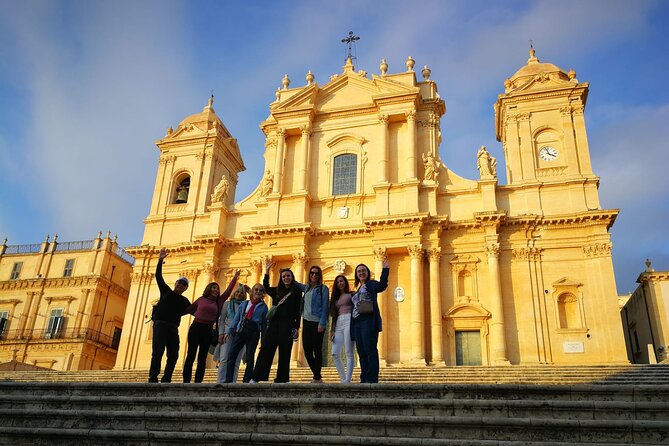
- Temple of Apollo and San Nicolò in Noto: Baroque Looks Best When the Sun Hits
- Guide Quality Makes This Tour Work (and Some Guides Are Stars)
- Price and Value: What $129.45 Covers (and Why It Can Be Worth It)
- What to Bring and How to Enjoy the Short Stops Without Getting Tired
- Should You Book This Syracuse–Ortigia–Noto Tour?
- FAQ
- What time does the tour start?
- Is hotel pickup included?
- How long is the tour?
- What’s included in the ticket cost?
- Which entrance tickets are included for stops in Syracuse and Ortigia?
- How big is the group?
- What’s the cancellation policy?
- Is this tour suitable if I have walking difficulties?
Key highlights to look for

- Max 8 travelers means you’re not packed like sardines and questions actually get answered.
- Parco Archeologico della Neapolis ticket included so you can spend time on the sites, not admin.
- Big-name ruins in one stop like the Ear of Dionysius, Latomie, and the Anfiteatro.
- Ortigia quick hits: Fonte Aretusa, Syracuse Cathedral area, and Mercato di Ortigia.
- Noto’s baroque finish with multiple photo-friendly church stops and sunlit streets.
Syracuse, Ortigia and Noto: What This Day Trip Really Covers
This is the kind of day trip that gives you a sense of eastern Sicily fast. You start from Catania at 8:45 am, roll to Syracuse for a major ruins block, then shift to Ortigia Island for streets and landmarks, and finish in Noto for baroque architecture and church stops. It’s designed to stitch three “different Sicily moods” into one about 8-hour outing.
You’re paying for more than transport. The value comes from having a professional multilingual guide and a small group (up to 8), plus key admission coverage. That combo matters because these places are dense with meaning. Without a guide, you’ll still see impressive stone. With one, you’ll know what you’re actually looking at.
One thing to keep in mind: this is a walking tour. Most people can do it, but the tour is not recommended for travelers with walking problems. If you’re on the fence, think “8 hours of getting on and off a shuttle plus site walking,” not “quick stroll and gelato.”
More of baroque Catania on foot, from Via Etnea to the Duomo.


Hotel Pickup and the Pace: A Day That Flows, Then Counts Steps
The tour includes a return shuttle bus, and pickup is at your hotel in Catania. You’ll have a mobile ticket for the day, and the tour confirms at booking. In plain terms, the logistics are built to keep you from hunting down transport or guessing meeting points.
Still, “organized” doesn’t mean “light.” You’ll spend time moving through uneven paths and historic sites, and some stops are short. That’s not a problem if you like photo breaks and quick orientation. It can feel like a lot if you’re the type who likes to linger at every corner.
What I’d do: wear shoes you can walk in for hours. Bring sunscreen and water. One practical note from real-life experience: if you struggle with getting in and out of vehicles, a small step stool can help. It’s a tiny tweak that makes the day less annoying.
Parco Archeologico della Neapolis: From Cordari Caves to the Ear of Dionysius
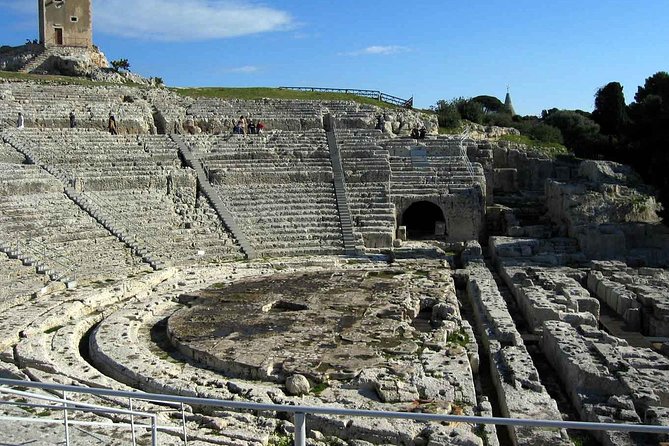
This is the anchor stop of the day, and it’s a big one: Parco Archeologico della Neapolis with about 1 hour on-site and an admission ticket included. Neapolis is where Syracuse’s ancient layers pile up, and your guide frames the ruins so they don’t feel like random rocks.
Inside this single block, you’ll cover several of the park’s headline areas:
- Grotta of Cordari (a cave stop that sets the tone for the underground side of the site)
- Ara Ierone (a key monumental area tied to ancient worship)
- Latomie (the quarry-like stone areas that feel both dramatic and oddly quiet)
- Necropoli (the necropolis context that helps explain how the city handled life and death)
- Anfiteatro (the amphitheater setting for performances and gatherings)
- Ear of Dionysius (the famous acoustics cave feature)
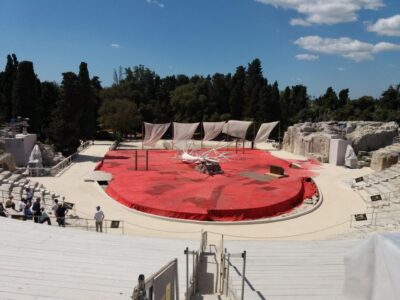
- The theater (you’ll see how the performance space connects to the wider ancient plan)
- A cave stop (you’ll get another look at the subterranean/stone-cut side of Neapolis)
Why this works as a tour stop: Neapolis is huge, and most people can’t see it all. This format trades “everything at once” for “enough to understand the site.” If you like ancient cities that evolved over time, this is the right mix.
The possible drawback is time. One hour is not long. It’s enough to hit major highlights, but it won’t satisfy the hardcore ruins devotee who wants slow wandering everywhere. If you want extra depth inside the park, the tour notes that a park tour guide is available on request. That’s a good option if you’re the type who wants every inscription and layout explained.
Fonte Aretusa and Syracuse Cathedral Area: Ortigia’s Classics in Bite-Size Time
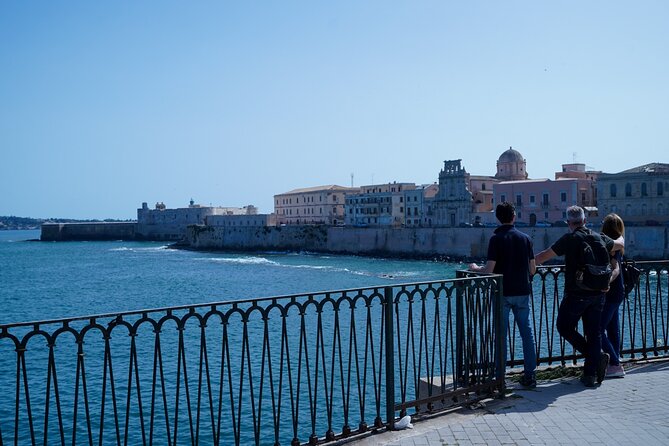
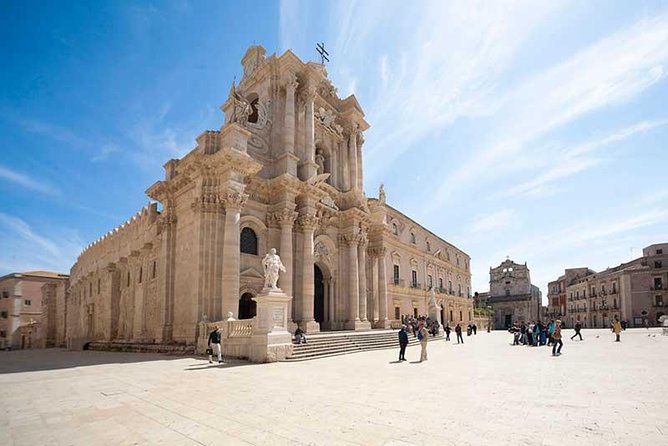
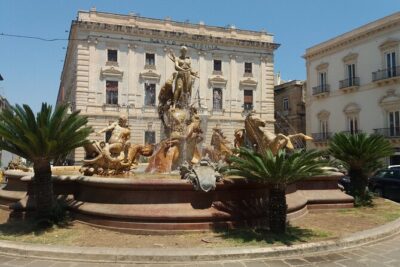
After Neapolis, the day pivots to Ortigia, the historic heart of Syracuse. You’ll hit Fonte Aretusa for about 10 minutes. It’s a short stop, but it’s one of those places that works even when you’re on a schedule. It gives you an immediate sense of the city’s coastal identity.
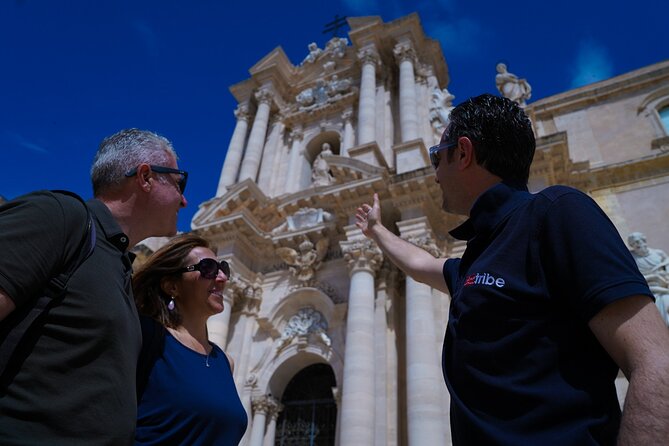
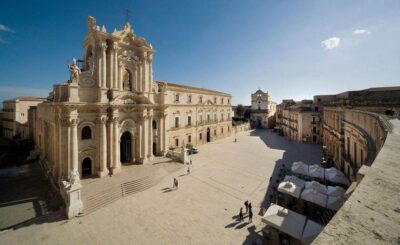
Then comes Syracuse Cathedral with a visit around 15 minutes, and the related entrance ticket is included. Cathedral stops can be hit-or-miss on tours, but here it makes sense because Ortigia isn’t just ruins. It’s lived-in history. Seeing the cathedral area helps you understand why people built, rebuilt, and kept using the same core spaces.
If you’re chasing atmosphere, be ready to let your pace slow down for a moment. Ortigia’s streets are narrow and made for wandering. Even when time is tight, it’s the kind of place where you’ll naturally stop for angles, doors, and sea views.
Mercato di Ortigia and Piazza Duomo: Where the Day Gets More Human
Next is Mercato di Ortigia, around 15 minutes, with admission-free wandering. Markets aren’t only for shopping. They’re a fast way to understand how locals move through the day. Your guide will help you navigate what you’re seeing and where to focus.
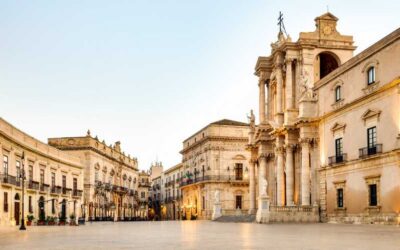
Then you get Piazza Duomo for about 10 minutes. This is one of those “quick orientation” stops that matters more than it looks. A piazza like this pulls Ortigia’s story together: religious power, civic life, and the daily flow of people.
In fact, one guide style that seems to really land well is when the guide doesn’t just point out buildings but also helps you read the market like a local. Some guides—like Nando—are known for showing the way around Ortigia’s market and adding tasting-style suggestions. That kind of detail turns a short market window into something you remember.
South to Syracuse, the island of Ortigia and golden Noto.




Temple of Apollo and San Nicolò in Noto: Baroque Looks Best When the Sun Hits
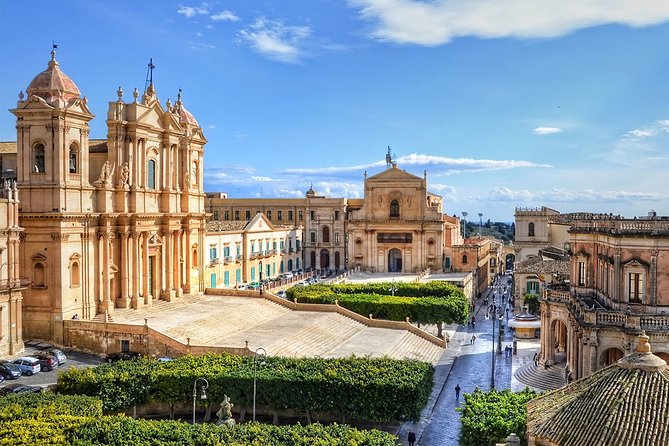
After Ortigia, you shift to Noto, the baroque showpiece of this whole route. This is the part where the day rewards you visually, especially in daylight.
You’ll see the Temple of Apollo (Tempio di Apollo) for about 15 minutes. It’s a stop designed for viewing and photos, but the point isn’t just the structure. The guide framing helps you connect it to why Noto became such a statement city.
Next is Cattedrale di San Nicolò with about 15 minutes. Again, these stops are short by design, but they’re perfect for noticing details: how the façade reads from different angles, how the church space fits the streetscape, and how baroque architecture changes with light.
At least in the tour structure you can expect multiple church/architecture moments in Noto (the schedule lists repeated San Nicolò time blocks). In practice, that means you’ll have more than one chance to catch good viewpoints, not just one quick “check the box and go.”
Guide Quality Makes This Tour Work (and Some Guides Are Stars)
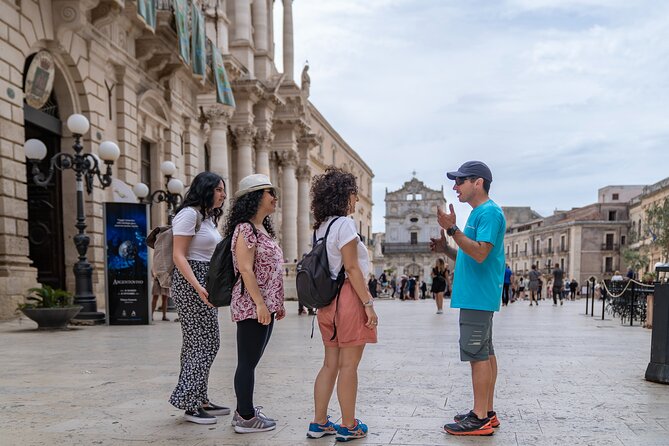
You’re not just buying access to sites. You’re buying interpretation. This tour is small—up to 8 travelers—and that’s where you can feel the difference. In groups that size, you can ask questions and actually get answers without the tour turning into noise control.
The names you may see associated with this experience include Salvatore, Enzo, Nando, and Lori. Across those guides, the consistent theme is strong communication and an easy flow through the day. Some guides lean more into architecture and context; others do a better job keeping the streets fun and readable.
One practical upside of the better guides: they help you know where to look when you’re moving fast. A quick tip can be the difference between taking 30 random photos and taking 30 photos that show the real geometry of the place.
Price and Value: What $129.45 Covers (and Why It Can Be Worth It)
At $129.45 per person for a roughly 8-hour day, this is best understood as a “transport + guide + key admissions” bundle. You get:
- Hotel pickup and return shuttle
- Multilingual guide
- Entrance ticket to Parco Archeologico della Neapolis
- A baby seat for infants in the INFANT price
That admission piece matters. Neapolis isn’t free, and if you’re trying to arrange everything on your own, you’d still be paying for entry plus spending extra time on transport. The tour also includes several free stops (Fonte Aretusa, Mercato di Ortigia, Piazza Duomo, Tempio di Apollo, and San Nicolò), which keeps the cost focused on the “must-pay” portion.
Could you do it on your own? Sure. But you’d spend more time on logistics and you’d lose the guide’s ability to point out what’s important—especially at Neapolis, where the layout can feel like a lot at once.
My view: this price feels right if you want the highlights without the mental tax of planning and coordinating.
What to Bring and How to Enjoy the Short Stops Without Getting Tired
Because several stops are around 10 to 15 minutes, your strategy matters. You’ll want to be ready to “see, frame, move.” Here’s what helps:
- Shoes for uneven terrain (Neapolis can be rougher underfoot than you expect)
- Sunscreen + sunglasses, especially in summer
- A water bottle, since you’ll be out most of the day
- A phone with your mobile ticket ready, not buried in your bag
Also, don’t try to treat every stop as a museum visit. Think of them as “chapters.” If you do that, the schedule feels satisfying instead of cramped.
One more small comfort tip: if you know you’ll get restless sitting in vans, bring something to keep you patient—music, a short podcast, or just enjoy watching the route change.
Should You Book This Syracuse–Ortigia–Noto Tour?
Book it if you want a well-paced day that hits three headline Sicilian cities without turning your trip into a transport puzzle. It’s especially a good fit if you like ancient sites paired with real street life and you want the baroque side of Sicily to end the day on a high note.
Skip it or consider another option if you need a slower, less walking-heavy experience. The tour is not recommended for travelers with walking problems, and the short stop windows mean there’s limited flexibility to linger.
If you’re the type who likes your history explained in plain language and you want to maximize one day on the east coast, this is a strong choice. The best version of the day happens with a guide who keeps things clear and moving—whether it’s a Salvatore, Enzo, Nando, or Lori style of guiding.
FAQ
What time does the tour start?
The tour starts at 8:45 am.
Is hotel pickup included?
Yes. Pickup and drop-off are offered at your hotel in Catania, and a return shuttle bus is included.
How long is the tour?
The duration is about 8 hours.
What’s included in the ticket cost?
Admission to the Archeological Park of Neapolis in Syracuse is included, along with a multilingual guide and the shuttle bus (return).
Which entrance tickets are included for stops in Syracuse and Ortigia?
The Syracuse Cathedral stop includes an admission ticket, and the Neapolis archaeological park ticket is included. Several other stops are listed as free.
How big is the group?
This tour has a maximum of 8 travelers.
What’s the cancellation policy?
Free cancellation is available up to 24 hours before the experience start time for a full refund.
Is this tour suitable if I have walking difficulties?
It is not recommended for travelers with walking problems, since it involves a lot of walking.
More Baroque Noto, Modica and Ragusa

More Syracuse and Ortigia Days

More Catania Old Town Walks



After something different? More tours and day trips around Catania and eastern Sicily





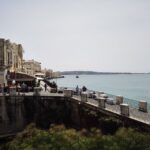



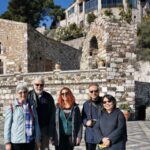
Syracuse, Ortigia & Noto Day Trips, compared.
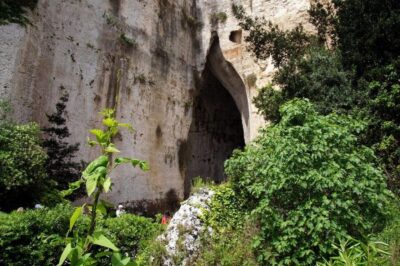 ★ 4.6Syracuse, Ortigia, and Noto Tour with BrunchFrom $112404 reviews
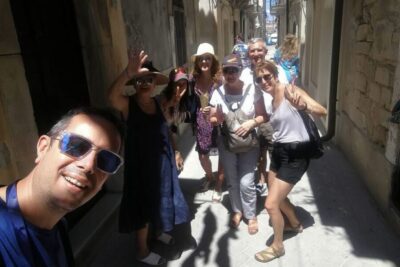 ★ 4.7From Catania: Neapolis of Syracuse, Ortygia, and Noto TourFrom $130234 reviews
 ★ 4.4From Catania: Syracuse and Noto Culture and History TourFrom $80232 reviews
 ★ 3.9From Catania: Syracuse, Ortygia, and Noto Tour140 reviews
 ★ 4.7From Catania: Syracuse, Ortigia and Noto Full-Day TourFrom $113133 reviews
 ★ 4.5Siracusa,Ortigia and Noto TourFrom $12082 reviews
 ★ 4.5Siracusa – Ortigia & Noto TourFrom $26471 reviews
 ★ 5.0Private Transfer from Catania Airport to Siracusa or TaorminaFrom $9449 reviews
Browse the lists this tour appears in