
Reviewed · ETNA VOLCANO TOURS FROM CATANIA
Piano Provenzana: Guided Mt. Etna Snowshoeing Trek
Snow and volcano in one trail.
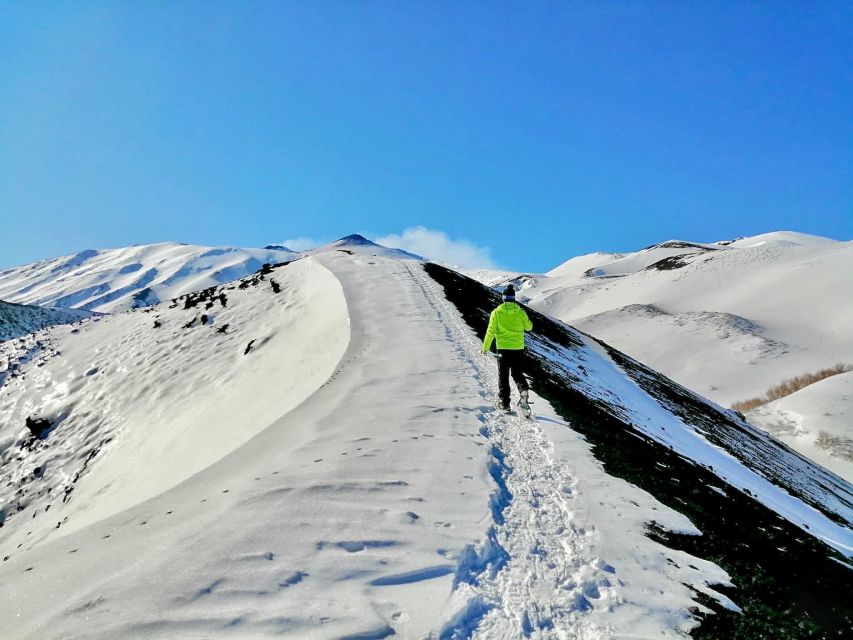
This Etna snowshoeing trek mixes snowy forest walking with dark volcanic ground, including lava-flow scars and crater areas tied to the 2002 eruption. I especially like the volcanological guide service, because you don’t just look at the rocks, you learn what you’re standing on. The other big win is the scenery: sea views toward Giardini Naxos and Taormina, then a wider panorama higher up as snow caps the active volcanic zone.
One thing to weigh: you climb to about 2,200 meters and you’re on uneven volcanic terrain, so it’s not a good fit if you have heart, respiratory, epilepsy, recent surgery, or mobility limits, or if you’re very afraid of heights.
In This Review
- Key Things I’d Prioritize on This Hike
- Mt. Etna in Winter: Why This Snowshoe Feels Different
- Finding Etna Nord: Meeting Point and Arrival Notes
- The First 15 Minutes: Safety Briefing That Actually Helps
- Piano Provenzana: Snowy Forest on a Real Volcano
- Cross Lava Flows and Fractures: What You’re Looking For
- Reaching the Craters: The 2,200-Meter Panorama Moment
- How Long and How Hard: 5 km, 300 Meters Up
- Gear and Costs: What You Pay for Besides the €44 Ticket
- Who This Etna Snowshoe Trek Fits Best (and Who Should Skip It)
- Should You Book Piano Provenzana Snowshoeing?
- FAQ
- How long is the Piano Provenzana snowshoeing trek?
- Where do I meet the guide?
- Is the $44 price for the snowshoes and trekking poles?
- How much do extra gear rentals cost on site?
- How far do we hike and how much elevation do we gain?
- What altitude does the hike start and reach?
- What languages will the guide speak?
- What happens if the weather is bad?
- How far ahead should I arrive because of parking?
Key Things I’d Prioritize on This Hike
- You get a volcanological guide focused on what the terrain means, not just where you’re walking
- Snow meets lava: black volcanic rock and fresh snow in the same frame is genuinely rare
- Views are built into the route, including the sea near Giardini Naxos and Taormina when visibility is good
- You walk through eruption damage, including areas destroyed by lava flows and crater zones near the former tourist area of Piano Provenzana
- It’s short but “up”: around 5 km round trip with about 300 meters of positive elevation gain in roughly 3 hours
Mt. Etna in Winter: Why This Snowshoe Feels Different
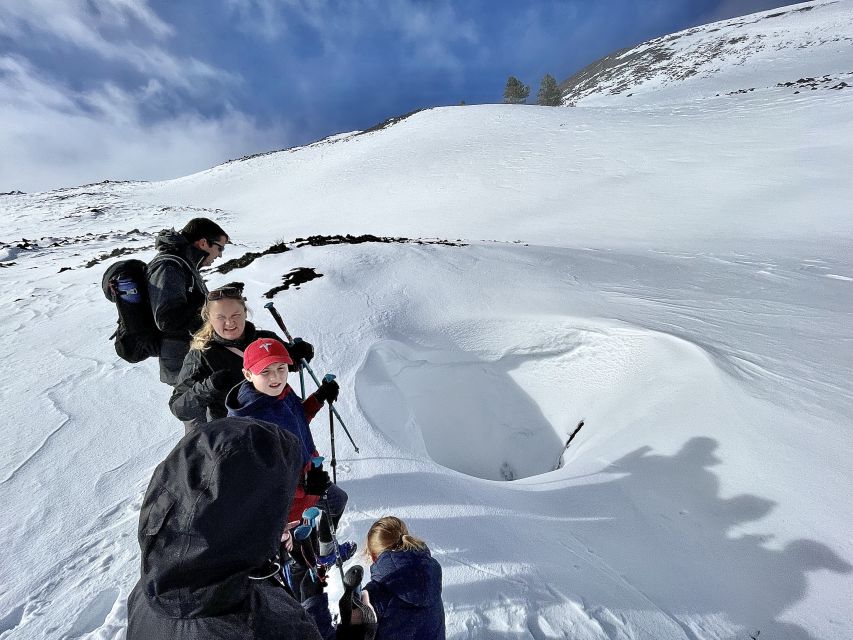
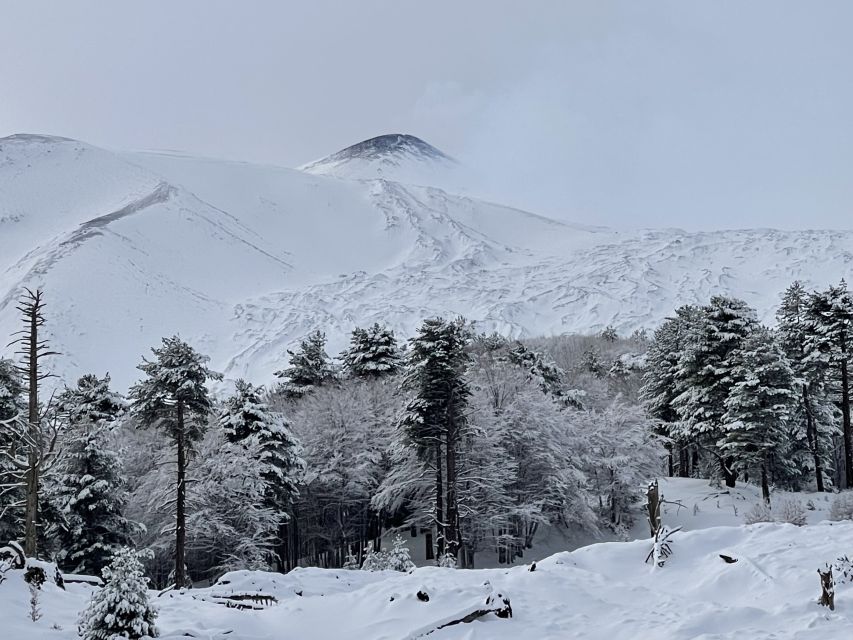
Mt. Etna is already dramatic when it’s bare. In winter, it turns weird in the best way: snow-softened ground sits next to jagged volcanic fractures, lava textures, and crater edges. You end up moving through a working volcano setting where the ground you’re stepping on is still part of the story.
The contrast is what hits first. Dark volcanic rocks create strong lines against snow, and your eyes keep jumping between smooth-covered trail and raw volcanic damage. I also like that you’re not limited to far-away sightseeing; the hike takes you into the crater area where you can spot the wider volcanic features more directly.
Another plus: the experience is built around a guided explanation. You learn how lava flows and crater structures shape what you see, which turns photos into understanding.
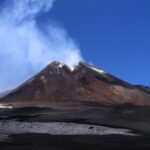
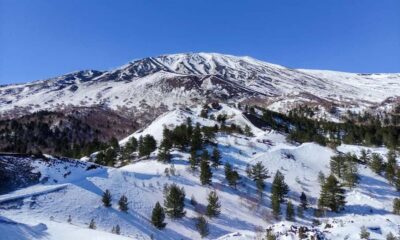
Back up the volcano, with Etna smoking above Catania.
Finding Etna Nord: Meeting Point and Arrival Notes
You meet your guide in the parking lot near the active chairlift at Etna Nord in winter, outside Chiosco Bar Mareneve. In practice, this matters because Etna Nord gets busy with skiers, and parking can be tricky.
Plan for extra time. The start time may shift earlier (with a bring-forward window noted around 8:45 to 9:00) so you can still find a spot for your car. If you’re driving, treat this as a “leave early” kind of outing.
Once you arrive, the outing starts with the basics you need for winter hiking: what route to follow, how to manage traction on snow, and how the guide wants you to behave around volcanic terrain.
The First 15 Minutes: Safety Briefing That Actually Helps
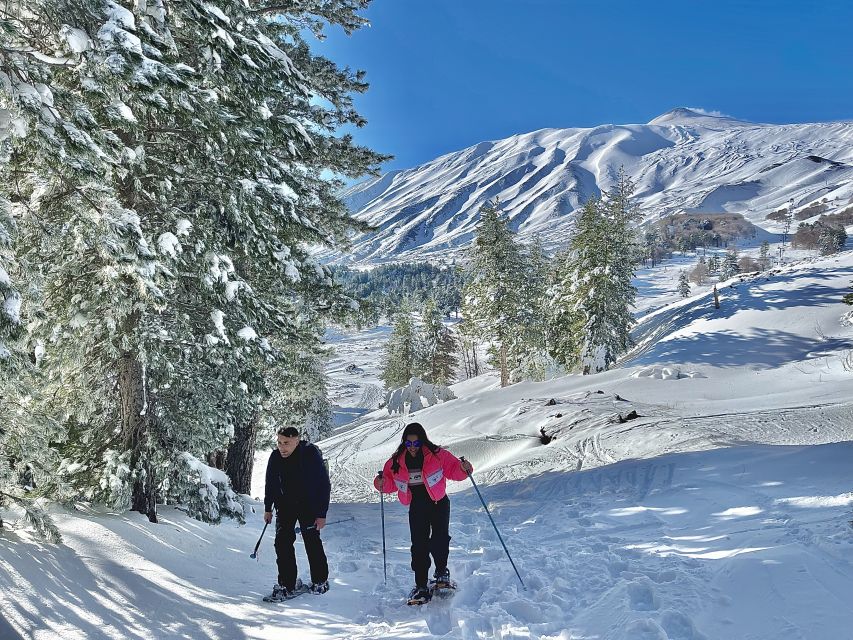
Right after meeting at Chiosco Bar Mareneve di Ferraro, you spend about 15 minutes on a safety briefing, then you move toward Piano Provenzana at roughly 1,800 meters in altitude. This early check-in isn’t just paperwork. It’s where you get the rules for snowshoe use and how to handle the uneven, volcanic ground beneath the snow.
Then you get a photo stop for about 10 minutes and a short guided segment around 20 minutes. I like this pacing because it avoids the common problem of starting a trek too fast while everyone’s still adjusting to gear and footing.
If you’re the type who needs a minute to get oriented, this structure works well. You ease into the walk, take a few early photos, then settle into a rhythm.
Piano Provenzana: Snowy Forest on a Real Volcano
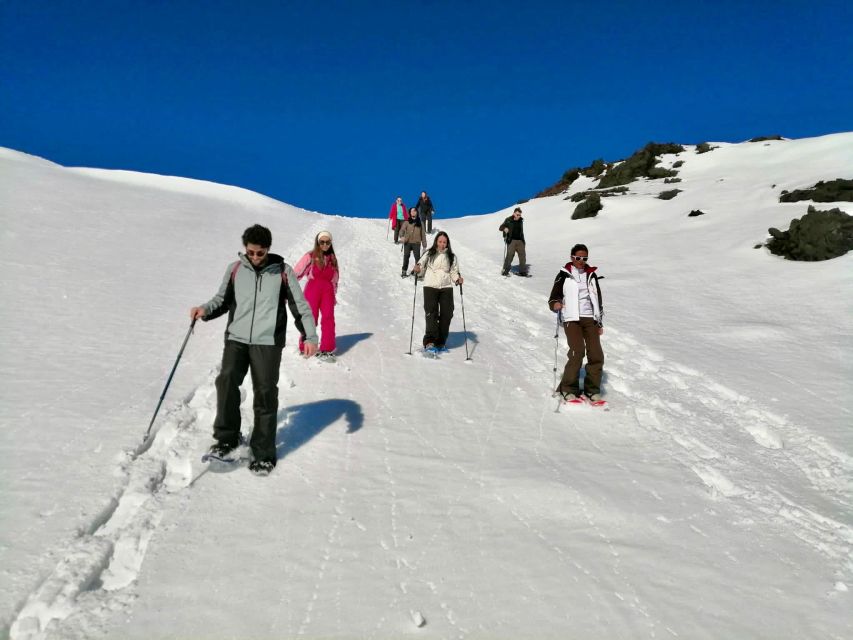
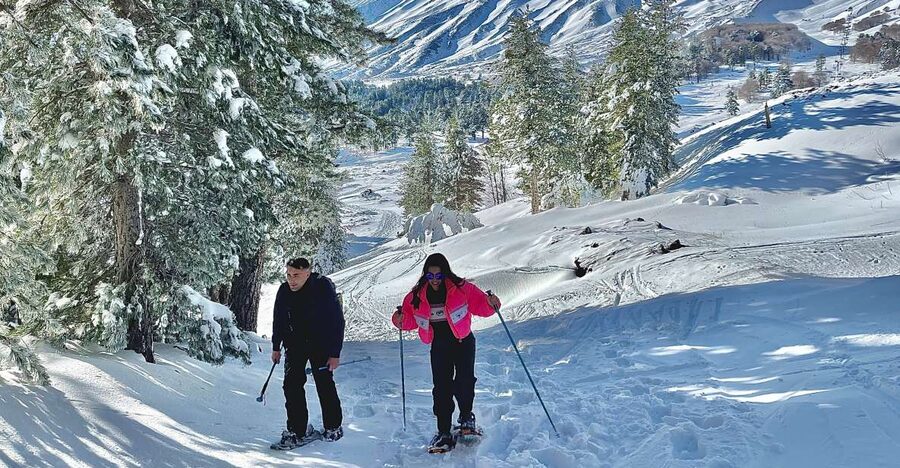
Piano Provenzana is the setting where the snowshoe hike begins its most visually interesting shift. You start in the snowy forest on Etna, and the ground gradually changes from regular winter trail feel to more volcanic textures.
This matters because the route isn’t only “pretty.” As you progress, you move through areas shaped by past eruptions, including structures destroyed by lava flows. The result is that you’re walking across a visible timeline: the snow cover gives you contrast, while the volcanic surfaces show scars underneath.
At one point you’ll have a longer block for photo stop, visit, guided tour, and sightseeing for about 30 minutes. That chunk is useful if you like to pause often. It also gives you time to absorb the terrain details instead of racing through them.
Cross Lava Flows and Fractures: What You’re Looking For
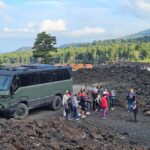
The route continues across lava flows from the north side eruptions and toward large crater areas. As you walk, you’ll see the kind of volcanic ground that’s hard to understand unless someone explains it.
This is where the guide makes the hike feel “worth it” beyond exercise. You’re not just collecting snapshots. You’re learning how features like lava flow paths, fractures, and crater structures relate to what happened in that eruption history.
Two things I’d pay attention to as you go:
1) Edges and breaks in the volcanic ground—they often hint at how the eruption shaped the terrain
2) Any lateral crater features—they help you connect the broader volcano picture to the smaller details you’re standing near
The snow doesn’t hide these details; it sharpens them. That snow-and-dark-rock contrast is the signature of this specific trek.
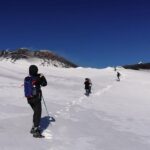
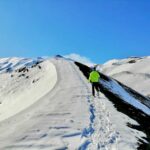
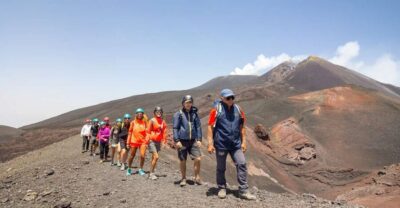
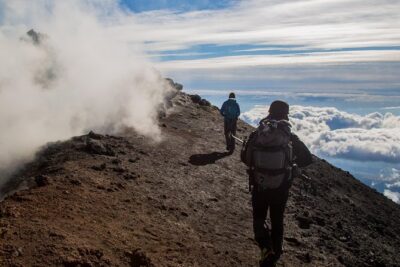
Higher up Etna on foot, towards the summit craters.
Reaching the Craters: The 2,200-Meter Panorama Moment

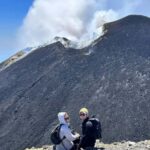
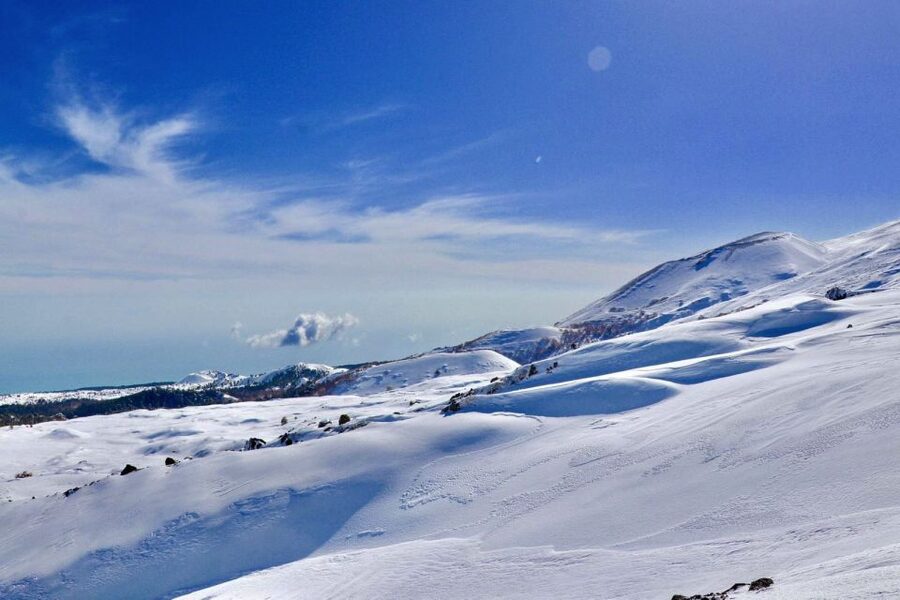
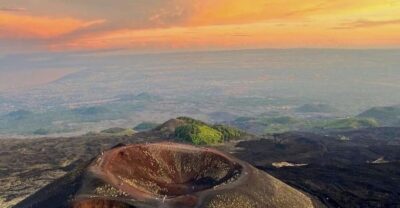
The highlight arrives as you climb to the top area of the large side craters at about 2,200 meters. From there, you get the payoff view: the panorama of Mt. Etna with snow cover, stretching up toward the higher volcanic zone.
You also have a front-row seat to the idea that this volcano is still active. The description notes emissions of volcanic gases from the summit area, which adds a real-world edge to the scenery. It’s not a museum feel; it’s a living environment.
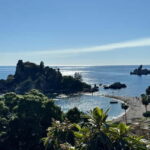
And the view extends outward. With good visibility, you can admire the sea toward Giardini Naxos and Taormina, and you can even see as far as Calabria if conditions are right. That outward sightline is a big reason this hike doesn’t feel like walking in a bowl.
The timing also helps: the trek is about 3 hours total, and the crater panorama is built into the schedule rather than treated as a rushed stop.
How Long and How Hard: 5 km, 300 Meters Up
This is a relatively compact hike, which is great if you want a volcanic outing without committing your whole day. The route is around 5 km round trip, with about 300 meters of total positive height difference.
That said, don’t confuse short with easy. You’re on snowy terrain and volcanic ground, so your legs work a bit differently than on a smooth path. If you’re sensitive to uneven footing or have balance concerns, the traction and terrain matter more than the distance.
It’s also not the kind of walk you’d want to wing without winter gear. The hike expects cold-weather clothing, gloves, and proper footwear, plus gear that lets you move confidently on snow.
Gear and Costs: What You Pay for Besides the €44 Ticket

The price you see (about $44 per person) includes a volcanological guide service. The snow and trekking equipment are not included in that base price, and a few extra items can change your total.
Here’s what you should plan for on the ground:
- Snowshoes + trekking poles rental: €12 per person (from authorized rentals on site)
- Windbreaker: can be rented on the spot for €5
- Trekking shoes rental: €5 per pair
- Snack, bottled water, and a jacket: not included
Two small gear notes people often forget:
- Gloves and hats aren’t included, so bring your own
- Avoid footwear that won’t grip. High heels, sandals, and flip-flops (or open-toed shoes) are explicitly not allowed
As for clothing, bring warm layers that breathe. You’ll want a jacket, rain gear, gloves, a hat, sunglasses, sunscreen, and long pants suitable for cold outdoor hiking. The route is winter, the air can be bright, and you’re exposed enough that sun protection still matters.
If you’re calculating value, think like this: the ticket buys the guide and interpretation, while the rentals cover the winter hardware you need to move safely.
Who This Etna Snowshoe Trek Fits Best (and Who Should Skip It)
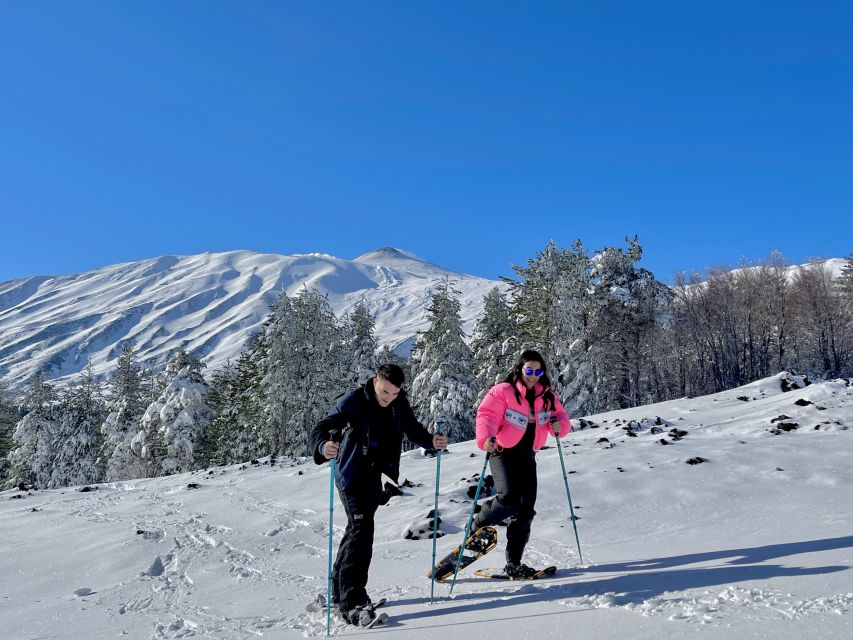
This hike is a strong choice if you want a short, guided winter experience with real volcanic context. It’s especially good for people who like their travel educational but still active, and who enjoy scenery with a story behind the rocks.
It’s not suitable for people with back problems, mobility impairments, heart problems, or respiratory issues. It’s also not a good fit if you have epilepsy, high blood pressure, recent surgeries, or low fitness levels. If heights make you nervous, this one may be stressful because you’ll be on a route that exposes you to wide views.
You’ll enjoy it most if you can handle cold weather, steady climbing for about 3 hours, and walking on snowy volcanic terrain.
Should You Book Piano Provenzana Snowshoeing?
If your idea of a great winter day is snow + volcano + an actual guide explaining what’s on the ground, then yes, I’d book it. The biggest reason is focus: you get a volcanology-led walk that turns the crater and lava-flow terrain into something you can understand, not just something you pass by.
I’d also book it if you care about views but still want an active format. The sea direction (Giardini Naxos and Taormina) and the outward look toward Calabria on clear days are real enough to influence the whole outing.
Skip it if you fall into the listed health or mobility concerns, or if you know you’re not comfortable on uneven, high-exposure winter terrain.
FAQ
How long is the Piano Provenzana snowshoeing trek?
The total duration is about 3 hours.
Where do I meet the guide?
Meet in the parking lot near the active chairlift at Etna Nord in winter, outside Chiosco Bar Mareneve.
Is the $44 price for the snowshoes and trekking poles?
No. Snowshoes and trekking poles are not included. Rental costs are €12 per person from authorized rentals on site.
How much do extra gear rentals cost on site?
Snowshoes and trekking poles cost €12 per person. A windbreaker rental is €5. Trekking shoes rental is €5 per pair.
How far do we hike and how much elevation do we gain?
The round trip is about 5 km, with a total positive height difference of 300 meters.
What altitude does the hike start and reach?
The hike starts around 1,800 meters at Piano Provenzana and reaches about 2,200 meters at the top of the large side craters.
What languages will the guide speak?
The guide service is available in Italian, French, and English.
What happens if the weather is bad?
If conditions are adverse, the operator will advise you as early as possible about cancellation or postponement of the excursion.
How far ahead should I arrive because of parking?
The meeting time may be brought forward to around 8:45 to 9:00 to help you find car space, since parking can be difficult during peak arrival.
More Tour Reviews in Catania
More Etna Summit Hikes and Treks
More Etna Volcano Tours from Catania
After something different? More tours and day trips around Catania and eastern Sicily


Etna Volcano Tours from Catania, compared.
 ★ 4.8Mount Etna Morning or Sunset Day Trip with TastingFrom $704,028 reviews
 ★ 4.7Guided Volcano Summit Hiking Tour with Cable CarFrom $1243,784 reviews
 ★ 4.8Sunset Jeep Tour of Mount Etna and Lava Flow CavesFrom $712,113 reviews
 ★ 4.8Etna and Alcantara Gorges Full-Day Tour with LunchFrom $1051,766 reviews
 ★ 4.7Etna Volcano: South Side Guided Summit HikeFrom $671,545 reviews
 ★ 4.8Guided Trek 3,000 Meters to the SummitFrom $1131,407 reviews
 ★ 4.9Mount Etna Trekking Trip off the Tourist PathFrom $781,351 reviews
 ★ 4.8Etna Sunset Tour with Pickup and Drop-offFrom $711,348 reviews
Browse the lists this tour appears in