
Reviewed · ETNA VOLCANO TOURS FROM CATANIA
Etna Volcano: South Side Guided Summit Hike
Etna is the kind of place that rewires your sense of scale. This guided South Side summit hike gets you up to the Etna crater rim with a 2,500 m cable car ride, then turns into a real walking adventure across volcanic ground that feels lunar. I love that you get real mountain-style support—boots, helmet, and walking sticks—and I love how the guides build the geology into the experience, not just a lecture on the bus. The main drawback to plan for is altitude plus active-volcano limits: if craters are closed for safety on your day, your route and maximum height can change.
If you want a volcano day that feels physical, photogenic, and genuinely guided, this is a strong choice. You’ll start at Rifugio Sapienza on Etna South, go up by cable car, hike through old lava terrain, and come back down the same way.
In This Review
- Key Things You’ll Notice on This Etna South Hike
- Why Etna’s South Side Summit Hike Feels Like a Real Adventure
- Meeting at Rifugio Sapienza (Etna South): Start Smart
- The Cable Car Climb to 2,500 Meters: Fast Altitude, Quick Payoff
- Stop by Stop: How the Hike Actually Plays Out
- Viewpoint Hike: Settling Your Pace
- Cratere Centrale dell’Etna: The Rim Walk and the Big Views
- Valle del Bove: The Descent With a Different Kind of Awe
- Return by Cable Car: You’ll Feel It in Your Legs
- What Makes the Guide Matter (And Why It Changes the Whole Day)
- Difficulty Level: When It’s Medium-High, Plan Like It’s Hard
- Gear and What to Pack: Don’t Show Up Light
- Price and Value: What You’re Actually Buying
- Weather, Volcanic Activity, and Route Changes You Can Expect
- Who Should Book This Etna South Hike?
- Should You Book This Etna South Guided Summit Hike?
- FAQ
- How long is the Etna South guided summit hike?
- Where do I meet the guide?
- What’s included in the price?
- Are cable car tickets included?
- What fitness level do I need?
- What should I bring?
- Who shouldn’t take this tour?
Key Things You’ll Notice on This Etna South Hike
- A guided summit-crater walk on the rim with views toward the Northeast and Southeast craters
- 2,500 meters by cable car for big altitude fast, then a steady hike on uneven, sandy ground
- Volcanic features up close: lava channels, gas emissions, volcanic bombs, and ground colors from mineral sublimation (especially sulfur)
- Safety-first itinerary changes if crater access is restricted due to activity
- Gear handled for you: boots, helmet, and walking sticks (plus an accident-insurance layer)
- Strong guide personalities you can feel in the pacing and the way questions are handled (Antonio, Giovanni, Nello, Max, Marco, Massimo, and others)
Why Etna’s South Side Summit Hike Feels Like a Real Adventure
This hike isn’t just standing at viewpoints. The South side route is built for motion—up by cable car, then on foot across volcanic ground that is uneven, sometimes sandy, and definitely not “easy trail.” It’s the kind of hike where your legs learn quickly, and your camera gets a full workout.
What I like most is how the day connects three things you usually keep separate: height, heat, and geology. From the summit craters, you get that wide, dizzying sense of scale over the volcano system. And along the way, the guide’s explanations turn the rocks and soil into a story you can actually picture.
The other big plus: the guides don’t force the impossible. With an active volcano, you might not reach the very top rim if conditions tighten. When that happens, you still keep hiking and still get dramatic crater views—just adapted to what’s safe.
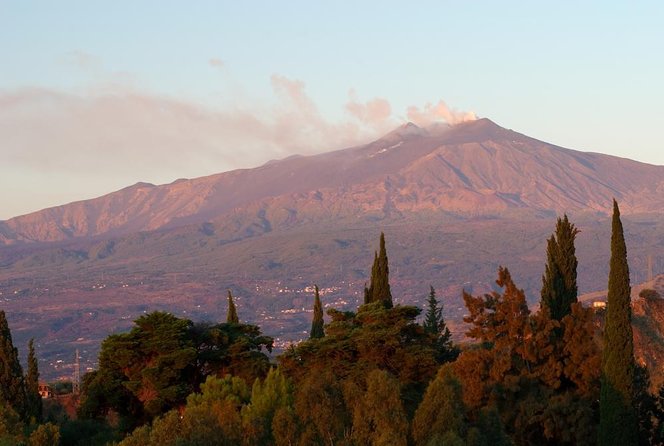
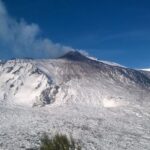
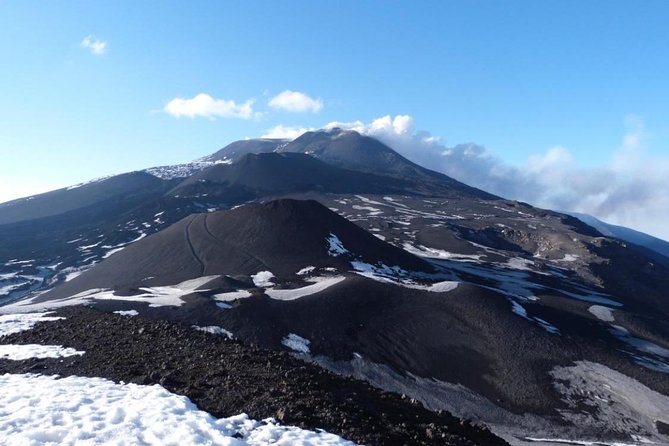
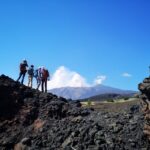
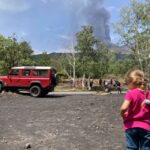
Back up the volcano, with Etna smoking above Catania.
Meeting at Rifugio Sapienza (Etna South): Start Smart
You meet at Ashàra’s info point near Rifugio Sapienza on Etna South, close to the Terrazza dell’Etna restaurant. It’s a straightforward starting point, but Etna is famous for fast-moving check-in days, so I’d plan to arrive a bit early.
The day is timed around cable car access and the hike sections after. That matters because the climb is not just “walk when you want.” You’ll be outfitted, get your helmet, and then move.
One practical consideration: the group can be large on some days. You may spend time getting boots and helmets on before you head toward the gondola line. It usually smooths out once you start climbing, but it’s good to know this isn’t a silent, private hike.
The Cable Car Climb to 2,500 Meters: Fast Altitude, Quick Payoff
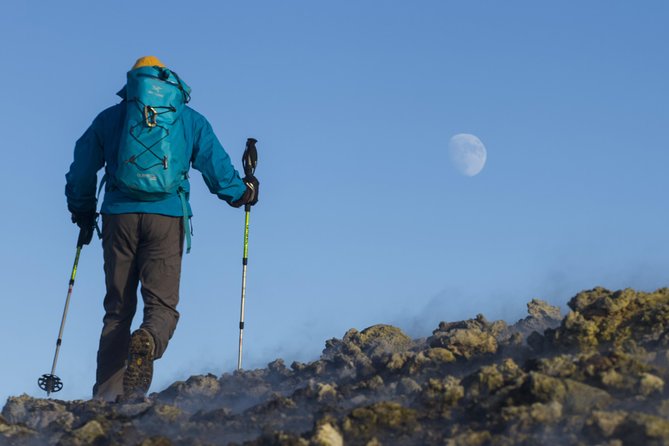
You ride the cable car for about 25 minutes to reach roughly 2,500 meters. That ride is part of the value. It buys you height without turning the whole day into a slog up a steep road.
Still, don’t underestimate what that quick gain feels like. At altitude, you can get breathy faster than you expect, especially when you go from seated to sandy terrain. Layering matters here, because the summit zone can feel cold even in Sicilian daylight.
Also note the money detail: cable car tickets are not included in the listed price. They’re 52 EUR per person, and payment is cash only on the spot. If you forget cash, you can lose time right at the moment your schedule is tight.
Stop by Stop: How the Hike Actually Plays Out
Instead of a single long slog, the route breaks into clear sections. Each one gives you a different kind of volcanic experience.
Viewpoint Hike: Settling Your Pace
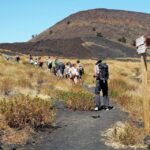
After the cable car, there’s a viewpoint area and then a roughly 40-minute hike through volcanic terrain. This is where you get your breathing and footing sorted. The ground can be sandy or uneven, so walking sticks help a lot if you’re not used to this kind of texture.
This first walking segment is also your mental warm-up. You’ll start seeing the textures you came for—rock forms, the way the ground crumbles, and the stark color shifts that show you Etna is working even when you can’t hear it.
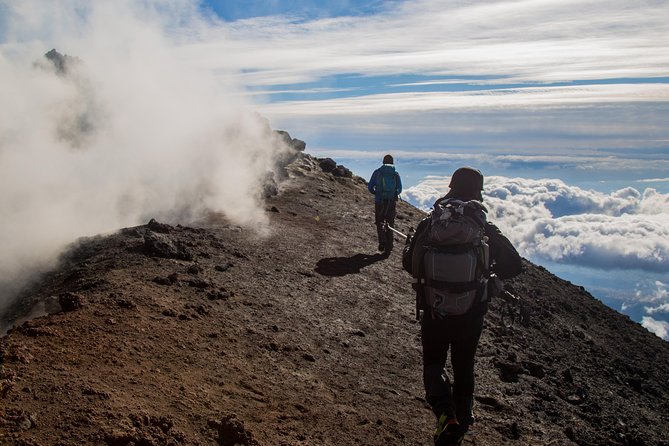
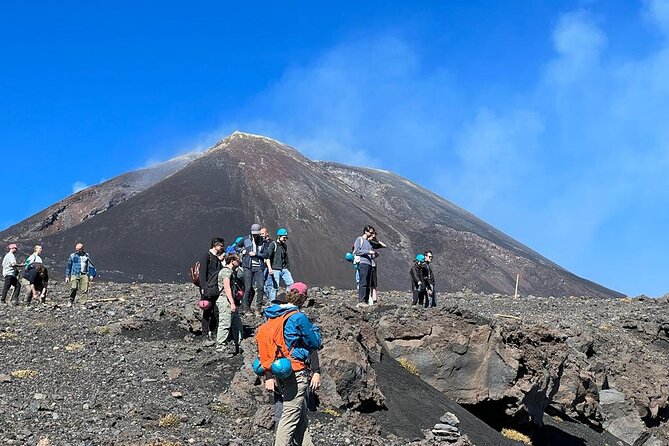
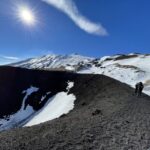
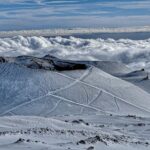
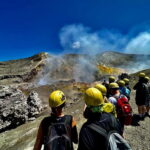
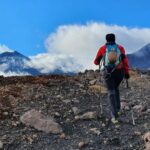
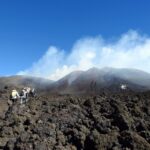
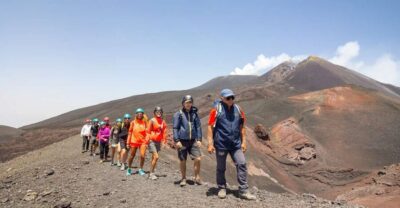
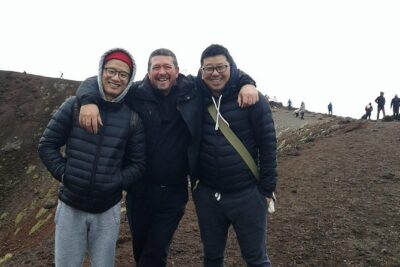
Higher up Etna on foot, towards the summit craters.
Cratere Centrale dell’Etna: The Rim Walk and the Big Views
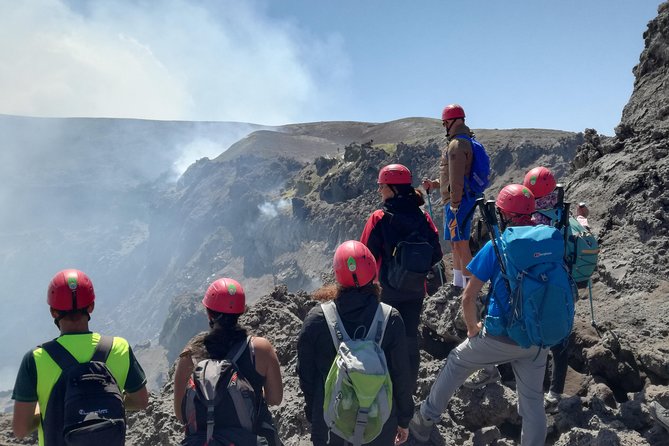
The core experience is time near Cratere Centrale dell’Etna, with scenic stops on the way and about 1.5 hours in this phase. Then you spend time at Mount Etna for a break plus a guided tour and photo stop (about 1 hour).
This is where the details matter. You’re walking on the rim of summit craters with views toward:
- the Northeast Crater
- the Southeast Crater, linked to the most recent and impressive eruptions
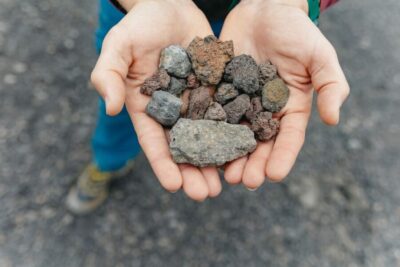
On active days, you might see gas emissions and other volcanic signs. The ground can sparkle with color due to mineral sublimation, with sulfur called out as especially noticeable. And you may encounter volcanic bombs—another reminder that this is not a museum volcano.
If you’re hoping for the highest possible access point: understand it’s conditional. If crater access is restricted on the day, the guide can shift the hike to the maximum allowed altitude.
Valle del Bove: The Descent With a Different Kind of Awe
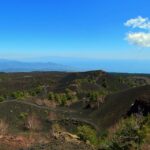
After the crater zone, you move toward Valle del Bove for about 1 hour of hiking. This part shifts the mood. Instead of the immediate edge-of-a-crater feeling, you get a wider sense of the volcano’s structures and how channels and basins shape what you see from above.
It’s also where the day starts turning from “look up” to “watch your footing.” The terrain remains uneven, so it’s a good moment to keep using your sticks and to pace yourself rather than speed up because you feel acclimated.
Return by Cable Car: You’ll Feel It in Your Legs
At the end, you hop back on the cable car again for about 25 minutes and return to the meeting area near Ashàra. Going down can be deceptively tiring—your body still works to control footing and balance on rocky, sandy ground.
If you want the cleanest photos, timing matters. The guides usually handle the schedule and stops, but if light is crucial for you, bring a lens or settings that work fast. This is a stop-and-go volcano day.
What Makes the Guide Matter (And Why It Changes the Whole Day)
A summit hike is partly about views. It’s also about what you do once you’re there. The best part of this tour setup is the guide’s role as a translator: they turn active geology into something you can point at.
The most praised guide traits show up again and again in real-world experiences:
- Safety-minded pacing, especially when groups include mixed ability levels
- Clear answers to questions, not a rushed script
- A real passion for volcanology, with local knowledge
Names that stand out across different days include Antonio, Giovanni, Nello, Massimo, Marco, Max, and Mary. You’ll likely get that same mix of enthusiasm and professionalism, even if the specific guide changes by date.
One very practical detail: if weather or activity makes crater access impossible, guides can still deliver a strong day by redirecting to other safe viewpoints and features. That flexibility is a big part of the value of a guided volcano hike on an active mountain.
Difficulty Level: When It’s Medium-High, Plan Like It’s Hard
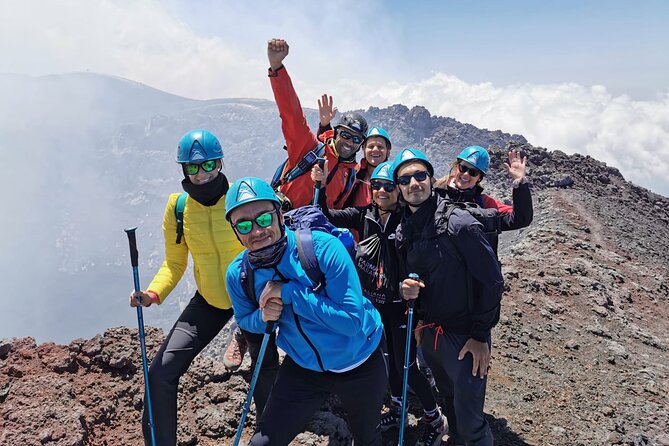
This excursion is described as moderately trained hikers with comfort on sandy or uneven terrain, and it’s listed as a medium-high difficulty hike. That means you don’t need to be an ultra-athlete, but you should go in expecting real effort.
A few things that matter for your day:
- You’ll be at altitude and hiking in a sandy feel at times
- Headwinds can make the ascent feel tougher
- Cold at altitude is common enough that some guides arrange extra layers like jackets on certain days
If you have trekking poles, use them. If you don’t, you’ll be glad sticks are included. And if you get sensitive to dust or wind, bring a face covering you’re comfortable using.
Also: the tour isn’t suited for people with vertigo, respiratory issues, high blood pressure, or back problems, and it’s not for wheelchair users. It’s also not for pregnant women and children under 9.
Gear and What to Pack: Don’t Show Up Light
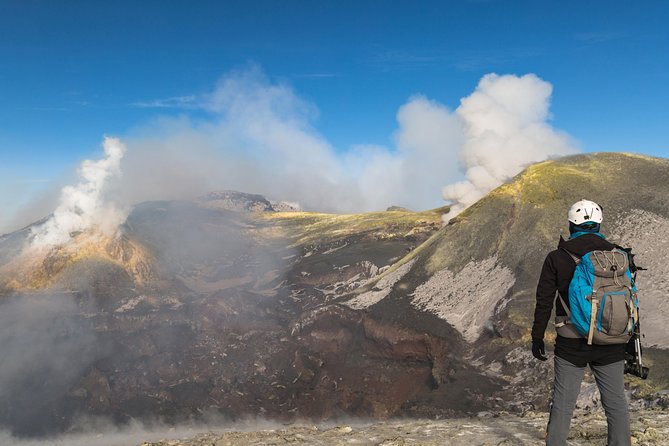
The tour includes several key items: hiking boots, a rock helmet, and walking sticks, plus accident insurance. That’s great value because footwear and safety gear are usually the hassle point on mountain tours.
But you still need to bring your own “survival layer” items:
- sunglasses
- sun hat
- sunscreen
- jacket
- t-shirt and long pants
- socks
- daypack (about 10–20L)
- water
- snacks
- food / a packed lunch
- extra layer like a second t-shirt if you tend to get sweaty
There are also clear restrictions:
- no pets
- no shorts
- no sleeveless shirts
- no baby strollers
- no luggage or large bags
I strongly recommend packing a daypack even if you feel you don’t need one. On Etna, you want your water and layers on you, not traded around.
Price and Value: What You’re Actually Buying
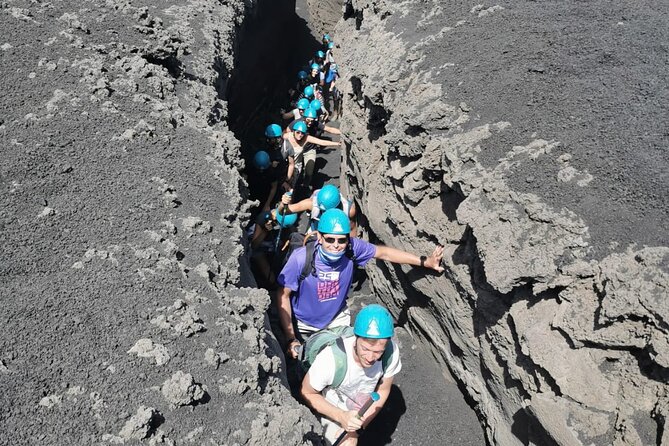
The listed price is $67.97 per person, for a 6-hour guided hike. On its own, that sounds simple—until you see what else is required.
The big add-on is the cable car tickets: 52 EUR per person, paid on the spot in cash. Since you ride up and down, that ticket cost is part of your real budget.
So is it worth it? For me, the value comes from what’s bundled:
- guided mountain and volcano expertise
- safety gear (helmet and sticks) plus boots
- accident insurance coverage
- a structured route that adapts when summit access changes due to volcanic activity
The hike also saves you from the “figure it out yourself” chaos that can happen on active-volcano days. Guides know how to keep moving and how to choose what’s safe and interesting when conditions tighten.
If you compare this to an un-guided hike, the guided version usually wins because the geology context and the safety logic reduce wasted time and wrong turns. You’re paying for effort plus interpretation.
Weather, Volcanic Activity, and Route Changes You Can Expect
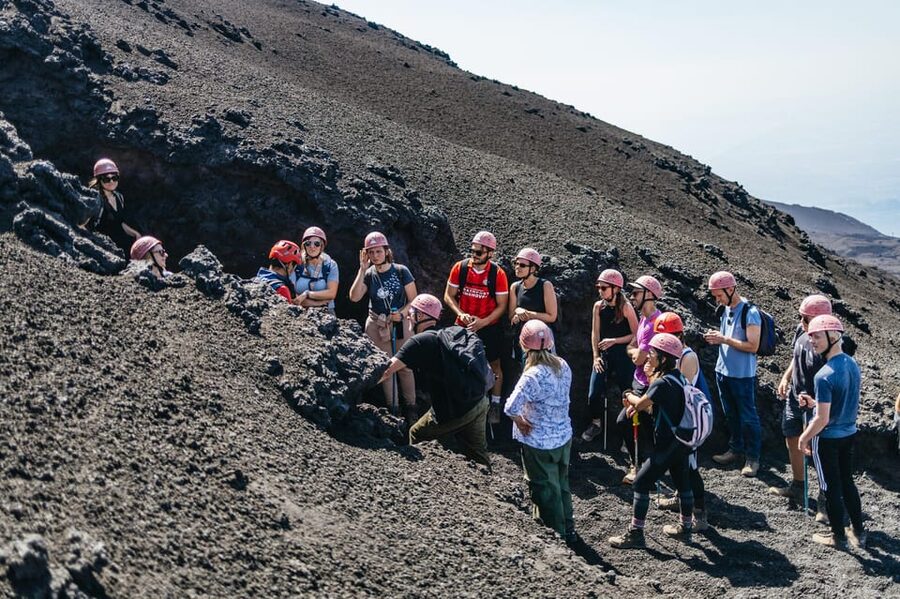
This is an active volcano. That means your plan is a draft, not a promise. The tour notes that the itinerary can vary based on weather, environmental factors, and possible volcanic risks.
If summit craters are forbidden due to strong activity, the hike continues to the maximum altitude allowed. In other words: you’re still hiking, but the exact top access can shift.
This matters for how you decide your day in Sicily. Don’t schedule this right next to something time-critical that can’t flex if Etna changes the rules.
Who Should Book This Etna South Hike?
Book it if you want:
- an active, walking-based volcano experience
- a guided crater-rim day with geology explained in plain terms
- gear included so you can travel lighter
- a plan that can adapt when crater access is limited
Skip it if you:
- have mobility limits or need wheelchair access
- have vertigo or significant respiratory constraints
- have heart issues, high blood pressure, or back problems
- can’t manage uneven, sandy terrain at altitude
- are traveling with kids under 9, or if you’re pregnant
If your group has mixed walking comfort, this tour can still work because guides pace the hike and handle safety as conditions change. Just be honest with yourself about how you handle altitude effort.
Should You Book This Etna South Guided Summit Hike?
Yes, if you’re excited by real volcanic terrain and you’re willing to dress for cold and work for the views. The combination of crater-rim access, a cable car push to altitude, and safety gear included makes this a strong value, especially when the guide can redirect the hike on active days.
I’d book it with two expectations set:
1) you might not reach the absolute highest point every time
2) you’ll feel the hike in your legs, even on a “moderate” day
If you want a volcano day that feels structured but not stiff, this is the kind of outing that turns Etna from a photo to a memory you can describe.
FAQ
How long is the Etna South guided summit hike?
The duration is listed as 6 hours. Starting times vary, so you’ll need to check availability for the exact departure slot.
Where do I meet the guide?
You meet at Ashàra Volcanological Guides in Sicily, at the info point located at Rifugio Sapienza (Etna South) near the Terrazza dell’Etna restaurant. The tour ends back at the same meeting point.
What’s included in the price?
Included: the hiking tour, a volcano or alpine multilingual guide, hiking boots, accident insurance, a rock helmet, and walking sticks.
Are cable car tickets included?
No. Cable car tickets are not included. They cost 52 EUR per person, paid on the spot in cash only.
What fitness level do I need?
It’s aimed at moderately trained hikers who are comfortable hiking on sandy or uneven terrain. The difficulty is medium-high.
What should I bring?
Bring water, snacks, sunscreen, sunglasses, a sun hat, a jacket, long pants, socks, and a daypack (about 10–20L). Food is also important because meals aren’t included.
Who shouldn’t take this tour?
It’s not suitable for children under 9, pregnant women, people with back problems, vertigo, respiratory issues, high blood pressure, or heart problems, and it’s not for wheelchair users.
More Tour Reviews in Mount Etna
More Etna Summit Hikes and Treks
More Etna Volcano Tours from Catania
After something different? More tours and day trips around Catania and eastern Sicily
Etna Volcano Tours from Catania, compared.
 ★ 4.8Mount Etna Morning or Sunset Day Trip with TastingFrom $704,028 reviews
 ★ 4.7Guided Volcano Summit Hiking Tour with Cable CarFrom $1243,784 reviews
 ★ 4.8Sunset Jeep Tour of Mount Etna and Lava Flow CavesFrom $712,113 reviews
 ★ 4.8Etna and Alcantara Gorges Full-Day Tour with LunchFrom $1051,766 reviews
 ★ 4.8Guided Trek 3,000 Meters to the SummitFrom $1131,407 reviews
 ★ 4.9Mount Etna Trekking Trip off the Tourist PathFrom $781,351 reviews
 ★ 4.8Etna Sunset Tour with Pickup and Drop-offFrom $711,348 reviews
 ★ 5.0Mt. Etna and Taormina village full day tour from CataniaFrom $1181,155 reviews
Browse the lists this tour appears in