
Reviewed · ETNA VOLCANO TOURS FROM CATANIA
Mount Etna: Summit Trekking Tour
Mount Etna feels like a different planet. This summit trekking tour takes you up to the Etna summit craters at about 3,340 meters, mixing 4×4 access with a real hiking day on the volcano’s wilder north side. Guides like Luca Cosma (and, in other runs, Arturo) focus hard on safety and on making the geology click, even when weather turns spicy.
What I like most is the way the day balances effort with payoff: you get a chance to walk among volcanic terrain that’s far from the usual sightseeing routes, then settle into the summit-area views over Sicily, the Aeolian Islands, and the Italian coast. The second big win for me is the small group size (10 people max) and the fact that the team actually watches the group—pace, footing, and how everyone is doing, especially when wind and cold show up.
One consideration: the route and time on the summit area can change based on volcanic activity and meteo conditions. If you’re the type who wants everything fixed to the minute, this is still doable, but you’ll need to stay flexible.
In This Review
- Key takeaways before you go
- Mount Etna summit craters at altitude: what you’re signing up for
- Where you start: Sole-neve Souvenirs on Etna’s north side
- Getting up the mountain: the 4×4 phase and why it matters
- The trek phase: hiking up to the summit area with volcanic terrain underfoot
- Cratere Centrale dell’Etna: guided walking near the real heart of the volcano
- Picnic time and the descent setup: sand gullies and Pizzi Deneri views
- Off-road return to Piano Provenzana: finishing the day without rushing
- What’s included (and what you still need to bring)
- Price and real value: the $62.63 tour cost vs the Unimog transport
- Small group hiking with multi-language guides: how the day stays smooth
- Who this tour suits best (and who should not book)
- Should you book the Etna Summit Trekking Tour?
- FAQ
- How long is the Mount Etna summit trekking tour?
- Where do we meet and where does the tour end?
- Is food included?
- What gear is included in the price?
- Do I need to pay extra for 4×4 transport?
- What languages are the guides?
- Can the trek change due to conditions?
Key takeaways before you go
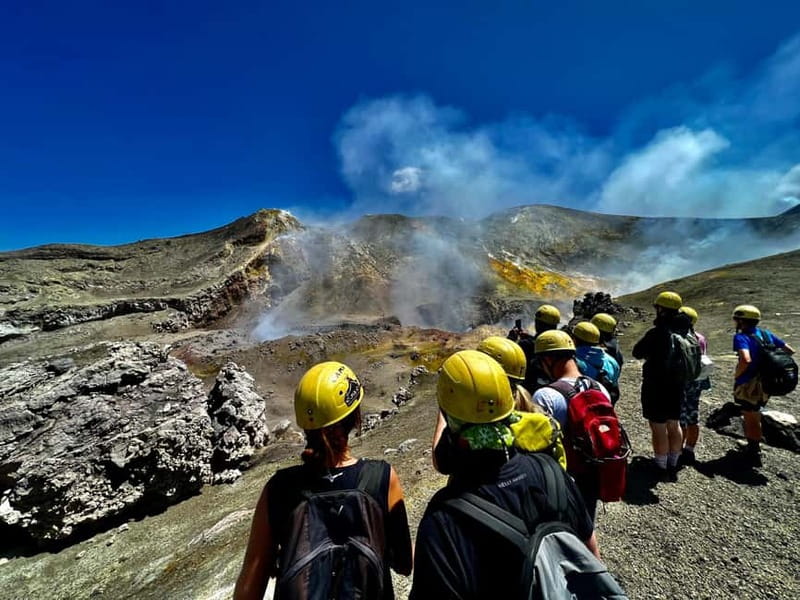
- 3,340 m summit craters: the highest and largest active volcano in Europe, with views you can only really earn by walking.
- Wild north-side terrain: lava fields and areas affected by recent eruptions, plus off-road driving to get you away from the crowds.
- Guides who manage risk: safety briefing early, helmets on, and constant attention as conditions shift.
- Big scenery at altitude: Sicily, Aeolian Islands, and parts of the Calabrian coast can be visible from the summit area.
- Gear is provided: hiking boots, a jacket, and a helmet—so you can travel lighter.
Mount Etna summit craters at altitude: what you’re signing up for
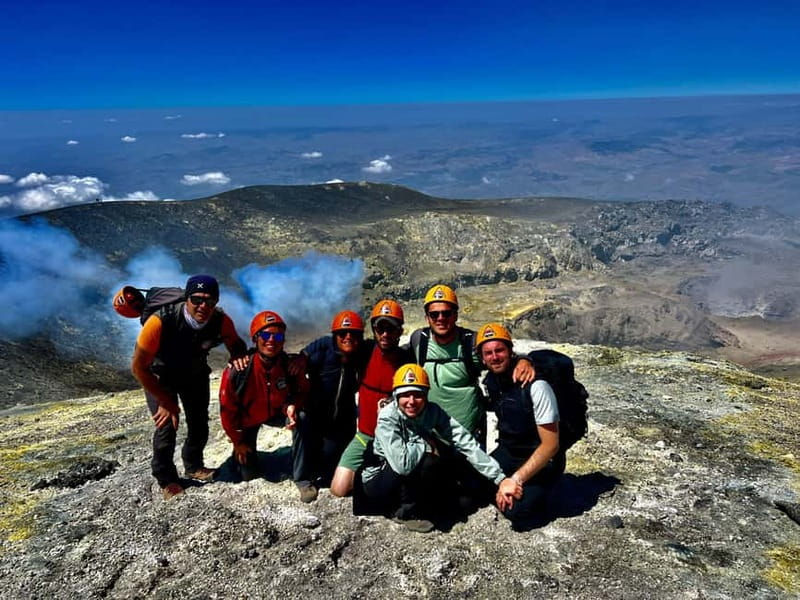
This day is built around one simple idea: reach the summit zone of Europe’s most active volcano and experience it at close range, without just stopping for photos. The trekking portion starts around 2,900 meters, and the goal is the summit craters near 3,340 meters. That altitude is a big part of the story—air is thinner, wind can cut fast, and your body works harder on sand, rock, and volcanic grit.
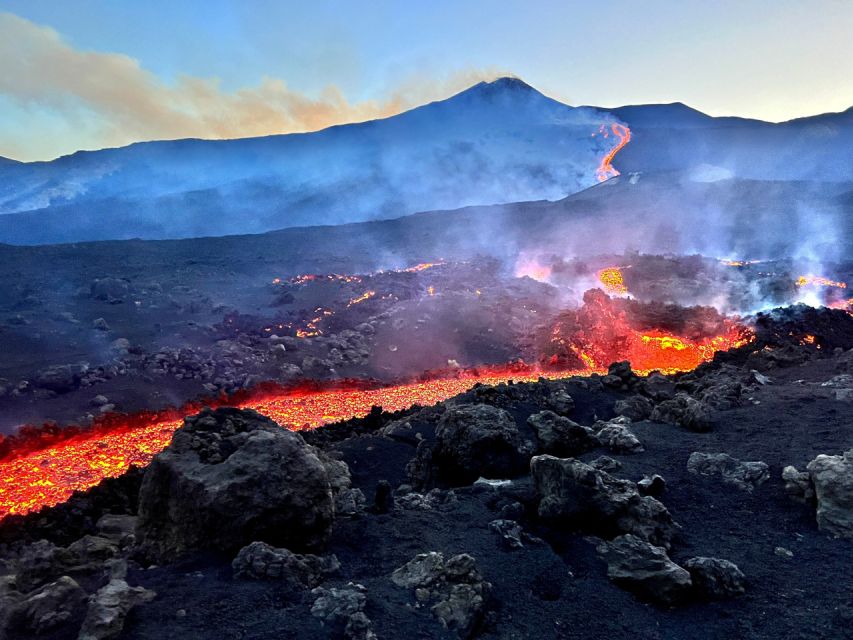
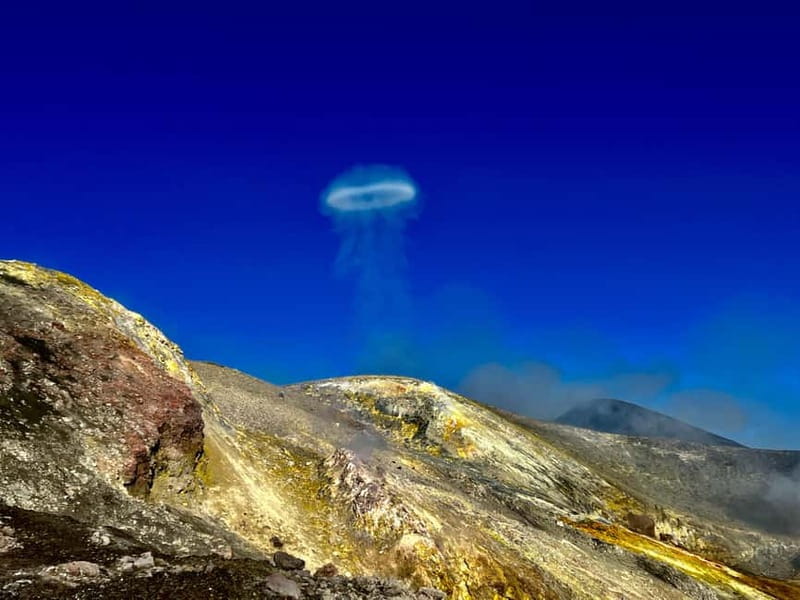
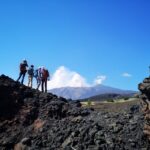
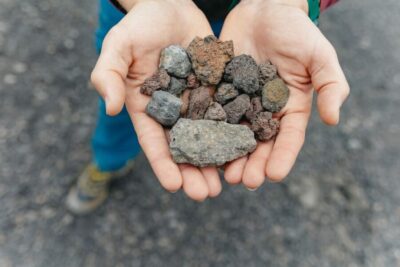
The other part of the story is how Etna looks when you’re not stuck in a single viewpoint. Expect volcanic formations, wide-open terrain, and the kind of scenery that’s shaped by eruptions—sometimes recently. The tour description is explicit that you may pass through areas affected by recent volcanic activity, and that you’ll cross lava fields as you make your way toward the summit area.
Also, the tour is not pretending it’s a guaranteed straight line to the peak. The summit area is governed by rules, and your time there depends on volcanic activity and weather. That’s not a small detail. It changes the whole experience from day to day, which is why the guide’s decision-making matters as much as the itinerary on paper.
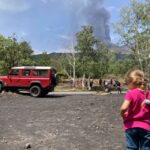
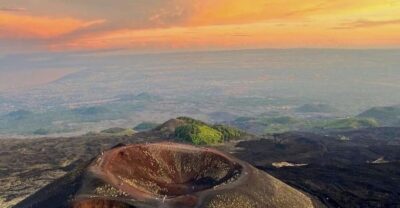
Back up the volcano, with Etna smoking above Catania.
Where you start: Sole-neve Souvenirs on Etna’s north side
You meet at Sole-neve Souvenir, right in Piano Provenzana on the north side of Etna. The nice practical part here is that the meeting point is straightforward: it’s at a souvenir shop location with parking. So you’re not hunting around for a random bus stop or a vague street corner.
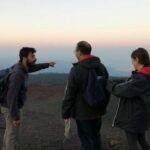
From there, the day moves quickly into the Etna setting. The early portion includes a sightseeing element plus a safety briefing that lasts about 20 minutes. This is the moment to get your bearings and learn how the guide wants to manage the group on steep or uneven ground—because on volcanic terrain, your footing is everything.
If you’re traveling on your own without a hotel pickup, that easy “meet-and-park” setup matters. You control your arrival timing, and you can focus on showing up ready.
Getting up the mountain: the 4×4 phase and why it matters
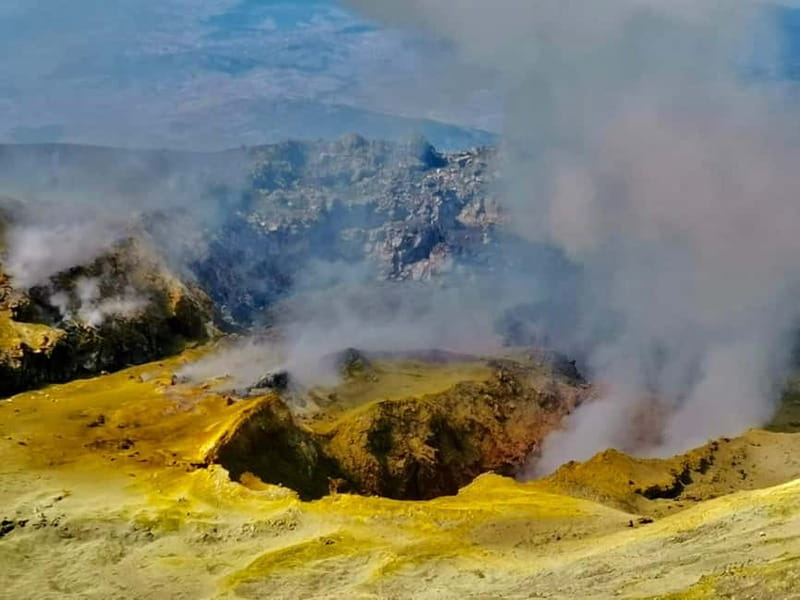
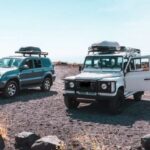
This tour uses Special Off-Road 4×4 to access the interior areas of the north side before trekking begins. The off-road portion is short but important: you’re driven up to around 2,900 meters, where the hiking starts. That means you’re spending your energy on the part that’s actually memorable—the walk through volcanic terrain and the summit-area visit—rather than grinding up from the lowest road access.
There’s also another practical side to the 4×4 portion: it can take you through places standard vehicles can’t. The route can include off-road travel through areas destroyed or affected by recent eruptions. That’s part of why this feels more like a mountain day than a bus-and-viewpoint outing.
Timing-wise, the off-road segments are about 20 minutes each in the itinerary flow. You’ll have an initial ride up, then later another off-road return after the walking portion.
One tip: you’ll likely feel wind and cold earlier than you expect at altitude. Even before you start climbing, dress like it’s going to be chilly.
The trek phase: hiking up to the summit area with volcanic terrain underfoot
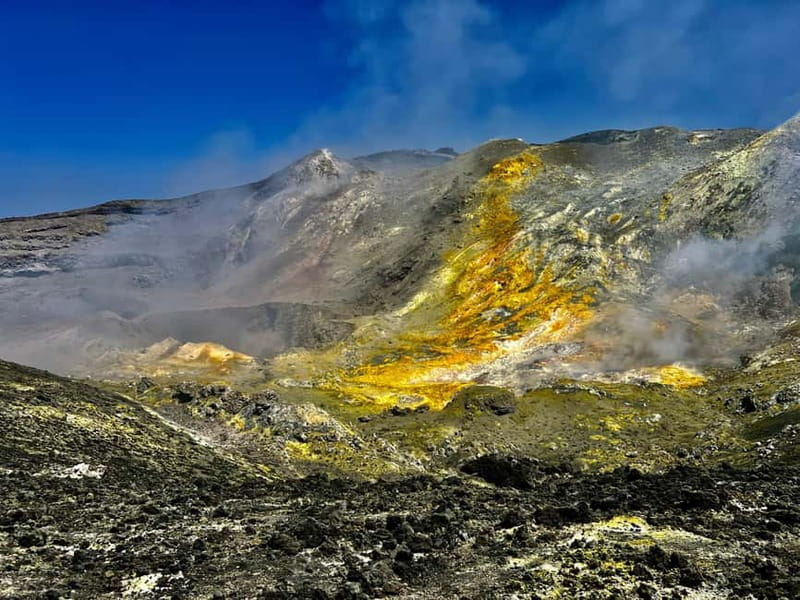
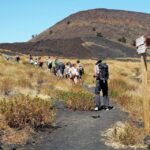
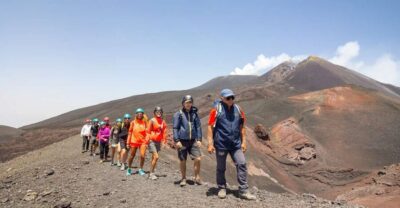
Once you’re at roughly 2,900 meters, the hiking begins. The trek to the summit zone is listed at about 100 minutes, but on Etna, your pace depends on wind, surface conditions, and what the guide has to do for safety. Sand gullies, volcanic rock, and mixed surfaces can slow you down even when you’re fit.
This is also where the tour earns its value: you’re not just walking for cardio. You’re walking through a landscape shaped by eruptions, and your guide uses that setting to explain what you’re seeing. The overall vibe from guides like Luca and Arturo (based on their approach described during these experiences) is that they keep things lively and clear, not stiff lectures.
What you’ll probably notice fast:
- You’ll feel how elevation changes your effort.
- You’ll want steady steps rather than speed.
- Volcanic ground can shift underfoot, so your “go slow” instincts will save you.
If you’re worried about difficulty, here’s the blunt truth from the tour’s own suitability notes: it is not suitable for people with low fitness, and it’s also not suitable for respiratory issues, heart problems, or pregnant women. Those limits exist for a reason—altitude plus rough terrain isn’t a casual stroll.
Cratere Centrale dell’Etna: guided walking near the real heart of the volcano
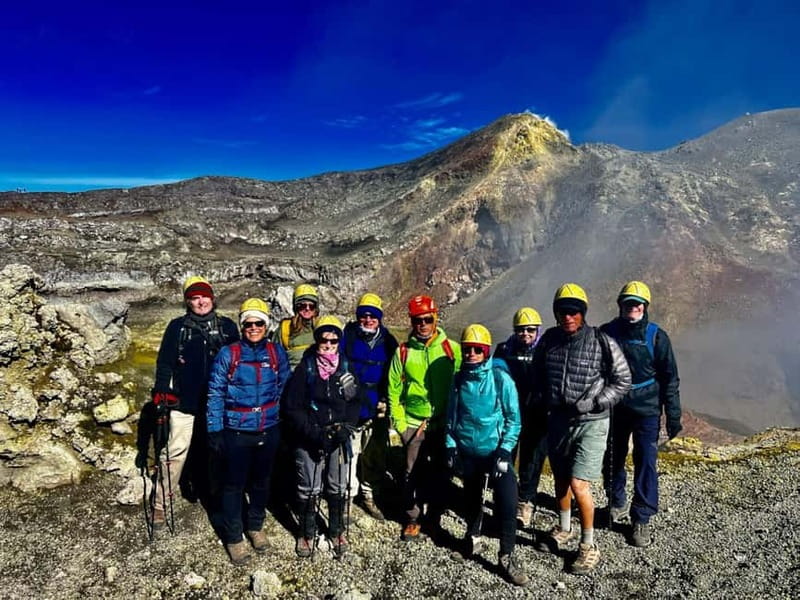
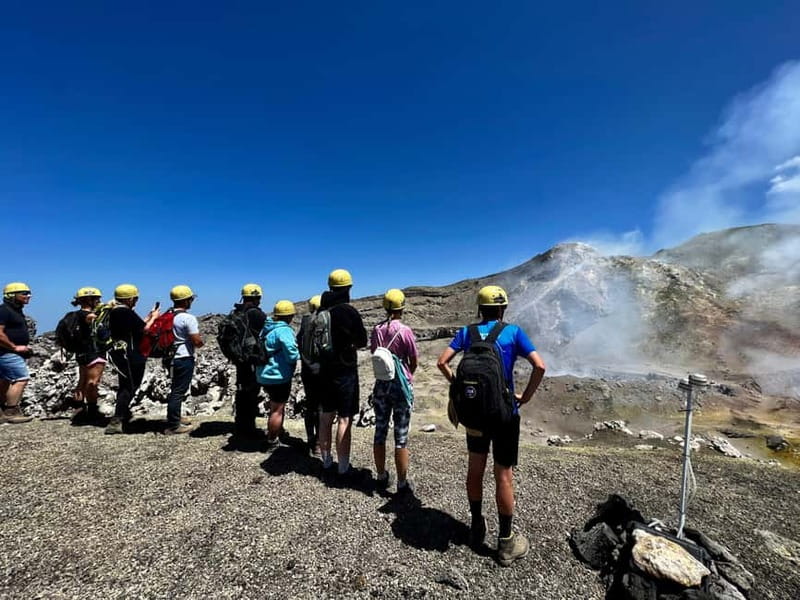
The centerpiece stop is the Cratere Centrale dell’Etna, where you get a guided visit with time for walking and scenic viewing along the way. It’s about 1 hour in the schedule. This is the time you’re there for: close to summit craters, in a zone where Etna’s activity is the background soundtrack.
At this stage, you should expect your guide to handle two jobs at once:
1) keeping you pointed in the right direction when the ground and vents can look similar, and
2) keeping your group safe when conditions shift.
You’ll also get the kind of context you can’t get from random signs. The tour format is built so the guide can connect what you’re seeing—craters, eruption-affected areas, volcanic features—with how Etna behaves.
And yes, the views are a major part of the appeal. From around the summit area (near 3,400 meters), the scenery can include Sicily, the Aeolian Islands, and visible stretches of the Italian coast. When the wind calms and clouds lift, the horizon feels unusually sharp at that height.
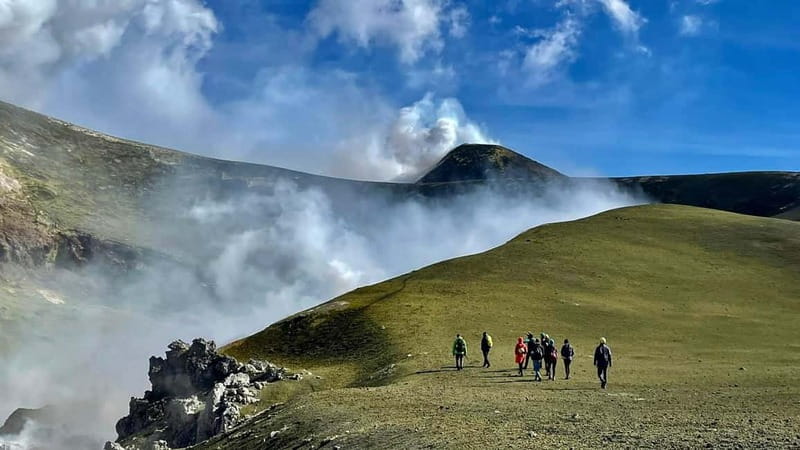
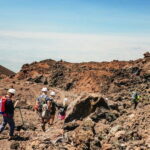
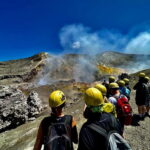
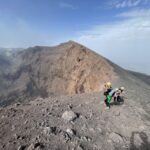
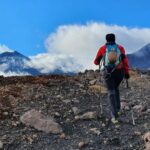
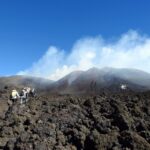
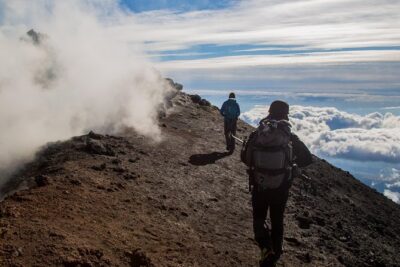
Higher up Etna on foot, towards the summit craters.
Picnic time and the descent setup: sand gullies and Pizzi Deneri views
After summit-zone walking, you get a break time of about 1.5 hours. This is where the day feels more human. You’ll typically have a chance for a picnic, plus sightseeing and a bit more walking.
This break isn’t just to eat. It’s also to reset in cold or windy conditions and let the group regroup before the descent portion. When wind picks up, that buffer time helps a lot.
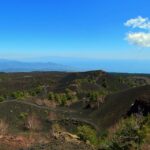
Then comes the descent strategy. The tour description highlights that you’ll head down through sand gullies toward an area called Pizzi Deneri, where you can enjoy a majestic view of the Valle del Bove. The Valle del Bove view is one of those “you finally get the full scale” moments, because it shows the volcano’s structure in a wider frame.
You’ll also have another short hiking segment at Valle del Bove, about 30 minutes. So even on the way down, you’re still doing something—just in a different terrain style.
Off-road return to Piano Provenzana: finishing the day without rushing
After Valle del Bove, the itinerary includes another off-road adventure of around 20 minutes to return to the starting area at Piano Provenzana / Sole-neve Souvenirs. This is a relief after altitude walking. It lets your legs cool down while the team handles navigation back across the volcanic-access routes.
One small logistics point: the day is listed at 4.5 hours, but in real life, you’ll often want to plan for extra time on the day. Cold wind, volcanic rules, and the timing of summit access can all add a bit of buffer.
So if you’re tying this to dinner reservations later that same evening, give yourself slack.
What’s included (and what you still need to bring)
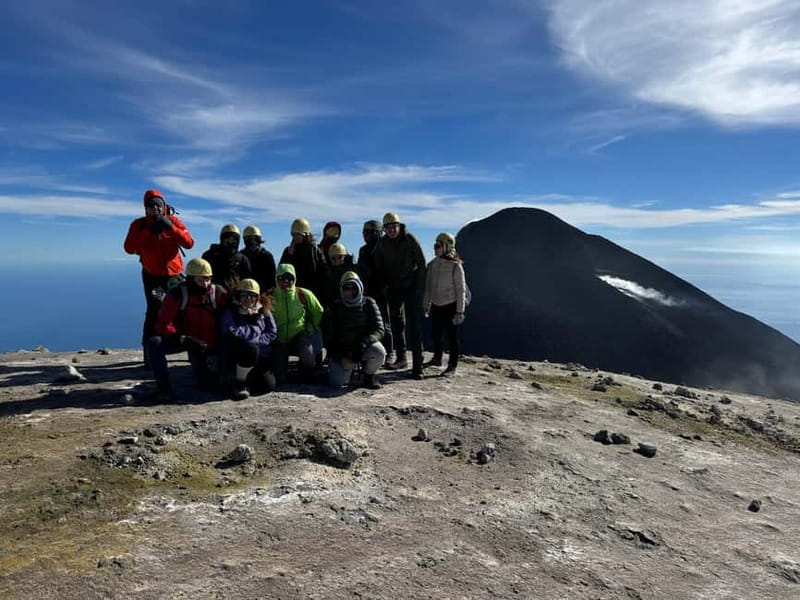
This tour is thoughtful about gear. You get:
- Hiking boots
- Jacket
- Helmet
- Volcanological or alpine guide
- Insurance
- Etna summit tour
That’s a big value lever, especially if you don’t want to buy boots for one trip. It also means the tour can outfit you for the realities of wind, cold, and rough ground.
What to bring:
- Sunglasses and a sun hat (yes, even on a cold summit day, light and glare can hit hard)
- Food and drinks
- Weather-appropriate clothing
- A daypack
- Cash
Alcohol and drugs are not allowed, so keep it simple.
And since cash is requested for an extra transport ticket (more on that next), bring it even if you’re not usually a cash person.
Price and real value: the $62.63 tour cost vs the Unimog transport
The listed price is $62.63 per person for the summit tour experience. On its face, that sounds like a steal for a guided hike in the summit zone—until you account for one important extra.
Not included is an Unimog 4×4 round trip ticket that costs 50 EUR per person, paid in cash on the spot. So your day may cost more than just the $62.63.
Here’s how I think about value:
- Your tour fee covers a guided Etna summit day, plus boots, jacket, helmet, and insurance.
- The extra 50 EUR covers a specific transport access piece (Unimog 4×4) that the day needs to move you where you’re allowed to go.
If you already planned to rent or buy hiking gear, the included boots and jacket can make the tour fee look even better. If you’re traveling light, you’ll probably appreciate not hunting for the right boots before Sicily.
Bottom line: it’s good value if you’re ready for the extra cash transport fee and you want an actual summit experience, not a “stand here and look up” version.
Small group hiking with multi-language guides: how the day stays smooth
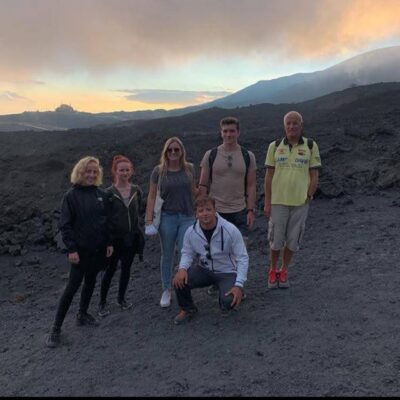
You’ll be in a small group of 10 participants max. That matters on Etna because the group can spread across uneven terrain, and the guide needs to manage pace and safety without losing people.
Language coverage is English, Italian, and French. Guides can explain the geology, safety rules, and what to watch for in a way that helps you follow along instead of just following footsteps.
Also, the tour format includes a safety briefing early on, so you’re not learning the basics while you’re already climbing.
Who this tour suits best (and who should not book)
This is for people who want a serious volcano hike and are comfortable with altitude and uneven ground. It’s a strong match if you enjoy:
- active outdoor days
- learning volcanology basics from what you see
- dramatic viewpoints, especially from high elevation
- off-road driving and wild terrain rather than paved stops
It’s not suitable if you have:
- heart problems
- respiratory issues
- pregnancy
- a low fitness level
If you’re unsure about fitness, go with your gut. The tour involves hiking on volcanic surfaces around 2,900 meters and higher, and safety rules are real here.
Should you book the Etna Summit Trekking Tour?
Book it if you want the real Etna experience: summit craters near 3,340 meters, volcanic terrain you can’t get from easy viewpoints, and a guide who manages safety while explaining what you’re walking through. The included boots, jacket, and helmet make it easier to show up ready, and the small group size keeps the day controlled even when conditions change.
Skip it if you dislike uncertainty. Weather and volcanic activity can modify the trekking—that’s part of the deal on an active volcano. Also skip it if altitude and strenuous hiking are not for you; the tour lists clear suitability limits for a reason.
FAQ
How long is the Mount Etna summit trekking tour?
The duration is listed as 4.5 hours. The day includes both trekking and off-road segments.
Where do we meet and where does the tour end?
You meet at the Sole-neve Souvenirs shop, which has parking. The tour ends back at the same meeting point.
Is food included?
Food and drinks are not included. The itinerary includes a break time and picnic, but you should bring your own food and drinks.
What gear is included in the price?
The tour includes hiking boots, a jacket, a helmet, and a volcanological or alpine guide, plus insurance.
Do I need to pay extra for 4×4 transport?
Yes. An Unimog 4×4 round trip ticket is not included and costs 50 EUR per person, paid in cash on the spot.
What languages are the guides?
The live tour guide is available in English, Italian, and French.
Can the trek change due to conditions?
Yes. The tour notes that trekking in the Etna summit area can be modified depending on volcanic activity and meteo conditions.
More Tour Reviews in Mount Etna
More Etna Summit Hikes and Treks
More Etna Volcano Tours from Catania
After something different? More tours and day trips around Catania and eastern Sicily
Etna Volcano Tours from Catania, compared.
 ★ 4.8Mount Etna Morning or Sunset Day Trip with TastingFrom $704,028 reviews
 ★ 4.7Guided Volcano Summit Hiking Tour with Cable CarFrom $1243,784 reviews
 ★ 4.8Sunset Jeep Tour of Mount Etna and Lava Flow CavesFrom $712,113 reviews
 ★ 4.8Etna and Alcantara Gorges Full-Day Tour with LunchFrom $1051,766 reviews
 ★ 4.7Etna Volcano: South Side Guided Summit HikeFrom $671,545 reviews
 ★ 4.8Guided Trek 3,000 Meters to the SummitFrom $1131,407 reviews
 ★ 4.9Mount Etna Trekking Trip off the Tourist PathFrom $781,351 reviews
 ★ 4.8Etna Sunset Tour with Pickup and Drop-offFrom $711,348 reviews
Browse the lists this tour appears in