
Reviewed · ETNA VOLCANO TOURS FROM CATANIA
Mount Etna: Trek to the Craters of The 2002 Eruption
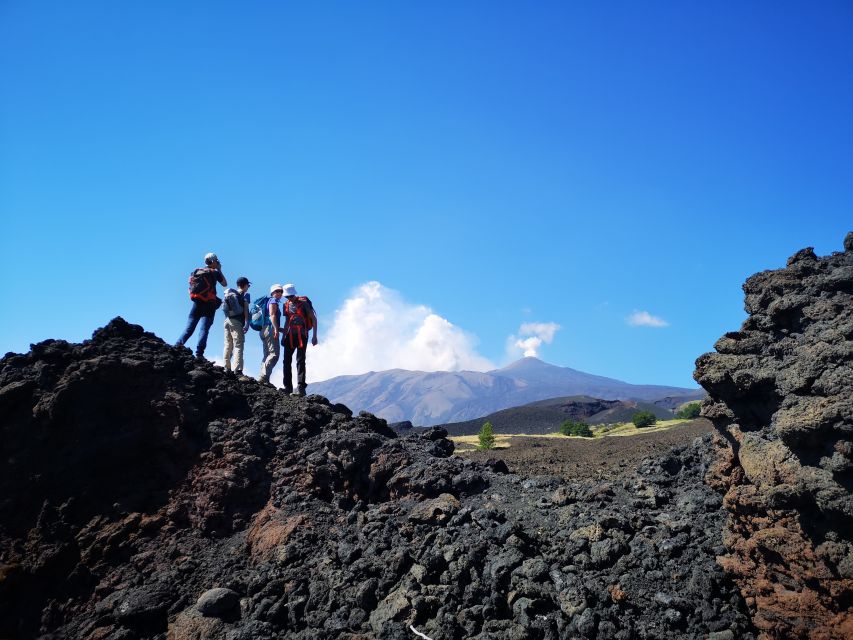
A volcano you can actually walk on makes the day feel real. This trek follows the eruptive fault from the 2002 eruption on Etna’s northern flank, with stops at hardened lava, lateral cone formations, and crater viewpoints. I like that the guide work is built for understanding, not just sightseeing, and I also love the big payoff views over the Bay of Naxos and the Calabrian coast. The main thing to consider is the surface and terrain: even with an easy rating, it’s still volcanic ground and it’s not for people with vertigo or limited mobility.
You’ll meet at Piano Provenzana and head out with GRUPPO GUIDE ETNA NORD in English, French, or Italian. The walk is designed to feel approachable, but it’s tied to your group’s rhythm, so plan for changes in pace and timing. If you expect a casual stroll, check the “bring rain gear and water” list and be ready for a more physical hike than a typical city walk.
In This Review
- Key things I think you’ll care about
- Mount Etna’s 2002 craters trek: what it feels like on the ground
- Starting at Piano Provenzana: timing, meeting point, and outfit basics
- Walking along the eruptive fault from the 2002 eruption
- Seeing lateral cones and crater features up close (with real context)
- The views that make the climb worth it: Naxos and Calabria from Etna
- How Etna’s myth and fertile soils shape everyday Sicilian life
- Itinerary flow: what happens at each stage of your 2.5-hour plan
- Price and value: is $39.86 worth it?
- Who this trek suits best (and who should skip it)
- What to bring and what to avoid
- Should you book this Mount Etna trek?
- FAQ
- How long is the trek?
- Where does the tour start?
- Where does the tour end?
- What difficulty level is it?
- What languages are the guides available in?
- Is food included?
- What should I bring?
- Are sandals allowed?
- Is the tour suitable for everyone?
- How much does it cost?
- Is it possible to cancel?
Key things I think you’ll care about
- 2002 eruptive fault route: You walk along the hardened path left by the eruption’s explosive behavior.
- Lateral cones and gas/rock fragments: You learn what you’re seeing, not just looking at it.
- Crater viewpoints: You get close enough to feel the scale and still have time to look around.
- Bay of Naxos plus Calabria coast views: The higher points reward your effort.
- Small-group guide focus: Clear live interpretation in English/French/Italian keeps the trail meaningful.
- Easy label, real-world terrain: Comfortable shoes matter because the ground isn’t smooth.
Mount Etna’s 2002 craters trek: what it feels like on the ground
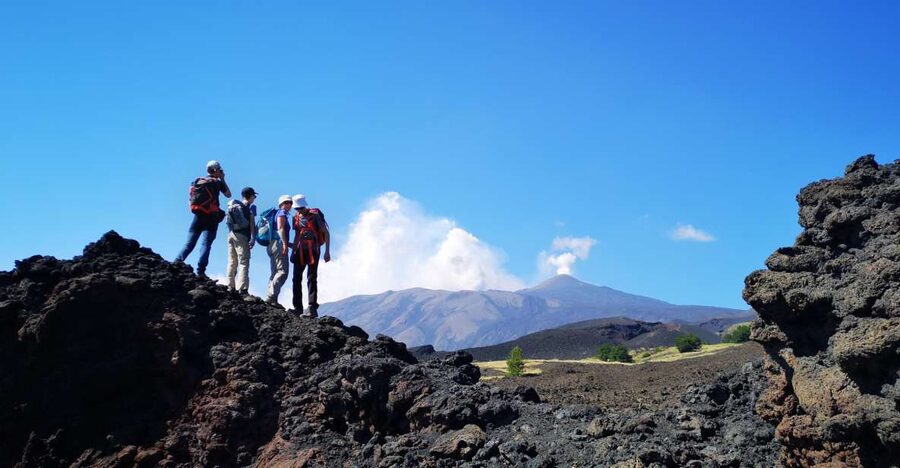
This is a short, guided hike with a very specific theme: the 2002 eruption. You’re not doing a generic “Etna summit” day. Instead, the experience follows the eruptive fault on Etna’s northern flank, so the trail itself becomes the story.
The best part is the mental switch you’ll make while walking. As you pass hardened lava rock and see the scar-like line of the eruptive fault, the eruption stops being an event you’ve read about and becomes a physical pattern you can trace step by step. You’ll also get crater viewpoints and wide-ranging coastal sightlines, so you get both science and scenery in the same 2.5-hour window.
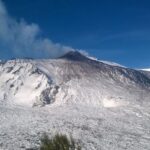
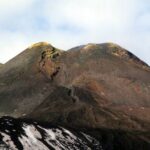
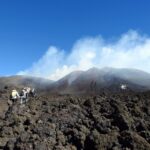
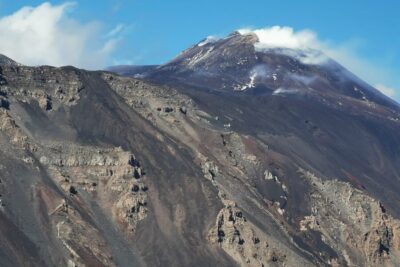
Back up the volcano, with Etna smoking above Catania.
Starting at Piano Provenzana: timing, meeting point, and outfit basics
You’ll start and end at Piano Provenzana, so the tour is self-contained. The meeting point is in the first parking area by the wooden house with the sign Gruppo Guide Etna Nord. That matters because it helps you avoid the usual Etna chaos of trying to interpret where your group is gathering.
Dress like you’re hiking a mountain in real weather, not like you’re touring a museum. You’ll want comfortable shoes, sunglasses, and a sun hat, and you should carry water. Bring a jacket and rain gear, because conditions on Etna can shift, and volcanic areas don’t care about your plan for a perfect day.
And please skip sandals or flip-flops. The trail is rated easy, but volcanic paths punish the wrong footwear fast.
Walking along the eruptive fault from the 2002 eruption
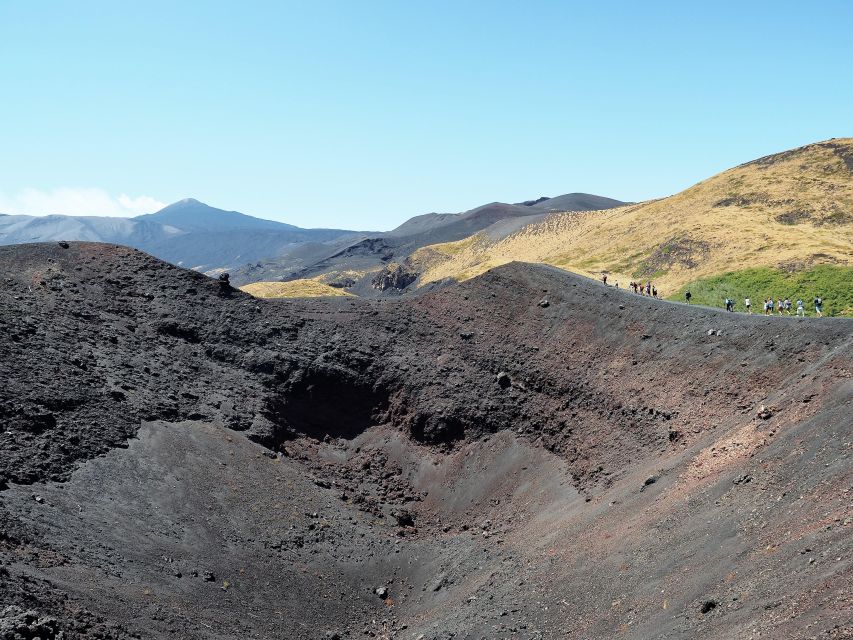
The core experience is your walk along the eruptive fault connected to the 2002 eruption. The eruption happened at dawn on October 27, 2002, and it’s remembered as the so-called “perfect eruption,” largely because of how it evolved and what it left behind. On this trek, you’ll imagine the explosive force as you follow the hardened lava flow and trace the fault line.
What you’ll likely notice is texture: lava doesn’t form the same way normal rock does, and hardened flows can look jagged, layered, or blocky depending on how they cooled. Your guide helps translate those shapes into eruption processes—so you’re not just walking from point A to point B.
Seeing lateral cones and crater features up close (with real context)
Along the fault, you’ll see lateral cones formed by strong explosions of gas and rock fragments. This is one of those details that makes a big difference. Without explanation, “cones” can sound like random scenery. With the guide’s context, they become evidence of how the eruption pushed material sideways rather than just straight up.
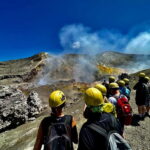
You’ll also peer into impressive craters. That’s the moment where the volcano feels close in a way that photos can’t fully capture. Your guide’s job is to connect crater features to what you’re actually standing beside, so you understand why craters look the way they do and what they imply about the eruption’s behavior.
If you like geology that’s practical—something you can see, then name—this part will be satisfying.
The views that make the climb worth it: Naxos and Calabria from Etna
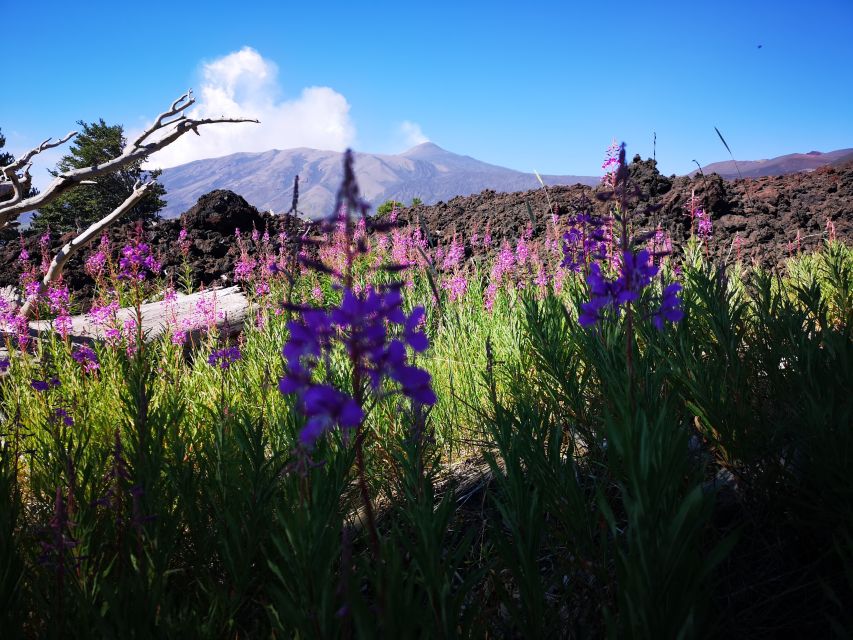
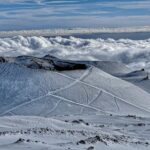
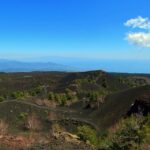
At the higher points on the route, you’ll take in stunning views from above. The highlights include the Bay of Naxos and the Calabrian coast. This isn’t just “look at a view for five seconds” sightseeing. The vantage points come after you’ve been walking through eruption features, so the scenery feels like a payoff rather than a separate activity.
For me, that combination works well: you can look out across the water and then look back at the landform patterns you just walked through. It helps you understand the scale—how a volcano shaped this region, not just a mountain you happened to hike.
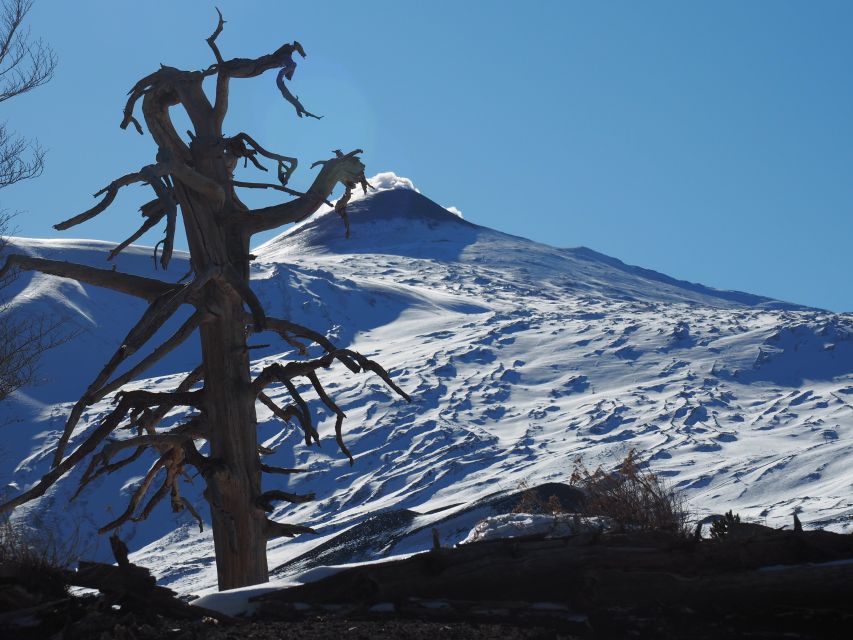
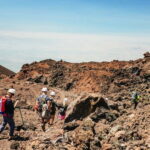
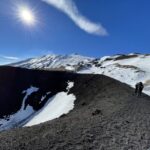
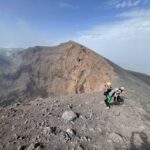
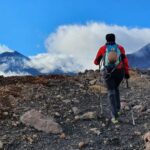
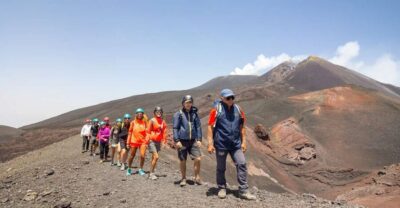
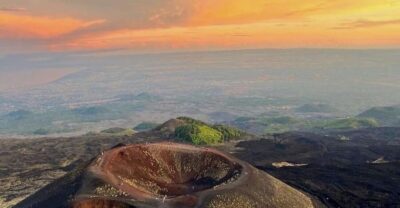
Higher up Etna on foot, towards the summit craters.
How Etna’s myth and fertile soils shape everyday Sicilian life
Etna isn’t only a physical landmark. It’s also a cultural one. You’ll learn about the mountain’s history and its impact on the region, including its connection to Greek mythology. Then the focus shifts to what matters day to day: the volcano’s fertile soils and how that supports extensive local agriculture.
This part is valuable because it turns Etna from a one-day thrill into a place with real continuity. You start thinking about how communities live with volcanic risk and how they still build livelihoods around the soil the volcano creates. Even on a short trek, that context makes the experience feel grounded.
Itinerary flow: what happens at each stage of your 2.5-hour plan
Stop 1: you begin at Piano Provenzana with your guide and group. This is the setup moment—get your water, confirm you have the right shoes, and get ready for steady walking.
Stop 2: you go out on the main guided section to Mount Etna. The activity is listed around 2.5 hours total, and the walking portion is described as about 3 hours on the route summary. In practice, that means you should treat this as a short-but-real hike and plan to move at a pace set by the group. The trail takes you along the eruptive fault on the northern flank, then toward crater viewpoints and scenic outlooks.
Stop 3: you return to Piano Provenzana at the meeting point.
The easy difficulty rating is encouraging, but it doesn’t mean “no attention required.” You’re walking on volcanic surfaces and spending time looking and learning, so keep your focus on footing and don’t rush.
Price and value: is $39.86 worth it?
At $39.86 per person, this trek sits in the mid-range for an Etna guided hike, especially because you’re getting interpretation in English, French, and Italian. The value isn’t just the guide presence—it’s the specificity of the route. You’re not buying a generic “Etna day.” You’re paying for an explanation-led walk along the fault and past eruption features you can see directly.
Also, the timing helps. With a short total duration, it’s easier to fit into a packed Sicily itinerary without losing most of your day. If you want Etna’s big-name impact but you’re not trying to spend an entire day on logistics, this format is a strong match.
Who this trek suits best (and who should skip it)
This hike is a good fit if you want a clear, guided science story on a real eruption trail. I think it works especially well for people who like understanding what they’re looking at—lava flow textures, lateral cone formations, and crater features.
It’s listed as not suitable for:
- pregnant women
- people with mobility impairments
- people with vertigo
That doesn’t mean the trail is extreme, but it does mean you should be honest about balance and comfort on uneven terrain, plus the “looking into craters” element.
Difficulty is easy, but you’ll still feel it if you’re not used to hiking.
What to bring and what to avoid
Bring:
- comfortable shoes
- sunglasses
- sun hat
- water
- a jacket
- rain gear
Not allowed:
- sandals or flip-flops
If you want one practical tip: water matters more than you expect at Etna, because you’re outdoors for a focused walk and you’ll be moving while learning.
Should you book this Mount Etna trek?
I’d book it if you want the 2002 eruption to make sense in your head as you walk. The guided focus on the eruptive fault, lateral cones, hardened lava flows, and craters is exactly the kind of structure that turns Etna from a famous name into a place you understand.
I’d skip it if you have vertigo or mobility limits, or if you’re hoping for a smooth, barefoot-friendly stroll. And if your top goal is only the highest summit views, this route may feel too focused on eruption geology rather than classic summit goals.
If you’re ready for a short hike with strong explanation and real volcano visuals, this is the kind of Etna experience that sticks.
FAQ
How long is the trek?
The activity is listed at about 2.5 hours, and the walking portion is described as around 3 hours. The exact timing can depend on the group’s rhythm.
Where does the tour start?
It starts at the meeting point in the first parking area by the wooden house with the sign Gruppo Guide Etna Nord, at Piano Provenzana.
Where does the tour end?
It ends back at the same meeting point in the first parking area at Piano Provenzana.
What difficulty level is it?
The difficulty is rated easy.
What languages are the guides available in?
The live guides are available in Italian, French, and English.
Is food included?
No. Food and drinks are not included.
What should I bring?
Bring comfortable shoes, sunglasses, a sun hat, water, a jacket, and rain gear.
Are sandals allowed?
No. Sandals or flip-flops are not allowed.
Is the tour suitable for everyone?
It is not suitable for pregnant women, people with mobility impairments, or people with vertigo.
How much does it cost?
The price is $39.86 per person.
Is it possible to cancel?
Yes. Free cancellation is available up to 24 hours in advance for a full refund.
More Tour Reviews in Mount Etna
More Etna Summit Hikes and Treks
More Etna Volcano Tours from Catania
After something different? More tours and day trips around Catania and eastern Sicily

Etna Volcano Tours from Catania, compared.
 ★ 4.8Mount Etna Morning or Sunset Day Trip with TastingFrom $704,028 reviews
 ★ 4.7Guided Volcano Summit Hiking Tour with Cable CarFrom $1243,784 reviews
 ★ 4.8Sunset Jeep Tour of Mount Etna and Lava Flow CavesFrom $712,113 reviews
 ★ 4.8Etna and Alcantara Gorges Full-Day Tour with LunchFrom $1051,766 reviews
 ★ 4.7Etna Volcano: South Side Guided Summit HikeFrom $671,545 reviews
 ★ 4.8Guided Trek 3,000 Meters to the SummitFrom $1131,407 reviews
 ★ 4.9Mount Etna Trekking Trip off the Tourist PathFrom $781,351 reviews
 ★ 4.8Etna Sunset Tour with Pickup and Drop-offFrom $711,348 reviews
Browse the lists this tour appears in