
Reviewed · ETNA VOLCANO TOURS FROM CATANIA
Etna: Craters of the 2002 Eruption Trekking Experience
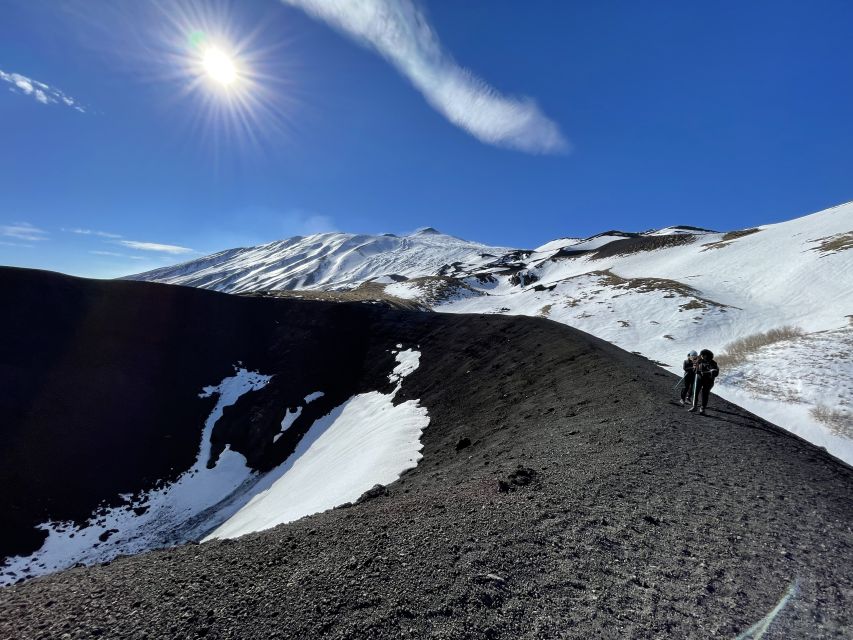
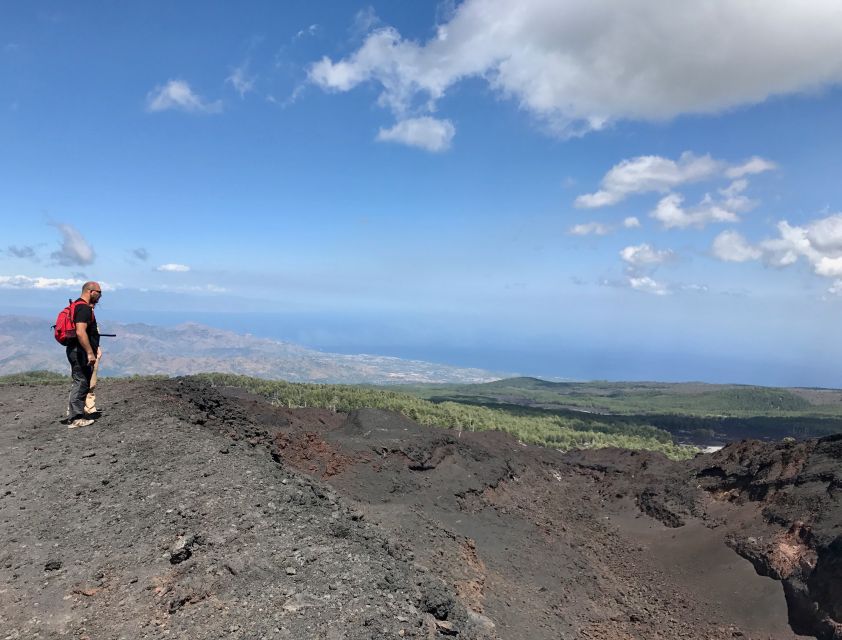
Etna’s 2002 scars are still walkable. On this north-side trek, I love how the guide links what you’re seeing—2002 craters and lava evidence—with the real story of how Etna reshapes this part of Sicily (with guides like Daniele and Vincenzo calling out key features as you go). You also get a standout view over the eruptive theater and toward the Calabrian Coast. One thing to consider: the ground can be unstable, and parts of the route run along crater edges, so dizzy feelings can be an issue.
This is a 3-hour outing that feels educational but not stuffy. I liked that the hike takes you through forest, lava streams, and eruptive fractures instead of only stopping for photos, and the guides bring the eruption to life with hands-on explanations and on-route humor. The only drawback I’d plan around is wind—more than once, guides and conditions can make the summit area gusty.
In This Review
- Key things I’d plan around
- Why Etna’s north side hits different in 3 hours
- Meeting at Chiosco Bar Mareneve: the spot where people mess up
- The hike route: from Piano Provenzana’s dirt road to summit craters
- Forest to lava streams: the part that makes the science feel real
- Hotel dell Betulle ruins: a simple landmark with heavy meaning
- Volcanic morphologies and the flank eruptions story
- Hornitos on the cinder cones: look small, learn big
- The summit craters: edge views and the reason you felt cautious
- Descending back via a sandy channel: a different kind of finish
- Guides make or break Etna: Daniele, Davide, Vincenzo, Niko
- What to bring (and what will slow you down)
- Price and value: what $41 buys you, plus the likely extras
- Who this trek fits best—and who should skip
- Should you book this 3-hour Etna trek?
- FAQ
- How long is the Etna Craters of the 2002 Eruption trekking experience?
- Where do I meet the tour?
- Is transport from my accommodation included?
- What extra costs should I expect?
- What should I bring and wear?
- Who should not join this trek?
Key things I’d plan around
- 2002 eruption highlights: you’ll walk through the physical results of Etna’s powerful recent activity, not just viewpoints.
- Ruins of Hotel dell Betulle: a rare, visible remnant left by the 2002 lava flow.
- Hornitos and cinder cones: small volcanic structures you can actually study up close.
- Crater-edge walking: spectacular views, but it’s also the part most likely to trigger dizziness.
- Summit descent through a sandy channel: a memorable finish that changes the feel of the trek.
- Strong guide energy: names you may get include Daniele, Davide, Vincenzo, and Niko, and many focus on keeping it fun.
Why Etna’s north side hits different in 3 hours
Etna is huge, and most people bounce between a few obvious lookouts. This trek is different because it’s built around walking through the aftermath of a specific event: the 2002 eruption. On the north side, that means craters, fractures, and lava features that are easier to connect to one timeline instead of feeling like random volcanic rocks.
You’ll move along a route that starts from the dirt road leading from Piano Provenzana up toward the summit craters. That matters because the terrain changes step by step: forest shade to raw volcanic surfaces, then into areas shaped by flank activity. In a short time window, it gives you a full “before, during, after” sense of the mountain’s power.
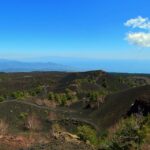
And yes, you’ll still get big views. The eruptive theater and the Calabrian Coast show up as payoff moments, not just quick glimpses. The goal is to make you feel like you’re reading the volcano, not just staring at it.
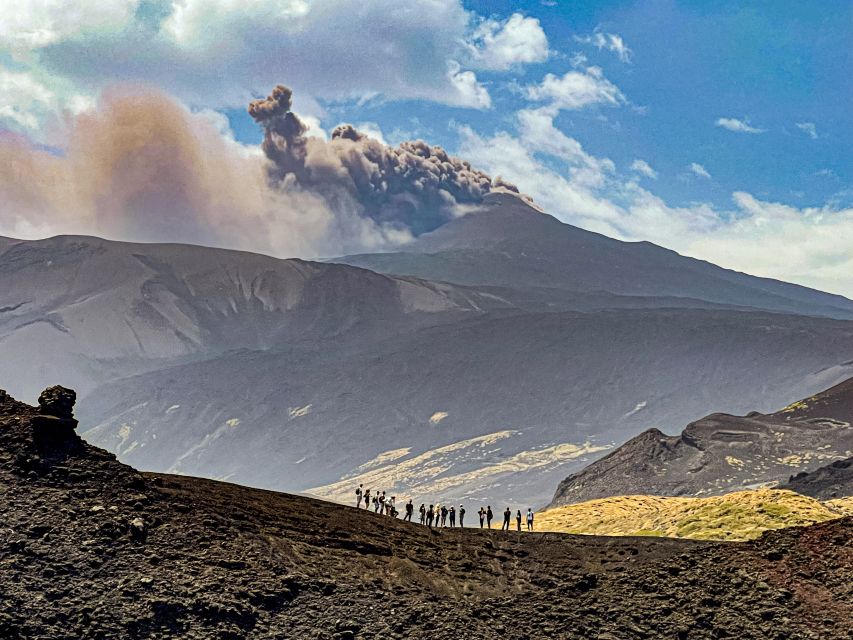
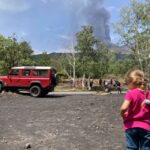
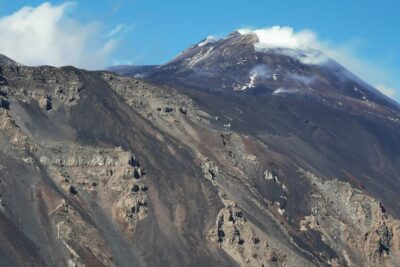
Back up the volcano, with Etna smoking above Catania.
Meeting at Chiosco Bar Mareneve: the spot where people mess up
Start at Chiosco Bar Mareneve, near the chairlift used by skiers in winter. Double-check this detail, because there’s another kiosk in the area called Chiosco Bar Etna Nord—it’s in the lower parking lot, and you want the Mareneve one instead. If you arrive at the wrong bar, you’ll likely waste time spotting the correct group.
Parking runs as a small add-on. There’s a 3€ parking ticket you pay after the excursion (for the whole day). Since the trek lasts about 3 hours, I recommend arriving early enough to find your guide and settle before you start walking.
If you’re trying to plan around a schedule, keep in mind starting times vary with availability. So don’t assume it’s always the same hour every day.
The hike route: from Piano Provenzana’s dirt road to summit craters
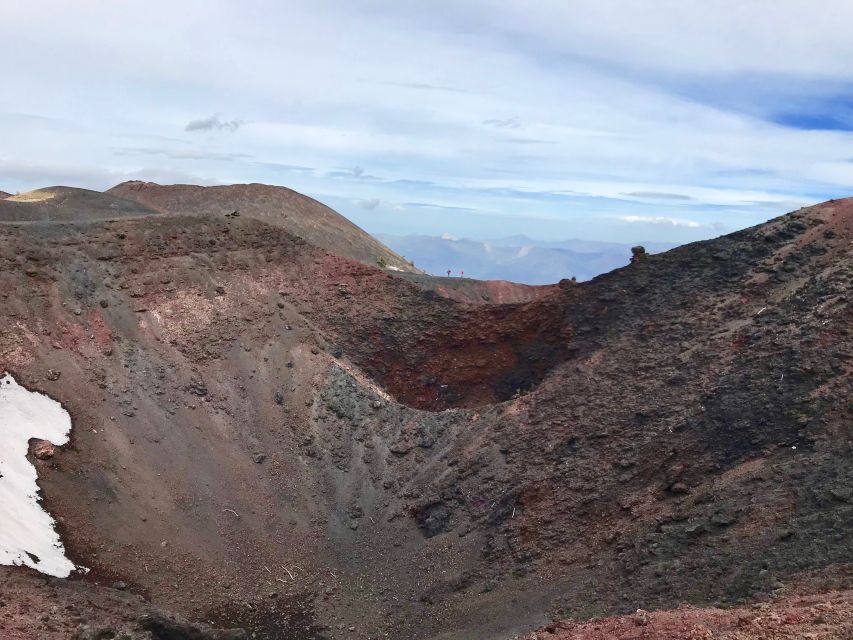
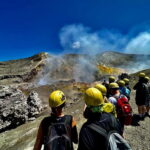
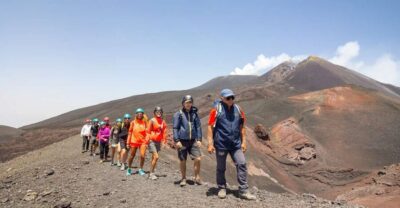
The core of the trek is an ascent plus walking near crater edges. Your route begins on the dirt road from Piano Provenzana toward the summit craters. As you go, the guide stops often enough to explain what you’re seeing—lava streams, eruptive fractures, and other volcanic forms—so you’re not left guessing.
Expect a mix of surfaces. The volcanic soil can be inconsistent and unstable, and that’s not a reason to panic—it’s a reason to walk deliberately. Good footing technique beats speed here. If you tend to stride without thinking, slow down on purpose.
The trek is aimed at hikers with medium training. That doesn’t mean you need to be an athlete, but it does mean you should be comfortable walking on uneven ground for the duration and taking short pauses when the guide stops.
Forest to lava streams: the part that makes the science feel real
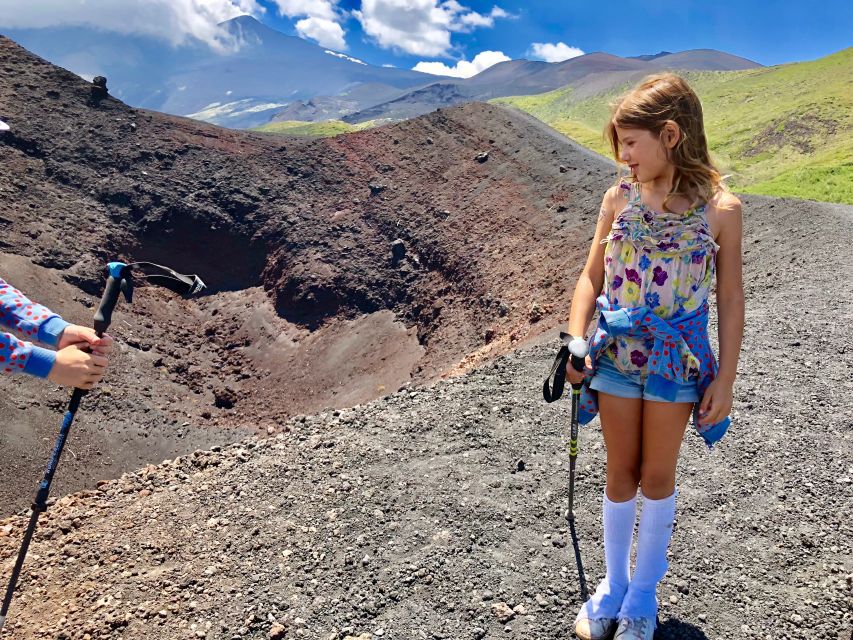
One of my favorite aspects of this trek is the variety before you ever reach the summit. You start with the calmer feel of the north-side forest, then gradually step into the harsher volcanic world—lava streams and more broken ground. That shift is what makes the explanations easier to remember.
When the guide points out eruptive fractures and volcanic morphologies, the terrain helps you understand why the volcano did what it did. Instead of reading about processes, you watch how the mountain leaves evidence behind—cracks, channels, and crater features.
If you’re the type who likes to connect details into a mental map, you’ll likely enjoy this section. The stops are designed to help you “see” the eruption mechanics as you move.
Hotel dell Betulle ruins: a simple landmark with heavy meaning
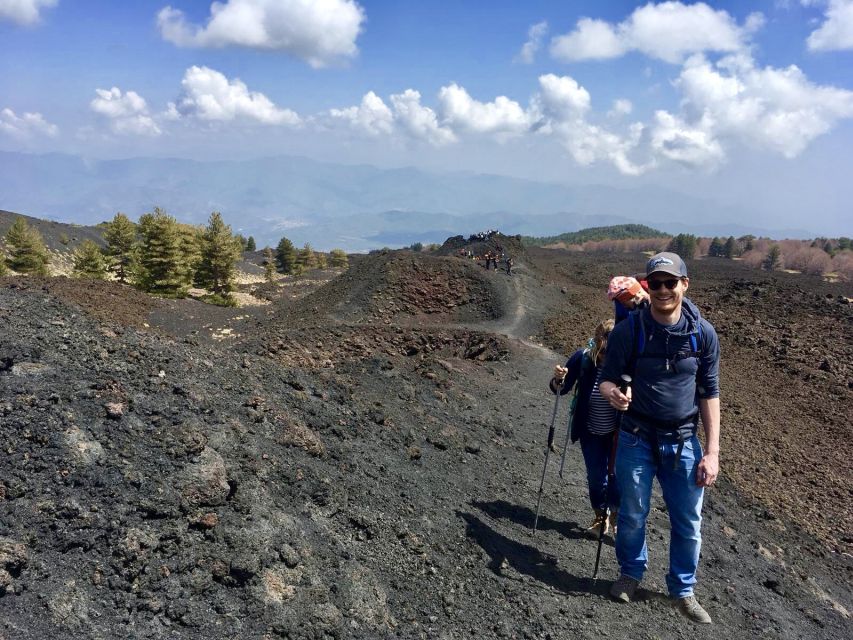
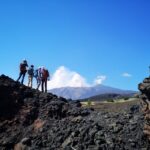
About partway along the route, you stop to see the ruins of the Hotel dell Betulle. This is described as the only visible structure left from the 2002 lava flow. That’s why it’s powerful: you can stand in one place and read a clear link between human structures and the volcano’s changes.
For your photos, this stop is also practical. It gives you something more than rocks: a fixed point with history that anchors what you’ve been hiking through. It’s a reminder that Etna isn’t just scenery—it’s a force that has repeatedly reached into inhabited areas.
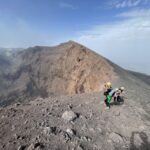
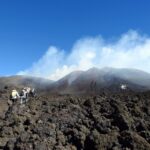
Higher up Etna on foot, towards the summit craters.
Volcanic morphologies and the flank eruptions story
As you continue, the guide focuses on volcanic forms tied to eruptions over time on the north side of Etna. Flank eruptions leave some of the strongest evidence, especially the most recent one discussed on this route. It’s also tied to how the volcano threatened the area near Linguaglossa.
This is where the trek becomes more than a “walk among craters.” The guide helps you interpret why the ground looks the way it does—how repeated activity builds, breaks, and reshapes the same general zone.
One heads-up: the exact route and stops can vary based on environmental, climatic, or volcanic conditions. That’s not a bait-and-switch; it’s a safety and weather reality on an active volcano.
Hornitos on the cinder cones: look small, learn big
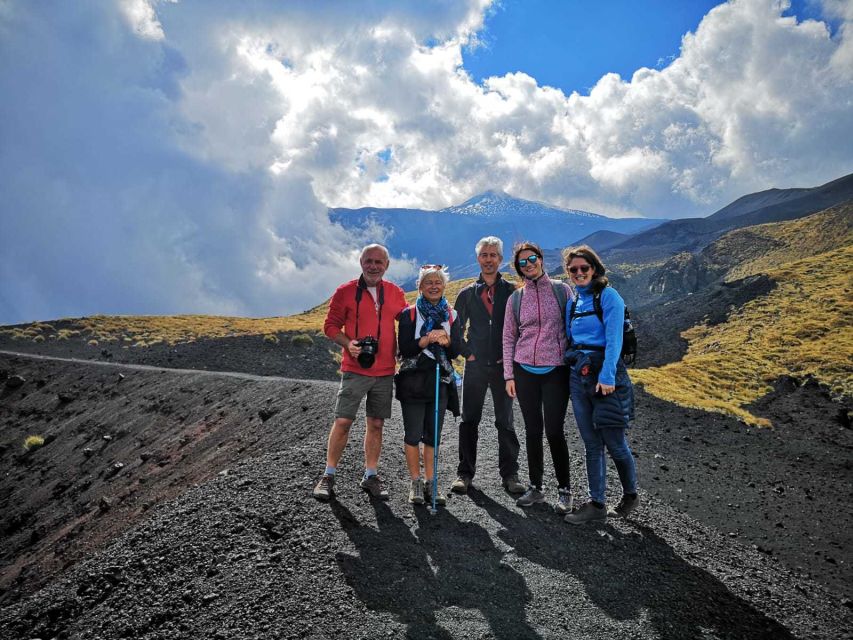
At some point, you’ll reach structures called Hornitos—literally small openings created during volcanic activity. The trek then involves going up along cinder cones so you can study these features at close range.
This is the kind of stop that’s easy to miss if you only care about the biggest craters. Hornitos are smaller, but they’re a direct clue to how gases and molten material moved. Seeing them in person helps you understand the “plumbing” behind the surface spectacle.
If you like detail, this will be a highlight. If you’re short on attention span, it still works because the guide connects these small structures to the larger eruption pattern.
The summit craters: edge views and the reason you felt cautious
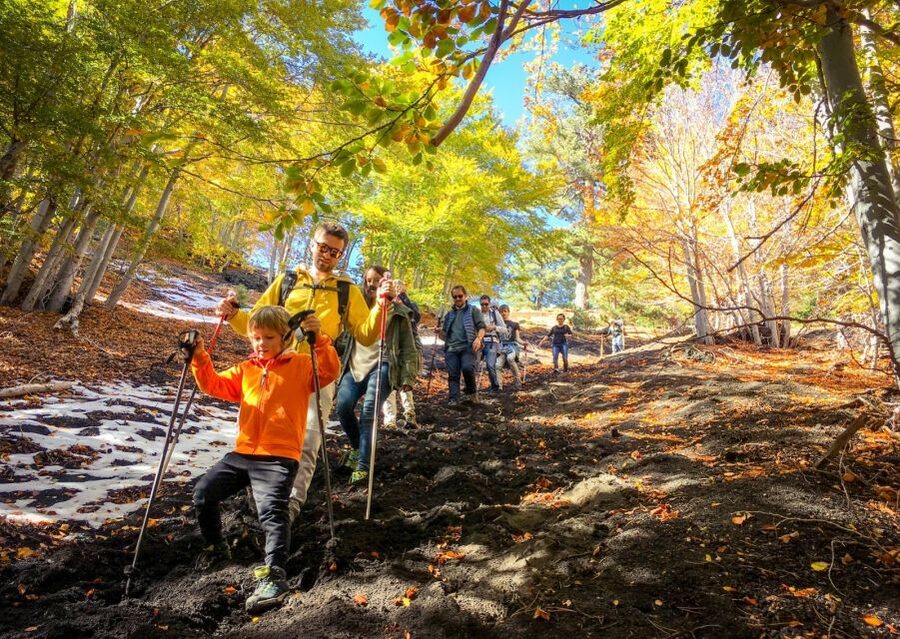
Once you reach the summit, you’ll look over the edge of the craters. This is the moment most people come for, because it turns the whole trek into one view: the crater geometry, the nearby eruptive terrain, and the scale of what’s happened here.
But this is also where the safety notes matter. The route includes walking along crater edges, and that can trigger dizziness in sensitive people. If you have a history of vertigo, or you’re afraid of heights, this trek is not recommended based on the activity’s guidelines.
When I plan for a summit edge walk, I do two things: I bring steady pacing, and I avoid rushing for photos. The view is great, but the ground is not a sidewalk.
Descending back via a sandy channel: a different kind of finish
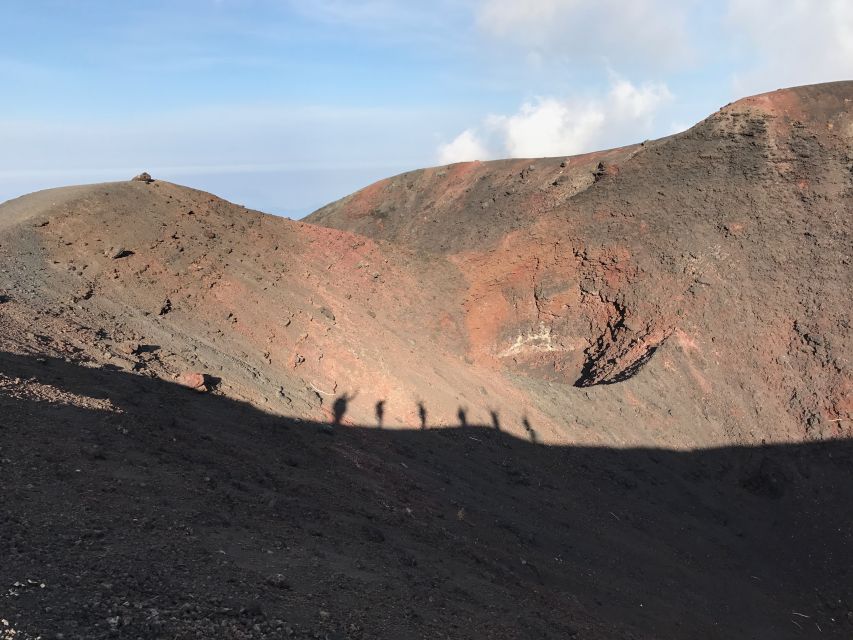
After the summit crater viewing, the plan is to go down inside a sandy channel to return toward the starting point. This change in footing can feel odd if you’re expecting normal trail dirt. It also helps explain why the guide emphasizes proper shoes and careful steps.
It’s a memorable finish because you can feel the volcano’s materials underfoot—like you’re walking through a channel left by eruption flow and later reshaping. It also tends to break the trek into clear parts: ascent, crater focus, and then a structured return.
Guides make or break Etna: Daniele, Davide, Vincenzo, Niko
The strongest praise in the feedback is about guide style: fun, education, and safety. I see a pattern with names like Daniele, Davide, Vincenzo, and Niko—guides who mix science talk with humor, keep the group moving at a sensible pace, and explain what matters without turning it into a lecture.
One practical advantage: some guides bring personal visuals from the 2002 eruption to help you connect the features you’re seeing in front of you. Another is preparedness. If you forget an item like a jacket, it’s been known that a guide can help you out with a spare.
Safety also shows up as a theme. People specifically noted feeling safe with the guide’s way of leading. That’s a big deal on volcanic soil that can be unpredictable.
And weather can be the only real spoiler. Wind was called out as the main annoyance when it showed up, so plan clothing accordingly.
What to bring (and what will slow you down)
Bring gear that matches a windy, uneven volcanic hike. The basics are straightforward:
- Windbreaker and jacket for changing conditions
- Hiking shoes (or you’ll need to rent)
- Sunglasses and sunscreen
- Water plus snacks
- Comfortable clothes and a daypack
Shoes are a major deal for two reasons. First, you need secure footing on volcanic ground. Second, insurance coverage depends on wearing adequate shoes. If you show up in weak footwear, you’re not just uncomfortable—you may not be fully covered.
If you don’t have shoes, you can rent footwear on-site at 5€ per pair. In winter months (December through March), snowshoes are available to rent on-site for 12€ per person.
For head and hand protection: gloves and hats aren’t included in the trek. In winter, spring, and autumn, bring them.
Also follow the no-go list:
- No high-heeled shoes
- No sandals or flip-flops
- No baby strollers
- No large bags or luggage
- No skirts
- No slippers
Price and value: what $41 buys you, plus the likely extras
The price is $41.00 per person for about 3 hours with an official volcano guide and insurance in case of accidents. For Etna, that’s strong value when you consider you’re not just getting a pass to a viewpoint—you’re walking through active volcanic evidence with an expert at your side.
That said, budget for add-ons. Some costs are typical:
- 3€ parking ticket, paid after the excursion
- 5€ shoes rental if needed
- 12€ snowshoe rental in December–March
- Wind and cold gear like gloves/hats are on you
Transport from your accommodation is not included, and neither are snacks or bottled water. So pack a small carry-on snack plan so you don’t end up paying for convenience.
The best value signal is the experience design: it’s educational, it gives you real stops (like Hotel dell Betulle and Hornitos), and it avoids the feeling of being trapped in a huge crowd.
Who this trek fits best—and who should skip
This is an active, short trek with crater-edge walking. It’s best for people who:
- Walk regularly and handle uneven ground
- Want a guided explanation, not just a drive-up viewpoint
- Appreciate geology and enjoy learning through what you physically see
It’s not a fit for anyone with conditions listed by the activity, including:
- Children under 6
- Pregnant women
- People with back problems
- People with mobility impairments
- People with heart problems
- People afraid of heights
- People with vertigo
- People with respiratory issues
- People with epilepsy
Even without those specific issues, be honest with yourself about dizziness. The crater-edge segment can affect susceptible individuals, and the volcanic soil requires steady attention.
Should you book this 3-hour Etna trek?
If you want a focused Etna experience that’s more than a photo stop, I’d book it. The route gives you a strong sequence: forest to lava evidence, the ruins of Hotel dell Betulle, Hornitos and cinder cones, crater-edge views, then the sandy channel descent. It’s also short enough to work even if you have limited time on Sicily.
Skip it if crater-edge walking would make you anxious, if you can’t manage uneven volcanic ground, or if you fall into the listed non-recommended health categories. And if wind is common where you’ll be that day, dress for it—wind was the main complaint that kept coming up.
FAQ
How long is the Etna Craters of the 2002 Eruption trekking experience?
It lasts about 3 hours. You can check availability for the starting times.
Where do I meet the tour?
Meet at Chiosco Bar Mareneve near the chairlift. Do not go to Chiosco Bar Etna Nord in the lower parking lot.
Is transport from my accommodation included?
No. Transport to the starting point is not included.
What extra costs should I expect?
There’s a 3€ parking ticket paid after the excursion. Trekking sticks, snacks, and bottled water are not included. Shoe rentals cost 5€ per pair. Snowshoes cost 12€ per person if needed in winter months.
What should I bring and wear?
Bring a windbreaker, sunglasses, snacks, hiking shoes, sunscreen, water, a jacket, comfortable clothes, and a daypack.
Who should not join this trek?
It is not suitable for children under 6, pregnant women, people with back problems, mobility impairments, heart problems, fear of heights, vertigo, respiratory issues, or epilepsy.
More Tour Reviews in Mount Etna
More Etna Summit Hikes and Treks
More Etna Volcano Tours from Catania
After something different? More tours and day trips around Catania and eastern Sicily
Etna Volcano Tours from Catania, compared.
 ★ 4.8Mount Etna Morning or Sunset Day Trip with TastingFrom $704,028 reviews
 ★ 4.7Guided Volcano Summit Hiking Tour with Cable CarFrom $1243,784 reviews
 ★ 4.8Sunset Jeep Tour of Mount Etna and Lava Flow CavesFrom $712,113 reviews
 ★ 4.8Etna and Alcantara Gorges Full-Day Tour with LunchFrom $1051,766 reviews
 ★ 4.7Etna Volcano: South Side Guided Summit HikeFrom $671,545 reviews
 ★ 4.8Guided Trek 3,000 Meters to the SummitFrom $1131,407 reviews
 ★ 4.9Mount Etna Trekking Trip off the Tourist PathFrom $781,351 reviews
 ★ 4.8Etna Sunset Tour with Pickup and Drop-offFrom $711,348 reviews
Browse the lists this tour appears in