
Reviewed · ETNA VOLCANO TOURS FROM CATANIA
Piano Provenzana: Mount Etna Hiking Trip to 3,300 Meters
One volcano, two modes of travel, zero dull moments. I like the 4×4 ride up the Etna north side that gets you high quickly, and I like the Central Crater guided explanations that turn the view into something you can actually understand. The catch: you’ll walk near crater edges, so if you get dizzy easily, this may not feel comfortable.
This is set up as a small-group outing (limited to 10), and you’re not just left to figure it out. You get practical hiking support like trekking poles, a helmet, a windbreaker, and extra socks, which matters when the wind and altitude start doing their thing.
One more thing to know: reaching 3,300 meters depends on conditions. On weather-bumpy days, the plan may shift and you might end up hiking around 2,900 m instead, which still sounds intense in the best way.
In This Review
- Key takeaways before you go
- Why Piano Provenzana is a smart starting point for Etna
- Meeting at Chiosco Bar Mareneve: don’t mix up the two bars
- The off-road 4×4 ride: fast altitude, serious terrain
- Stop at the Central Crater: the guided part that makes it click
- Piano delle Concazze: a quieter volcanic walk that feels otherworldly
- The step-up to 3,300 m: what the final ascent really feels like
- Descent through soft scoria channels: steady steps, not heroics
- Price and logistics: does it feel like value?
- What to pack for Etna wind and high altitude
- Who this Mount Etna hike suits (and who should pass)
- Weather changes are part of the Etna plan
- Should you book the Piano Provenzana 3,300 m Etna hike?
- FAQ
- How high does this Mount Etna trip go?
- What’s included, and what extra costs should I expect?
- Where do I meet the guide on arrival?
- How long is the tour, and how many people are in the group?
- What level of fitness do I need?
- What should I bring for the hike?
Key takeaways before you go
- You’ll combine 4×4 height gain with a real crater-edge hike (the hardest part is on foot).
- Central Crater time is guided, not just photo stops.
- Volcanic footing is soft and gritty (scoria and volcanic bombs), so shoes matter.
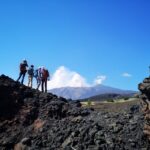
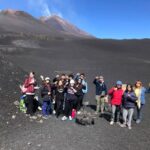
- The group is small, capped at 10, so you get more attention from the guide.
- Weather can change the route or the summit target, so pack for wind and cold.
Why Piano Provenzana is a smart starting point for Etna
Mount Etna hikes can be either scenic walks or full-on volcano sessions. This one sits in the volcano session category: you’re climbing toward the Central Crater and moving through areas shaped by ancient eruptions and more recent lava flows.
Starting from Piano Provenzana also helps you get the right balance of effort and reward. You’re not starting at sea level and slowly crawling up, and you’re not only staying in a vehicle either. The mix of 4×4 travel plus a few hundred meters of ascent on foot is a practical formula for people who want the summit feeling without a long day of relentless climbing.
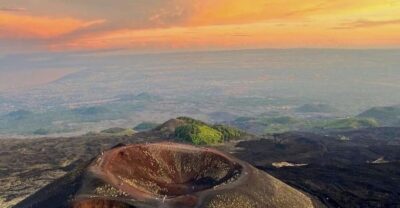
Back up the volcano, with Etna smoking above Catania.
Meeting at Chiosco Bar Mareneve: don’t mix up the two bars
Meet your guide at CHIOSCO BAR MARENEVE di Ferraro Giuseppa. This matters because the parking lot has more than one bar-style stop point, and the wrong one can waste time when you’re on a tight schedule.
The key detail: the Chiosco Bar Mareneve is near the ski chairlift used in winter, and it’s the second house of the four houses in that parking area. Also: it’s not Chiosco Bar Etna Nord down in the lower parking lot. If you’re arriving late or with a taxi drop-off, I’d recommend checking the signage twice before you commit to the wrong meeting spot.
The off-road 4×4 ride: fast altitude, serious terrain
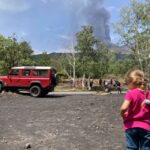
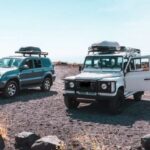
After the meet-up, you’ll head out by jeep/SUV for about 30 minutes. This is the “get high quickly” part of the trip, and it’s a big part of why Etna day trips can feel so much more dramatic than a standard hike.
You’ll travel along a panoramic path on the north side, then keep rising as the route threads through volcanic terrain. The plan includes riding up to around the 2,925–2,965 m area, where the ground shifts from road-style travel to hiking-style exploration.
Value-wise, the 4×4 segment is what makes the day manageable. It also means you should plan mentally for a different kind of physical strain: you’ll arrive higher than you expected, then your body will immediately start adapting to altitude once you step out.
Stop at the Central Crater: the guided part that makes it click
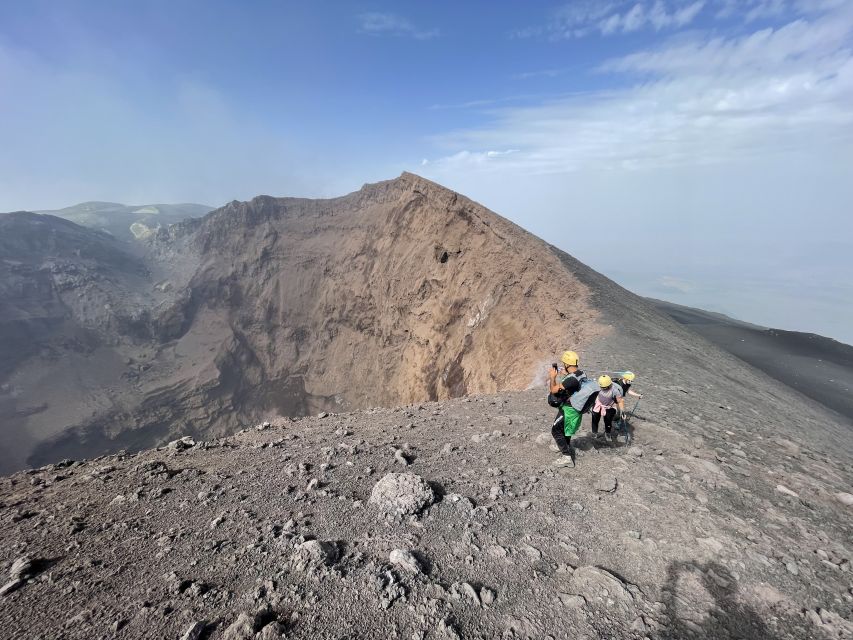
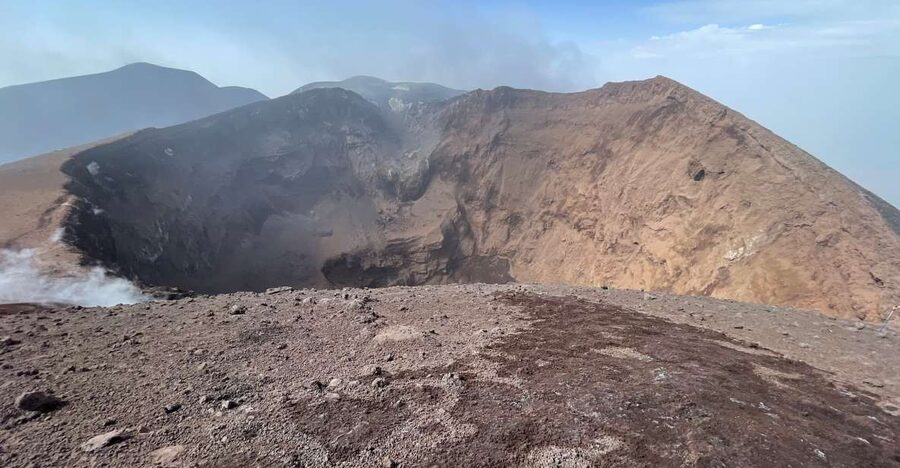
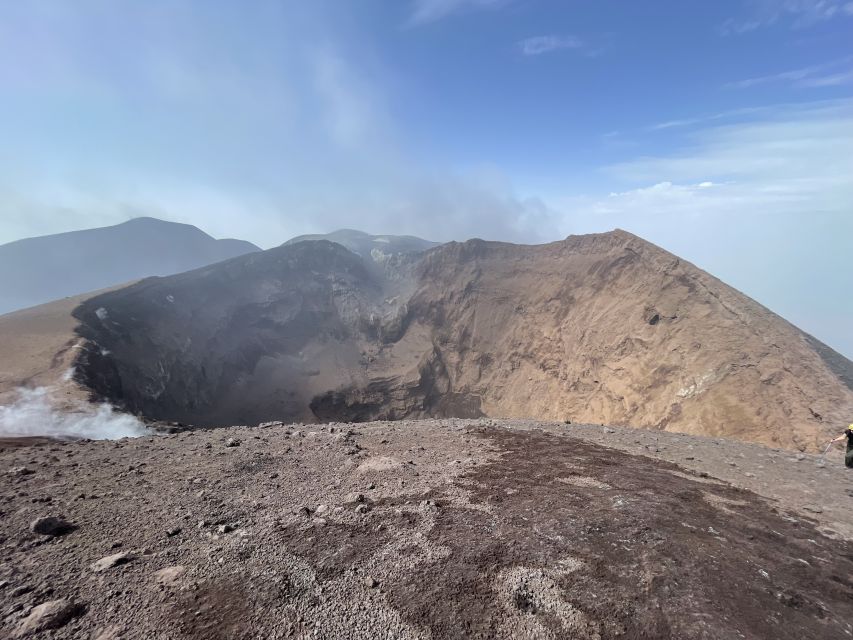
The main crater stop is built around time to look, photos, and a guided explanation: about two hours at the Cratere Centrale dell’Etna area.
This is where you’ll get the volcanology storytelling you came for—how Etna behaves, what eruptions have left behind, and why the craters and surrounding features look the way they do. In the reviews, guides like Vincenzo and Paolo are praised for being friendly, knowledgeable, and attentive. Even if you’ve read about Etna before, a live guide helps connect the names and dates to what you can see.
Practical note: plan for it to feel crowded with sights. The views can be dramatic, but you’ll still want to pace yourself. If you’re prone to dizziness, it’s smart to take slow breaths and keep your eyes level on the horizon when the ground drops away around crater areas.
Piano delle Concazze: a quieter volcanic walk that feels otherworldly
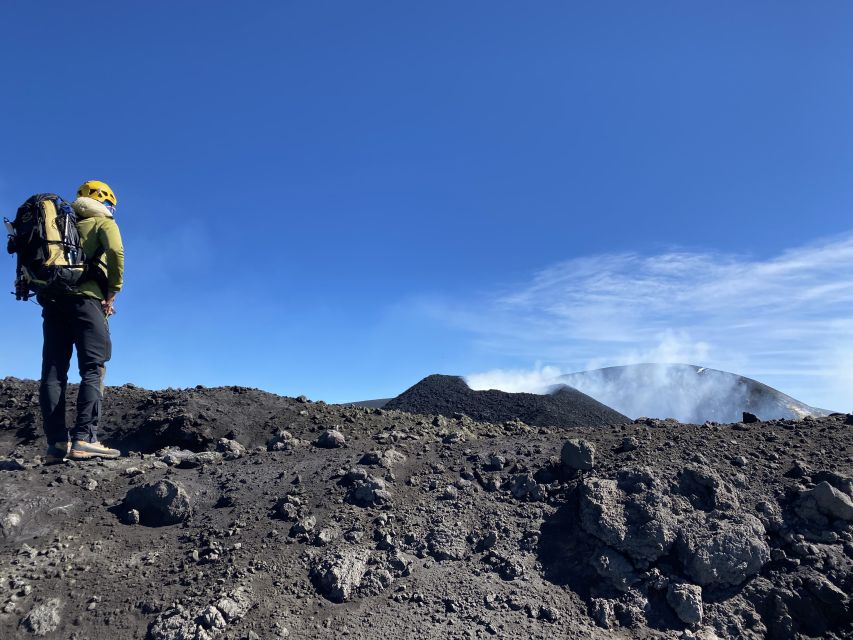
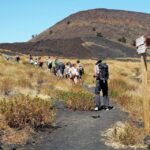
After the central crater time, you move to Piano delle Concazze for roughly 80 minutes. This is your photo stop plus guided tour plus a walk—exactly the kind of time where you’ll start seeing volcanic patterns as more than random rocks.
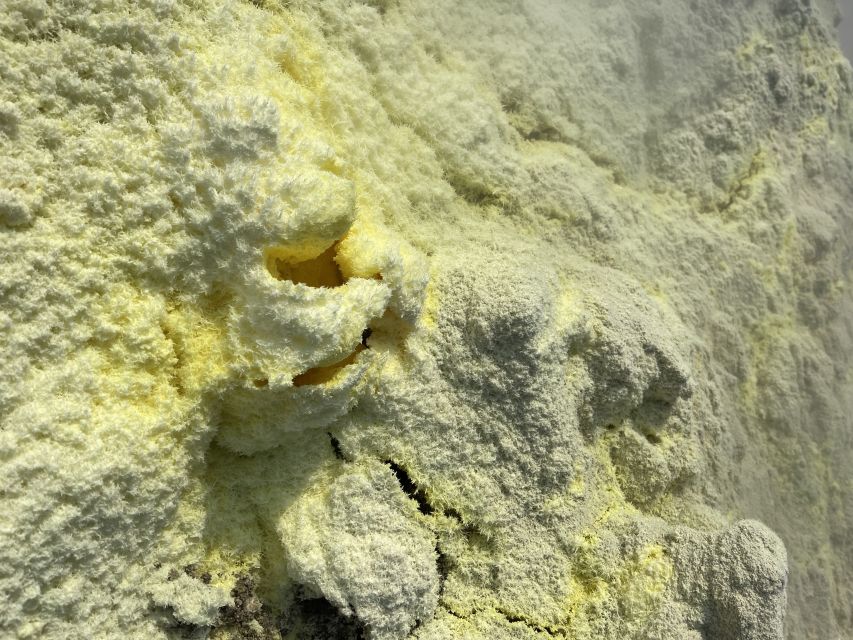
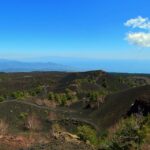
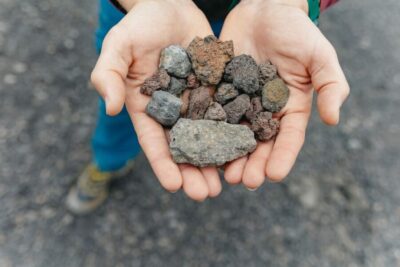
This portion puts you closer to the volcanic material itself: volcanic bombs and scoria (gritty, loose volcanic rock). That matters because you’re not walking on flat dirt. The surface can be uneven and springy, so your hiking rhythm will be slower than you’d expect on a normal trail.
Why this stop is worth it: it’s a chance to be on Etna without the loudest tourist crush. The route is designed to use a side path that’s described as less frequented by crowds, so you’re more likely to feel like you’re walking through an active geological world, not just passing a viewpoint.
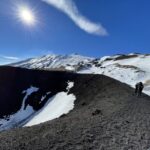
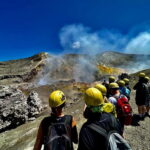
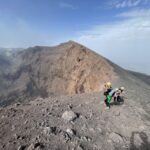
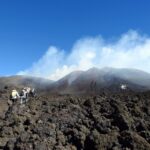
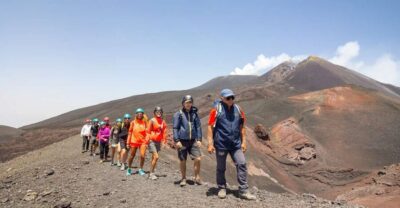
Higher up Etna on foot, towards the summit craters.
The step-up to 3,300 m: what the final ascent really feels like
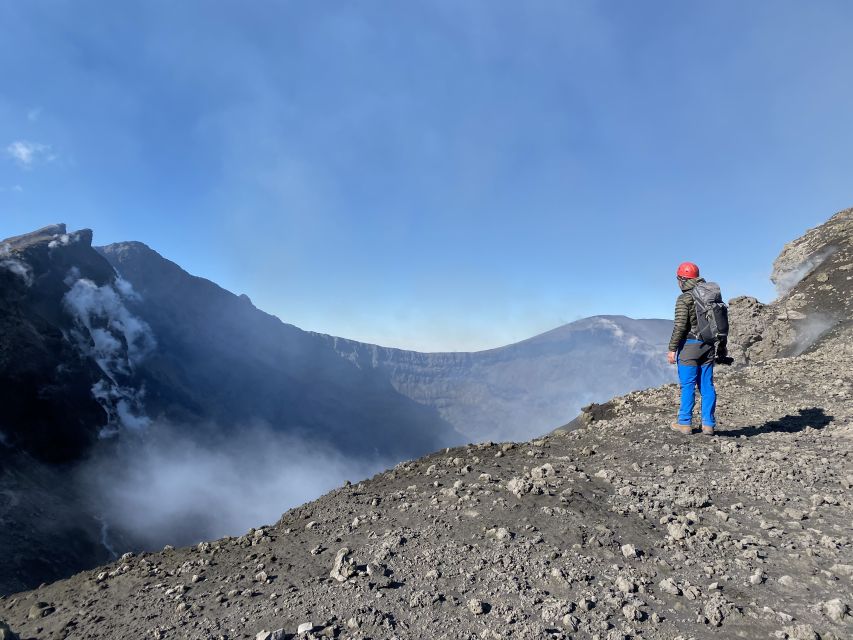
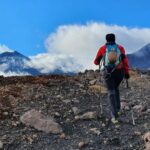
The heart of the hike is a climb that includes a positive gain of about 470 meters, taking you up to 3,300 m at the Central Crater.
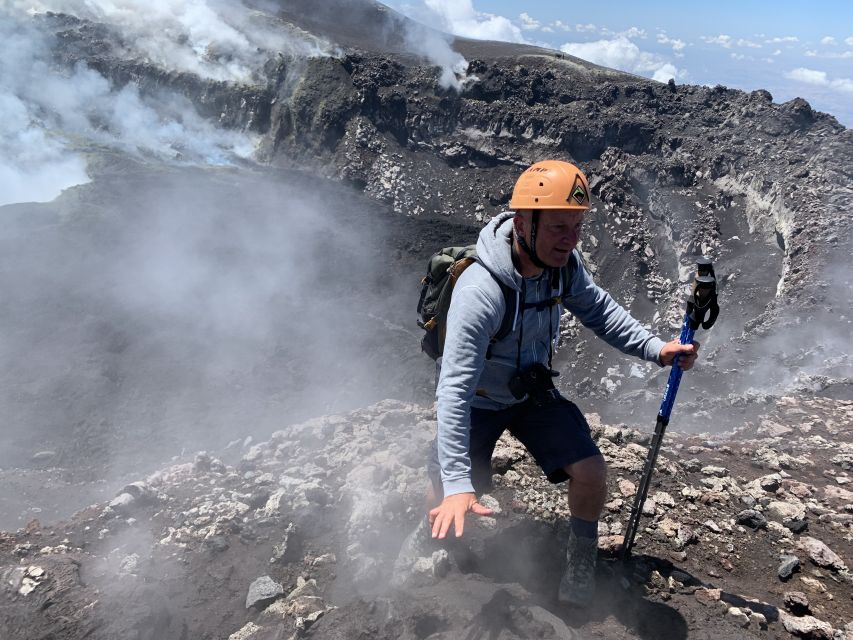
On paper, 470 m doesn’t sound impossible. At altitude, it’s different. Your breathing changes fast, and your legs start working even if the trail isn’t steep in the cartoon sense. The trek is described as for moderately trained hikers, not beginners, and the path develops at high altitude—so you’re dealing with both effort and thinner air.
There’s also a comfort factor. The route requires walking along crater edges, and that can cause dizziness for some people. If you’re the type who feels uneasy with heights or has ever gotten lightheaded on a viewpoint, take that seriously before you book. This isn’t a fear-of-heights game; it’s a real volcanic hike with real drops.
Descent through soft scoria channels: steady steps, not heroics
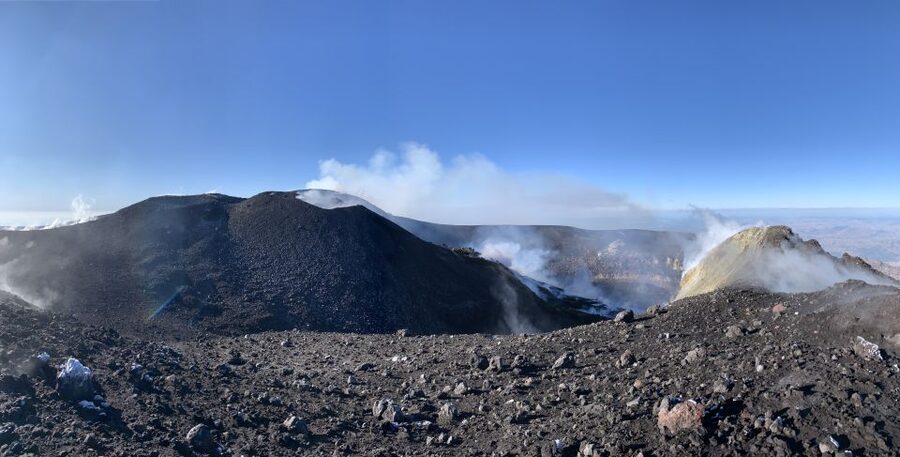
For the return, you go back along the same main path, but after dropping down you’ll continue on foot to about 2,825 m. The description includes walking inside smaller channels with soft, friable volcanic scoria.
This part is easy to underestimate. Loose volcanic rock can slip underfoot, and it’s the sort of footing where careful, slow steps beat speed. If you’re using the trekking poles provided, use them early rather than waiting until you start getting tired.
Then the plan finishes with jeep/SUV travel back down to Piano Provenzana, closing the loop on a day that feels like: vehicle to altitude, hike to crater, vehicle back to comfort.
Price and logistics: does it feel like value?
The listed price is $73.64 per person, but the day has an extra cost: 4×4 transportation is €70 paid in cash on the day. Parking also costs €3 for the whole day.
So what are you buying with that extra spend? You’re paying for access and time efficiency. Without the off-road vehicle, this kind of 3,300 m crater-day would be either longer or harder to manage. You’re also paying for a small group structure (max 10) plus a volcanological guide and gear.
What’s included is genuinely helpful in the field: trekking poles, protective helmets, and trekking shoes, plus a windbreaker, extra socks, and an extra backpack. That reduces the risk of showing up underprepared, which is a real issue on windy, high-altitude volcanic ground.
If you’re traveling light and you don’t want to rent gear, this can be good value. If you already have everything and you’re cost-sensitive, the cash-on-arrival 4×4 fee can sting. Either way, I’d plan your total budget with the 4×4 fee in mind before you book.
What to pack for Etna wind and high altitude
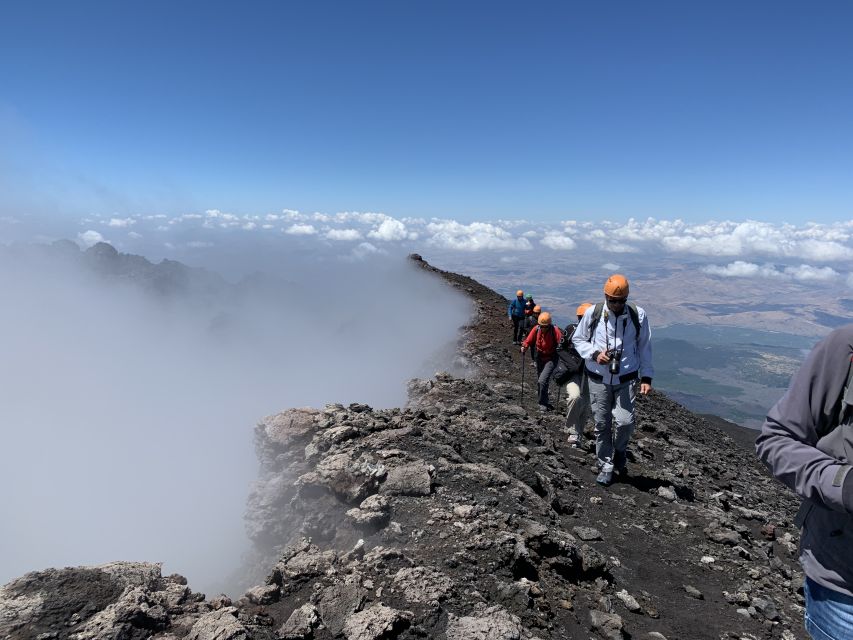
The day is about wind, cold, and dry grit. Bring layers you can adjust.
What you’ll want:
- Warm clothing and a jacket/windbreaker
- Sunglasses, hat, sunscreen
- Water and food for a packed lunch
- Rain gear in case conditions shift
- Comfortable clothes you can move in
Gloves are a specific call-out. Gloves and hats are not included in spring and autumn, so if you’re going in shoulder season, you should pack your own.
What you shouldn’t bring:
- High-heeled shoes
- Shorts
- Luggage or large bags
- Sleeveless shirts
- Swimwear
Also: you’re required to have proper hiking shoes. The info notes that without adequate hiking shoes, you’re not covered by insurance. Even though trekking shoes are included, I’d still treat this as a reminder to wear the right footwear and keep the fit secure.
Who this Mount Etna hike suits (and who should pass)
This tour is for people who can handle a moderately challenging hike at high altitude and who can walk near crater edges.
It is not suitable for:
- Pregnant women
- People with back problems
- Mobility impairments
- Heart problems
- People afraid of heights
- People with vertigo
- People with respiratory issues
- People with epilepsy
- People with pre-existing medical conditions
- People with high blood pressure
- People with low fitness
If you’re in good hiking shape but still get a little lightheaded at high elevations, you may want to think twice. The route requires ascending and walking along crater edges, and dizziness is specifically mentioned as a concern.
On the other hand, if you’re the kind of traveler who likes hands-on geology, enjoys guided explanations, and can handle a short but high-altitude climb, you’ll likely love the payoff.
Weather changes are part of the Etna plan
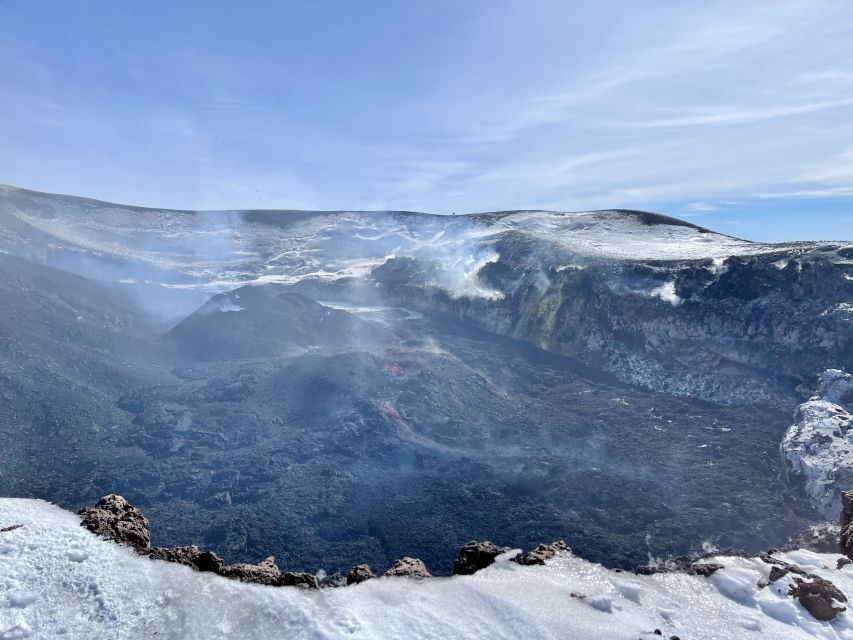
Etna weather can move fast. The trip may be cancelled if conditions are too rough, or it may be modified if the weather is bad. In one example, the summit attempt at 3,300 m wasn’t possible and the hike was shifted so the group still went up to around 2,900 m, which still sounded incredible.
That’s a realistic way to approach the day: treat the crater hike as the goal, not just a number on a pin on your map. If the summit changes, you’ll still be walking volcanic terrain and looking at Etna up close.
Should you book the Piano Provenzana 3,300 m Etna hike?
Book it if you want a guided, crater-focused Etna day that uses a smart mix of 4×4 access and a real hike. The small group size, volcanology guide, and practical gear make it a good bet if you’d rather show up and follow a plan than build your own route.
Skip it if you have vertigo, strong fear of heights, heart or respiratory concerns, or if you know high altitude and crater-edge walking make you dizzy. Also think carefully if you’re very low on hiking stamina. This isn’t meant to be a casual stroll.
If you’re on the fence, one simple move helps: pack for wind and cold, bring water and a packed lunch, and wear footwear that you trust on loose volcanic rock. Do that, and you’ll be set for one of Sicily’s most unforgettable geology walks.
FAQ
How high does this Mount Etna trip go?
You ride by off-road vehicle to around the 2,925–2,965 m area, then hike to the Central Crater at 3,300 m when conditions allow.
What’s included, and what extra costs should I expect?
Included: volcanological guide, trekking poles, protective helmets, trekking shoes, windbreaker, and extras like an extra backpack and extra socks. Not included: 4×4 transportation is €70 cash on the day, and parking is €3 for the whole day.
Where do I meet the guide on arrival?
Meet at CHIOSCO BAR MARENEVE di Ferraro Giuseppa, near the chairlift used by skiers in winter. It’s the second house in the parking lot. Do not meet at Chiosco Bar Etna Nord in the lower parking lot.
How long is the tour, and how many people are in the group?
The duration is about 5 hours. The group is limited to 10 participants, and there is a minimum of 8 participants required to run the activity.
What level of fitness do I need?
The trek is for moderately trained hikers and involves hiking at high altitude. The ascent on foot includes about 470 meters of positive level difference.
What should I bring for the hike?
Bring warm clothing, a windbreaker, hat and sunglasses, sunscreen, and rain gear if needed. You should also pack water and food/packed lunch, plus hiking shoes and a few extra layers appropriate for the weather.
More Tour Reviews in Mount Etna
More Etna Summit Hikes and Treks
More Etna Volcano Tours from Catania
After something different? More tours and day trips around Catania and eastern Sicily
Etna Volcano Tours from Catania, compared.
 ★ 4.8Mount Etna Morning or Sunset Day Trip with TastingFrom $704,028 reviews
 ★ 4.7Guided Volcano Summit Hiking Tour with Cable CarFrom $1243,784 reviews
 ★ 4.8Sunset Jeep Tour of Mount Etna and Lava Flow CavesFrom $712,113 reviews
 ★ 4.8Etna and Alcantara Gorges Full-Day Tour with LunchFrom $1051,766 reviews
 ★ 4.7Etna Volcano: South Side Guided Summit HikeFrom $671,545 reviews
 ★ 4.8Guided Trek 3,000 Meters to the SummitFrom $1131,407 reviews
 ★ 4.9Mount Etna Trekking Trip off the Tourist PathFrom $781,351 reviews
 ★ 4.8Etna Sunset Tour with Pickup and Drop-offFrom $711,348 reviews
Browse the lists this tour appears in