
Reviewed · ETNA VOLCANO TOURS FROM CATANIA
Etna: Winter excursion to 3.000mt
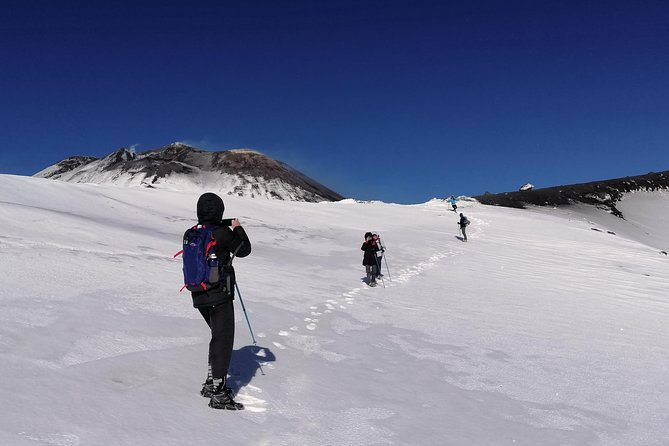
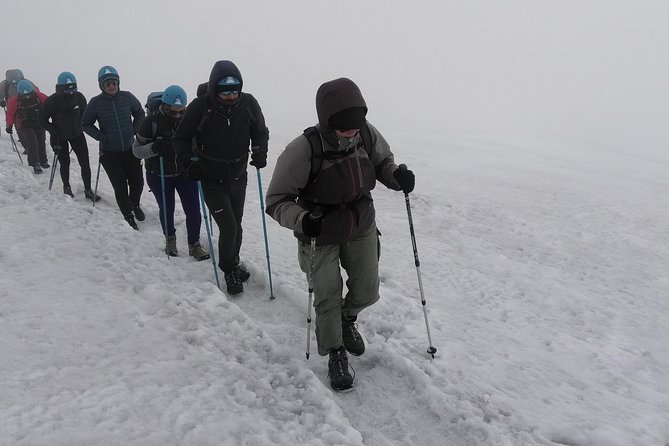
Snow on Etna makes the volcano feel personal. In winter, you trade summer crowds for cold air, snow on the ground, and small groups led by authorized alpine and volcanological guides, with the goal of getting you safely to the upper zones of Etna.
Two things I like a lot: the gear support (helmet, high-neck hiking shoes, trekking pole) and the way the guides explain what you’re seeing as you move through the volcanic terrain. I even saw different guide styles mentioned by name—Simone, Max, and Giuseppe—each focused on safety first and then turning the hike into a real Etna lesson.
One thing to consider: this is not an easy walk. Expect expert-level winter effort over icy/snowy ground, and you’ll still need to pack your own winter supplies like at least 1.5 L of water (snacks and a packed lunch too), plus the return cable car ticket is extra (€52 per person).
In This Review
- Key highlights you’ll actually feel on the hike
- Winter Etna to 3,000 m: why it’s special
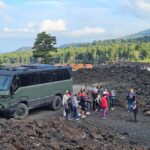
- Getting from Sapienza to 2,500 m and then trekking up
- The route stops that actually teach you Etna
- Funivia dell’Etna: a quick lift, then the real climb begins
- Valle del Bove: walking through a volcanic valley system
- Barbagallo craters: a close read of crater geography
- The cone of the 2001 eruption: a specific event you can see
- Summit crater views without the risky part
- Guides and group size: what you want on a snowy volcano
- What’s included vs what you must bring (winter edition)
- Price and value: what $108.84 really turns into
- Who should book this Etna winter hike
- Weather reality: what can change on Etna
- Should you book this Etna winter excursion?
- FAQ
- How high does the cable car take you?
- Is this tour suitable for beginners?
- What gear is included?
- Do I need to buy the cable car ticket separately?
- What should I bring for the trek?
- What happens if the hike can’t run due to weather?
Key highlights you’ll actually feel on the hike
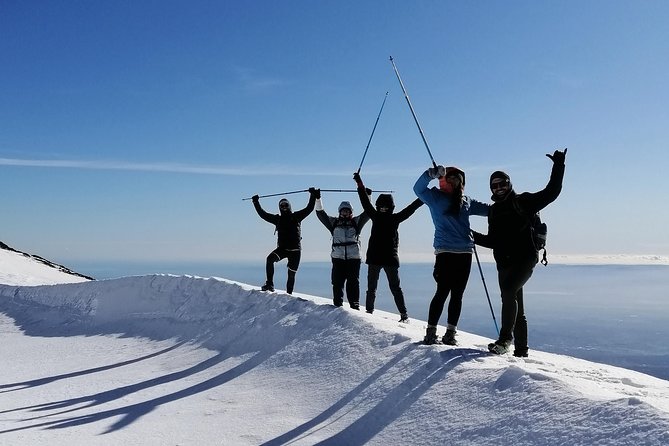
- Cable car to 2,500 m, then a trek starting around 3,000 m through snow and ice conditions.
- Authorized alpine + volcanology guides who pace the group and keep you moving with safety in mind.
- Volcanic stops with clear themes: the cone of the 2001 eruption, Valle del Bove, and Barbagallo craters.
- Summit craters from a safe distance, so you get big views without the risky stuff.
- Small groups (up to 15) that make the day feel more like a shared climb than a bus tour.
- Possible lava-flow channel visit if snow conditions allow on the return.
Winter Etna to 3,000 m: why it’s special
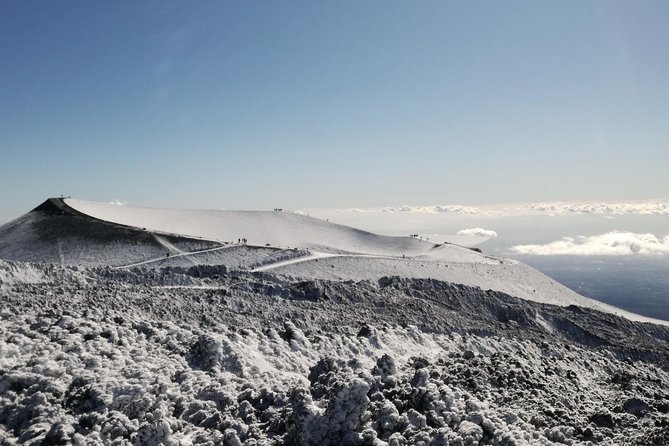
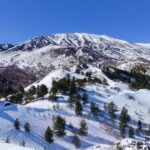
Etna in the cold months has a different personality. The volcano is still imposing, but the snow and ice make it feel sharper and more graphic—like the rock textures suddenly matter more. This outing is built for that season: you go up by cable car, then you hike through snowy volcanic terrain with an alpine and volcanology team.
You’re also not just chasing photos. The route is designed to connect the physical terrain with Etna’s history and structure. You’ll walk past features tied to eruptions and volcanic valleys, then look toward the summit craters from a distance where safety comes first. If you’re the type who likes to understand what you’re seeing instead of just staring at it, this style fits.
The day runs about 5 hours and starts at 9:00 am near Piazzale Rifugio Sapienza (Nicolosi CT). You’ll meet at the Ashàra Etna & Stromboli Guides point, and the location is near public transportation, which is helpful if you’re staying in Catania and don’t want to overthink getting there.
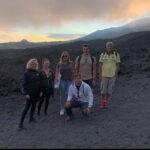
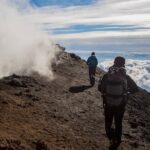
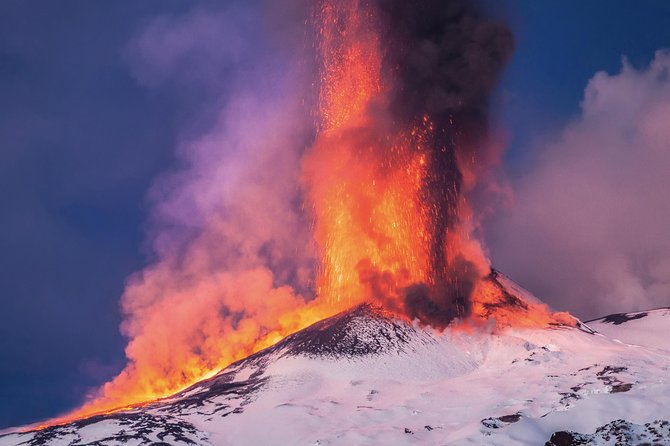
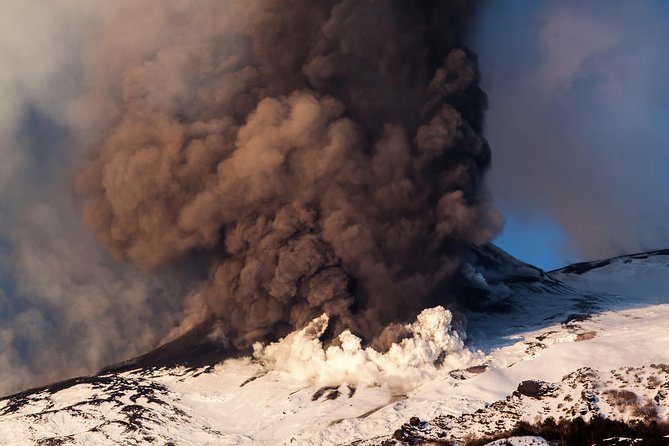
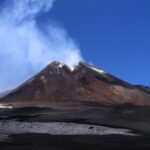
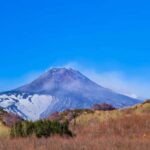
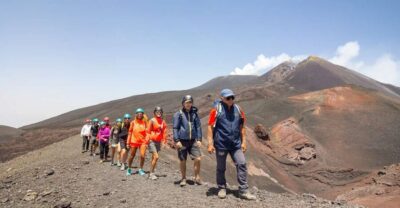
Back up the volcano, with Etna smoking above Catania.
Getting from Sapienza to 2,500 m and then trekking up
The basic flow is simple, which is good on a winter day: cable car first, then footwork. You’ll ride up to about 2,500 metres, then begin your trek at around 3,000 metres. From there, the itinerary focuses on walking segments long enough to make the winter feel real.
This is the part where you should calibrate your expectations. One hiker described a climb of about 7.5 km and roughly 2.5 hours to reach 3,000 m. Even if your exact pace and conditions vary, that gives you a reality check: this is active hiking, not a light stroll on packed trails.
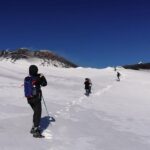
You’ll deal with winter traction issues. The tour is explicitly described as suitable for expert hikers because ice and snow are part of the plan. That’s also why you’re given proper winter-oriented gear like high-neck hiking shoes and a trekking pole. Those small tools matter when the ground turns to slick volcanic material or crusted snow.
Small-group dynamics also come into play here. With a maximum group size of 15, you’re more likely to get a pace that matches the real conditions on the mountain, not the pace of the fastest person. That’s a win for safety and comfort, but it also means slower hikers set the rhythm for everyone.
The route stops that actually teach you Etna
This outing works because each area has a job: one teaches you about eruption geography, another connects you to volcanic valleys, and another gives you a better read of Etna’s structure.
Funivia dell’Etna: a quick lift, then the real climb begins
You start by riding the cable car (Funivia dell’Etna) to 2,500 m. In winter, that matters. It compresses the hardest altitude gain into a shorter span so you can spend more energy on the scenic volcanic parts of the trek.
Also, it sets your body up for the climb. You’ll feel cold at altitude, but you’re not starting the day from sea level with winter gear on. Still, once you begin walking, the cold can turn “uncomfortable” if you get too warm then cool down again, so layers and movement pace matter.
Valle del Bove: walking through a volcanic valley system
You’ll reach Valle del Bove during the trek. Valle del Bove is a big name on Etna, and on a winter day it feels more dramatic because snow adds contrast to the rock forms. You’ll get time to observe how the terrain channels and breaks up sight lines.
One practical note: valleys can mean wind pockets. The guides will be watching conditions and will likely adjust how you move and where you pause. If gusts are strong, your schedule could shift, and the tour provider may even cancel for safety if conditions are extreme.
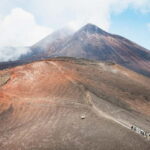
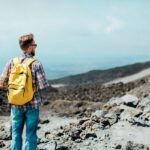
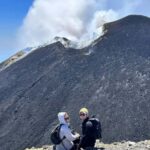
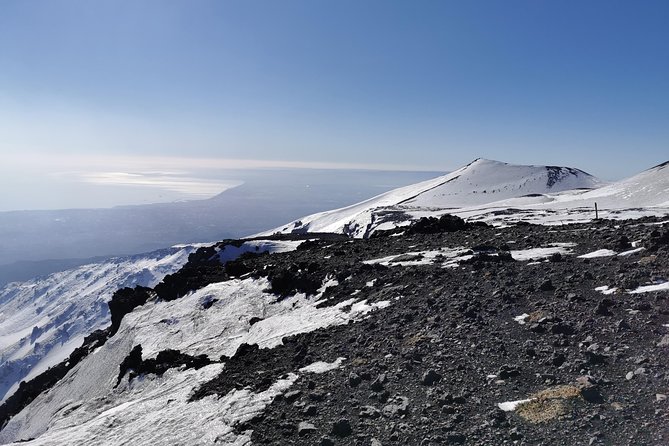
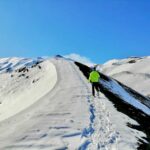
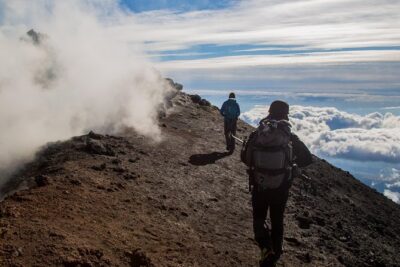
Higher up Etna on foot, towards the summit craters.
Barbagallo craters: a close read of crater geography
Next up are the Barbagallo craters. Crater zones are exactly where volcanology questions become easy. From the ground level, you can start thinking in shapes—how cones form, how eruptions build and reshape the mountain, and why certain areas look like they do.
You won’t be doing anything reckless here. The idea is to experience the terrain and understand it, with a guide who can connect what’s in front of you to Etna’s eruptive behavior.
The cone of the 2001 eruption: a specific event you can see
The trek includes the cone of the 2001 eruption. This is one of the most satisfying parts of the day because you’re not stuck with general Etna talk. You’re walking near a feature tied to a specific eruption history, so the volcanic story becomes concrete.
Winter makes this especially readable. Snow and ice don’t just make things pretty—they outline contours and break up flat surfaces. That helps you register where the mountain has built up and where paths may be more slippery.
Summit crater views without the risky part
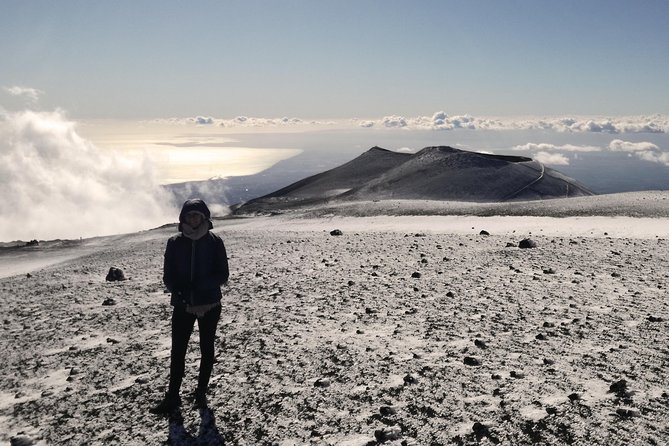
You’ll admire Etna’s summit craters from a safe distance before turning back. That safe-distance approach is a big deal in winter. Snow can hide texture changes underfoot, and wind at altitude can make handling gear and maintaining footing more difficult. The tour is designed so you get big views while keeping the excursion within the bounds of safe guiding.
If conditions allow, you may also visit a lava flow channel before you reach the upper station of the cable car for the return. That “if” matters. It’s not a gimmick; it’s a winter-conditions reality. Sometimes ice makes certain areas too dangerous to approach. Other times snow firms up enough to make a short detour possible.
Guides and group size: what you want on a snowy volcano
This excursion is led by authorized alpine/volcanological guides and limited to a maximum of 15 travelers. That small cap is not just about comfort. On a winter mountain hike, it’s about keeping the group together, controlling pace, and being able to respond quickly if footing or wind changes.
In the feedback I’m taking seriously here, guides get praised for two things: safety management and clear explanations. Names that came up include Simone, Max, and Giuseppe, and the common theme is that they keep the day moving while still making time for the science and the history behind what you’re seeing.
Language also matters. One note described the group receiving guidance in English, Italian, and French, which can help if your group has mixed languages. Even if you speak only one, that kind of structure often improves safety because everyone understands stop-and-go instructions.
You also get insurance included, which is worth noting for a winter excursion involving ice/snow travel. And you get a free rental rock helmet—one of those “small” items that turns into a big comfort when the terrain is harsh and your guide asks you to keep that gear on.
What’s included vs what you must bring (winter edition)
The tour includes:
- Free rental rock helmet
- High-necked hiking shoes
- Trekking pole
- Alpine and volcanological guide
- Insurance
Not included:
- Return cable car ticket: €52.00 per person
- Bottled water (bring at least 1.5 L)
- Snacks and a packed lunch
Here’s the practical impact for your day planning. Water is the one people underestimate. Cold weather makes you forget thirst, but altitude and winter exertion still pull fluids out of you. Bring at least 1.5 L and consider keeping it accessible so you can sip during breaks.
As for food, plan like you’ll be outside longer than you think. Even with meal breaks, winter hiking can stretch your energy needs. Pack something that works in cold hands—snack bars, nuts, sandwiches, anything you can eat without fuss.
Gear-wise, you’re getting the key items for traction and protection. But based on on-the-ground accounts, there may also be additional gear options you can use if you need them (like gloves or jackets). Still, don’t rely on borrow-everything. Bring what you already trust, and use rentals to fill gaps, not as your entire safety plan.
Price and value: what $108.84 really turns into
The listed price is $108.84 per person, and the duration is about 5 hours. What makes this tricky is that the return cable car ticket is not included and costs €52 per person.
So your real budget is closer to:
- the tour price
- plus the return cable car fee
- plus your own water and food
Why might it still be good value? Because you’re getting more than a guide. You’re getting winter-appropriate walking support (helmet, high-necked shoes, trekking pole) and insurance included. If you tried to do the same hike on your own, you’d need equivalent gear and a safety plan, and you’d still have to figure out timing, winter route constraints, and eruption/terrain context.
Also, the group size cap matters. Paying for a small group with specialized expertise is often what separates “fun winter hike” from “dangerous winter experiment.” Here, you’re buying that structure.
Who should book this Etna winter hike
Book it if you:
- like hikes that feel serious (you can handle steep, icy terrain)
- are comfortable moving for hours in cold conditions
- want a guide who connects volcanic features to what you’re walking through
- enjoy small-group days where you’re not lost in a crowd
Skip it if you:
- want a casual winter walk
- don’t have ice footing confidence
- can’t carry the essentials like at least 1.5 L of water and a packed meal
- get uncomfortable when wind and snow complicate plans
One more practical point: this hike is described for expert hikers, and the description notes moderate physical fitness is the expectation. That combination usually means: you can be fit, but you still need winter hiking technique and comfort on snow/ice ground.
Weather reality: what can change on Etna
Etna winter days depend on conditions. The experience requires good weather, and if the outing is canceled due to poor weather, you’ll be offered a different date or a full refund.
That’s not a dealbreaker. It’s winter on a real volcano. The smarter move is to book early enough that you have backup days in your week, and to plan your schedule with flexibility.
If you’re weighing whether to go, treat this hike like weather-sensitive outdoor sports. If the wind or snow isn’t right, the provider will prioritize safety over sticking to the schedule.
Should you book this Etna winter excursion?
Yes, if your goal is to feel Etna up close in winter with real guidance. I like that you get structured access (cable car to 2,500 m), a coherent trek through specific volcanic features (2001 eruption cone, Valle del Bove, Barbagallo craters), and crater views from a safe distance. I also like that gear is handled for you up front with helmet, traction-focused shoes, and a trekking pole.
I’d think twice only if you’re unsure about icy winter hiking. The trek is demanding, and you need to show up ready with water and food. Budget correctly too: the return cable car ticket (€52) is extra, so plan around the full total.
If you match the fitness and winter comfort level, this is exactly the kind of excursion that makes Sicily feel more than beaches and cities.
FAQ
How high does the cable car take you?
You ride the cable car up to about 2,500 metres, and then you start the trek around 3,000 metres.
Is this tour suitable for beginners?
It’s aimed at expert hikers because ice and snow are part of the route. The tour says travelers should have moderate physical fitness, but you should expect a demanding winter climb.
What gear is included?
The tour includes a free rental rock helmet, high-necked hiking shoes, and a trekking pole, plus an alpine and volcanological guide and insurance.
Do I need to buy the cable car ticket separately?
Yes. The return cable car ticket is not included, and it costs €52.00 per person.
What should I bring for the trek?
Bring at least 1.5 litres of bottled water, and bring snacks and a packed lunch (snacks and lunch are not included).
What happens if the hike can’t run due to weather?
The experience requires good weather. If it’s canceled due to poor weather, you’ll be offered a different date or a full refund.
More Tour Reviews in Catania
More Etna Summit Hikes and Treks
More Etna Volcano Tours from Catania
After something different? More tours and day trips around Catania and eastern Sicily

Etna Volcano Tours from Catania, compared.
 ★ 4.8Mount Etna Morning or Sunset Day Trip with TastingFrom $704,028 reviews
 ★ 4.7Guided Volcano Summit Hiking Tour with Cable CarFrom $1243,784 reviews
 ★ 4.8Sunset Jeep Tour of Mount Etna and Lava Flow CavesFrom $712,113 reviews
 ★ 4.8Etna and Alcantara Gorges Full-Day Tour with LunchFrom $1051,766 reviews
 ★ 4.7Etna Volcano: South Side Guided Summit HikeFrom $671,545 reviews
 ★ 4.8Guided Trek 3,000 Meters to the SummitFrom $1131,407 reviews
 ★ 4.9Mount Etna Trekking Trip off the Tourist PathFrom $781,351 reviews
 ★ 4.8Etna Sunset Tour with Pickup and Drop-offFrom $711,348 reviews
Browse the lists this tour appears in