
Reviewed · ETNA VOLCANO TOURS FROM CATANIA
Etna Volcano: South Side Guided Summit Hike
Cold wind, hot ground, and real craters.
This Etna South guided summit hike is interesting because it pairs volcanology-led safety with a walk on actual summit-rim terrain, not just scenic stops. I like that you’re geared up with helmet, boots, and trekking poles, which makes the day feel practical from minute one. One thing to consider: because Etna is active, you might not reach every crater area if gas or conditions make it unsafe.
You meet at Piazzale Rifugio Sapienza and get pulled up to the 2,800–2,900 meter zone via cable car or a 4×4 jeep (tickets are extra). From there, you walk through lunar-black lava country toward the summit craters, with breaks for photos and a volcanologist’s explanations. It’s not a stroll, but the pacing and the safety talk help a lot.
In This Review
- Key things to know before you go
- Why the South-Side Etna Hike Gets You Into the Real Volcanic Zone
- Sapienza Start: Cable Car or 4×4 to the 2,800–2,900 Meter Trailhead
- On the Summit Craters Rim: Central, Northeast, and Southeast
- Valle del Bove and the Broader Mount Etna View
- Descent via Barbagallo Craters and a Lava Flow Channel
- Gear, Clothing, and Weather: Stay Warm in Wind and Cold
- Fitness Level and Footing: What Makes This Hike Medium-High
- Price and Logistics, Plus Who Should Book
- Should You Book This Etna South Guided Summit Hike?
- FAQ
- What time does the Etna South guided summit hike start?
- How do you reach the trail area on Etna?
- Is the tour fully included in the $78.64 price?
- What hiking gear is provided?
- Do I need to bring water or snacks?
- Is the tour offered in English?
- What if weather or volcanic conditions are unsafe?
Key things to know before you go
- Small group size (max 20) helps you hear the guide and stay together on uneven ground.
- Active-volcano reality means your route can change for safety, even on a planned summit hike.
- Crater-rim walking includes the Central Crater rim with views toward the Northeast and Southeast craters.
- Terrain is medium-high: deep gravel/sand, lava rock edges, and some slippery footing on the way down.
- You’ll likely feel the wind and temperature swings up high—warm layers matter even in mild seasons.
- Cable car/4×4 are not included (and you pay locally), so budget for that ahead of time.
Why the South-Side Etna Hike Gets You Into the Real Volcanic Zone
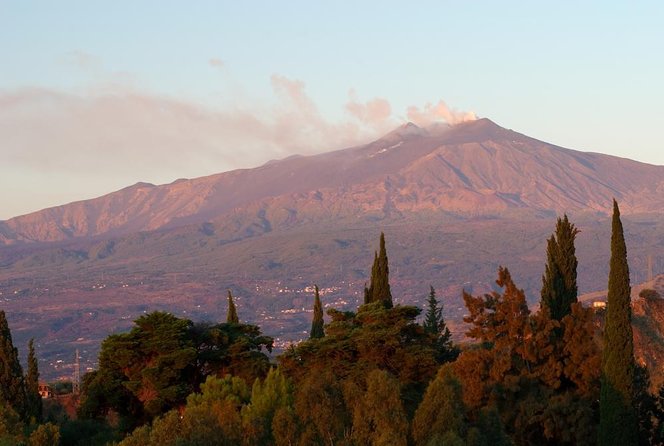
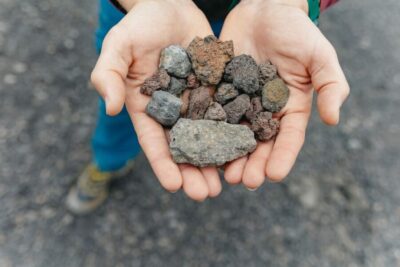
This tour is built around the south side of Etna, where you start from the Sapienza area and work upward into the summit world. The big value here is that you’re not just seeing Etna from a distance. You’re walking through volcanic ground that’s been shaped by eruptions—lava flows, spatter cones, bombed rock, gas emissions, and that weird sparkle from minerals like sulfur.
What makes it feel especially worthwhile is the volcanologist-led tone. You get safety guidance that fits an active volcano, plus explanations for what you’re looking at: why gases move, what crater features mean, and how the summit system changes. Even when conditions shift, the hike still aims to show you the volcano’s “why,” not just its “wow.”
If you’re the type who likes your nature with facts and a safety net, this is a strong match. If you want an easy promenade with guaranteed top-of-mountain access no matter what, you’ll want to keep expectations flexible.
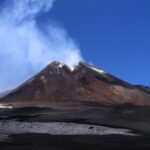
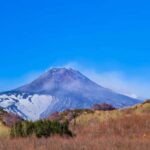
Back up the volcano, with Etna smoking above Catania.
Sapienza Start: Cable Car or 4×4 to the 2,800–2,900 Meter Trailhead
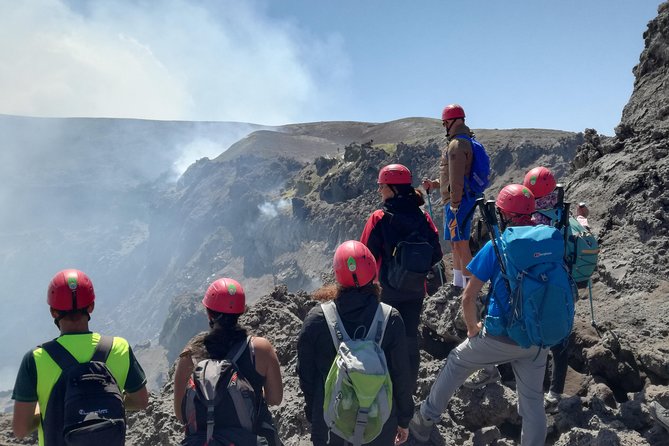
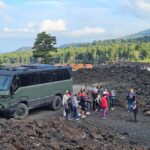
The day starts at Piazzale Rifugio Sapienza (Etna South) at 8:00am. From there, you’ll head up by cable car and/or a 4×4 jeep to the higher starting zone. The height you’re pushed toward is about 2,800 meters, with the access route often described around 2,900 meters depending on how operations are running that day.
Here’s the practical part: the cable car and 4×4 are not included in the tour price. You pay those locally (listed at €65 per person). So your “all-in” budget is higher than the headline number—still reasonable, because those rides save a lot of climbing and put you in position for the crater walk.
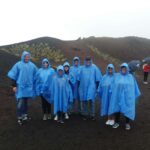
You also don’t need to arrive hours early with a plan for gear shopping. The tour provides essentials like helmet, boots, and trekking sticks. The smarter move is to add your own comfort layers (more on that below) so you’re not relying on borrowed items if the wind turns mean.
On the Summit Craters Rim: Central, Northeast, and Southeast
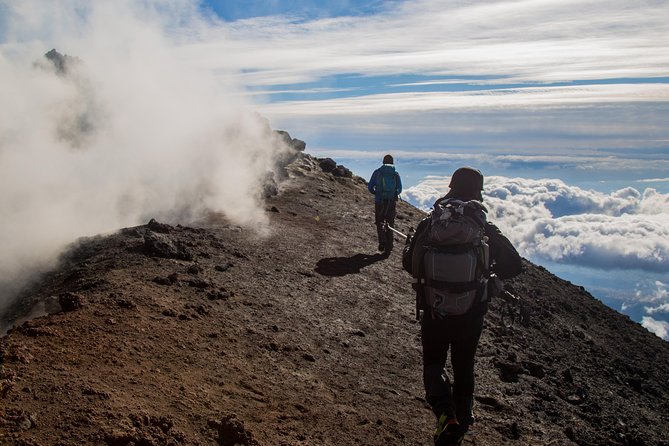
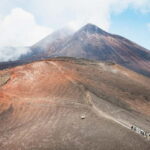
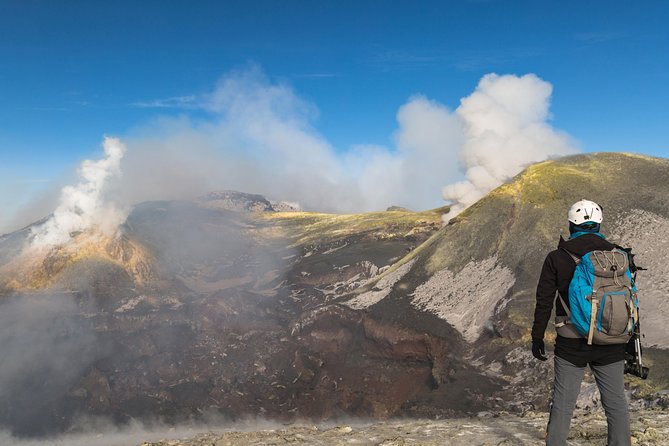
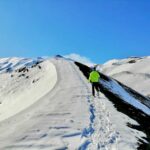
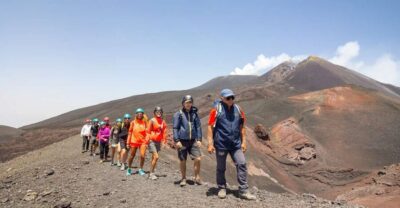
Once you’ve reached the higher altitude, the walking starts. Expect about two hours on foot in a lunar-like zone of lava flows and black ground before you reach the summit crater areas. This is the core “Etna South summit hike” experience—walking near crater rims and seeing the summit system as an interconnected world.
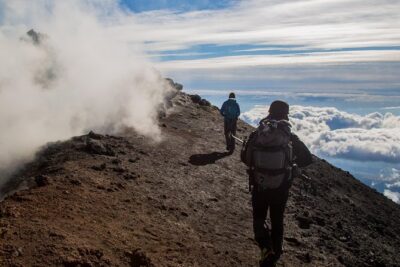
The highlight is the rim walk on the Central Crater. You’re guided along a spectacular edge where the views feel close and dramatic. From there, you face the Northeast Crater and look toward the famous Southeast Crater, which has been responsible for impressive recent eruptions.
You’ll also be watching for volcanic details that aren’t just visual:
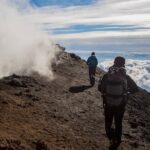
- Gas emissions can rise and shift with conditions.
- You might see volcanic bombs and other eruption debris.
- The ground can show sparkling mineral colors, often linked to sublimation processes and sulfur-rich activity.
One key reality check: because Etna is active, the exact summit access can vary. There are cases where guides adjust plans if vapor and gas make it unsafe to go all the way in. When that happens, you still get a lot of crater-and-lava material—lava lakes, lava tubes, spatter cone shapes, and other summit-zone features you can learn from without needing to force a route.
Valle del Bove and the Broader Mount Etna View
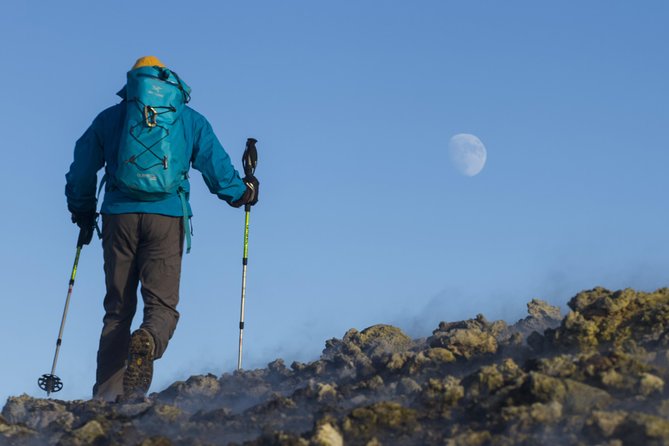
After the crater-focused part, the hike transitions into wider volcanic terrain, including Valle del Bove. This area helps you understand Etna not as one “top,” but as a whole volcanic system carved into big-scale shapes.
If you like geology that you can read with your eyes, Valle del Bove is where the mountain starts to feel bigger. You’re surrounded by a world that looks engineered by eruptions: broken slopes, old flows, and the kind of open sightlines that make the guide’s explanations more effective. Breaks here matter because the wind can pick up at altitude, and the walking surfaces can be loose.
In practical terms, you’re also still building toward a “full Etna” story. The tour doesn’t only chase the most dramatic crater views; it aims to show you how different eruption areas connect visually and physically.
Descent via Barbagallo Craters and a Lava Flow Channel
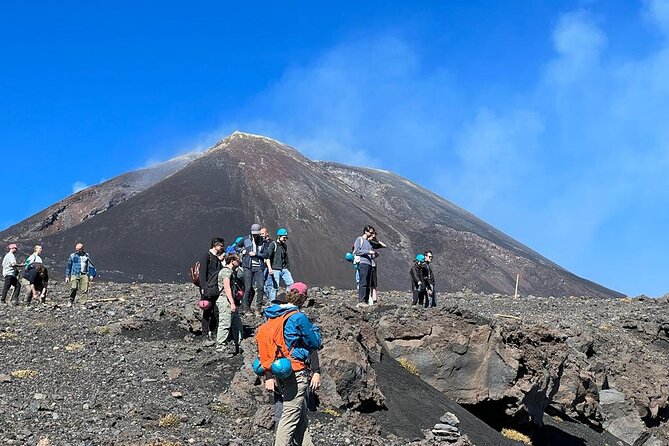
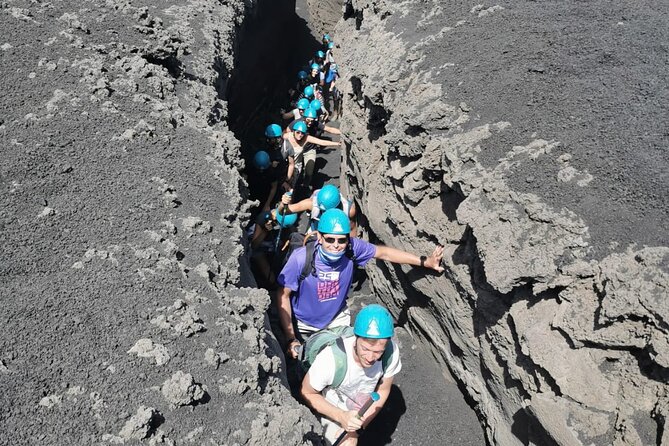
The best part of an Etna hike (for many people) is not just the climb. It’s the descent, because it changes your angle on the terrain you climbed. You’ll visit Barbagallo craters and cross a lava flow channel during the return.
This is where footing becomes more of a factor. Lava-rock edges and loose volcanic material can turn slippery, especially if the surface is damp or the wind has stirred gritty powder into slick patches. Your guide may keep a steady rhythm and add extra care on the way down, and trekking sticks become more than comfort—they’re stability.
The day then finishes with the return toward the lower point by cable car again (around 2,500 meters, before getting back to the start). The route is designed to be “walk the science,” not just “walk up and down”—you get multiple volcanic features, not one big straight climb.
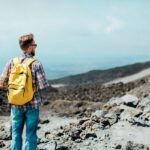
Higher up Etna on foot, towards the summit craters.
Gear, Clothing, and Weather: Stay Warm in Wind and Cold
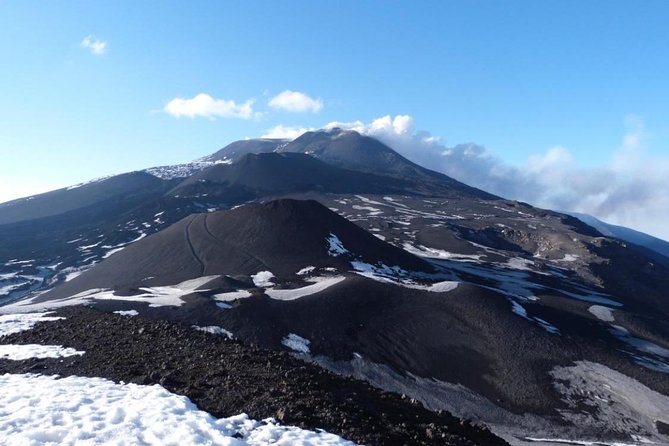
Etna at summit altitude can feel like a different country. Even on a clear day, wind strength can change quickly, and temperature swings can be big. That shows up in how people describe the hike: cold, wind, gloves needed, and the feeling that you should dress like you’re heading to a windy ridge, not a volcano with a comfortable beach nearby.
The tour helps you get started with key gear:
- Helmet
- Trekking boots
- Trekking sticks
- Wind-related layers and hand protection are described as provided (with the note that a full wind jacket isn’t included)
What you should add:
- A windproof layer you’re comfortable getting cold in, if you run warm or cold easily.
- Gloves (even if some are provided, having your own can be smarter).
- A hat for wind-chill at the top.
- Warm socks and long pants.
- Dark clothing can help with comfort on sun/heat contrasts on the volcanic ground.
Also, plan for “walkers’ weather.” You’ll be moving for hours, so you’ll warm up. Then the wind hits at altitude, and you’ll feel it fast. Packing layers beats hoping.
Fitness Level and Footing: What Makes This Hike Medium-High
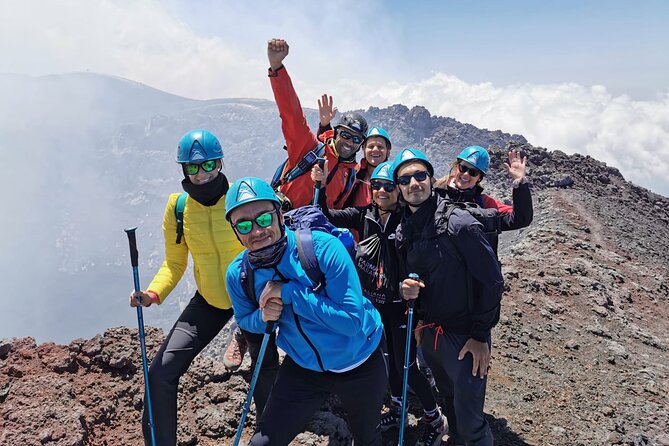
This hike is listed as medium-high and calls for good physical shape. You’ll hike on uneven ground, and a lot of the experience takes place on volcanic surfaces that don’t behave like normal dirt trails.
A few realities to plan for:
- The climb is strenuous, and the altitude adds effort.
- The descent can be harder than you expect because surfaces can be slippery and uneven.
- Wind at the summit zone makes you feel like you’re working harder than the distance suggests.
The group pace matters too. With a max of 20 people, it’s not huge, but it’s big enough that you may need to position yourself to hear your guide well when they’re explaining crater features. If you like questions, you’ll probably get more out of the information by staying closer to the front half of the group.
Time-wise, count on about 6 hours. The stops and photo breaks are part of the learning, not wasted time.
Price and Logistics, Plus Who Should Book
The tour price is listed at $78.64 per person, and it includes key parts of the experience: guides, insurance, helmet, boots, and trekking sticks. That’s a decent base price because you’re paying for certified mountain/volcano guidance and safety gear, not just a generic walking route.
The main cost add-on is transportation from Sapienza to the higher trail zone:
- Cable car or 4×4 jeep tickets are €65 per person, paid locally.
Pick-up from Catania is also not included in the base offering.
So who should book this?
- You should book if you want a real crater walk with safety-first volcanology guidance and don’t mind a strenuous day.
- You should book if you care about understanding active volcanoes, not just taking photos.
- You should think twice if you want a low-effort hike, have poor footing tolerance, or can’t handle cold wind at altitude.
Finally, because Etna is active, conditions can change. That’s not a “failure.” It’s how you stay safe in a living volcano system. On days when summit access is limited, you still get plenty of crater and lava features to learn from.
Should You Book This Etna South Guided Summit Hike?
Yes—if you’re prepared for wind, uneven ground, and a “route can adjust” day. This is a strong value for the money when you factor in volcanology guidance and safety equipment. The biggest payoff is the way the guide ties what you see to how Etna behaves, while still getting you onto the crater rims and through the summit-zone terrain.
Skip it only if you need guaranteed summit access no matter what, or if strenuous hiking would ruin your vacation vibe. If you’re comfortable with medium-high effort and want an authentic, hands-on Etna experience, this is one of the better ways to do it from the south side.
FAQ
What time does the Etna South guided summit hike start?
It starts at 8:00am and the activity runs for about 6 hours (approx.).
How do you reach the trail area on Etna?
You move from Sapienza using cable car and/or a 4×4 jeep, reaching roughly 2,800–2,900 meters before the walking begins.
Is the tour fully included in the $78.64 price?
The base price includes the guide and equipment, but the cable car and 4×4 jeep tickets are not included and cost €65 per person, paid locally.
What hiking gear is provided?
You receive a helmet, trekking boots, and trekking sticks. Wind-related gear like windbreakers and gloves is described in the highlights, but a wind jacket is listed as not included.
Do I need to bring water or snacks?
Water and snacks are not included. It’s smart to bring what you need, and you might want to plan for a lunch break during the climb.
Is the tour offered in English?
Yes. The tour is offered in English and uses a mobile ticket.
What if weather or volcanic conditions are unsafe?
The tour notes that Etna is active, so the itinerary can vary for safety. It also requires good weather; if canceled due to poor weather, you’ll be offered another date or a full refund.
More Tour Reviews in Catania
More Etna Summit Hikes and Treks
More Etna Volcano Tours from Catania
After something different? More tours and day trips around Catania and eastern Sicily


Etna Volcano Tours from Catania, compared.
 ★ 4.8Mount Etna Morning or Sunset Day Trip with TastingFrom $704,028 reviews
 ★ 4.7Guided Volcano Summit Hiking Tour with Cable CarFrom $1243,784 reviews
 ★ 4.8Sunset Jeep Tour of Mount Etna and Lava Flow CavesFrom $712,113 reviews
 ★ 4.8Etna and Alcantara Gorges Full-Day Tour with LunchFrom $1051,766 reviews
 ★ 4.7Etna Volcano: South Side Guided Summit HikeFrom $671,545 reviews
 ★ 4.8Guided Trek 3,000 Meters to the SummitFrom $1131,407 reviews
 ★ 4.9Mount Etna Trekking Trip off the Tourist PathFrom $781,351 reviews
 ★ 4.8Etna Sunset Tour with Pickup and Drop-offFrom $711,348 reviews
Browse the lists this tour appears in