
Reviewed · BAROQUE TOWNS: NOTO, MODICA & RAGUSA
Noto, Modica and Ragusa: The Baroque Tour from Catania
Three Baroque cities in one long day.
This Noto, Modica and Ragusa tour pulls you into southeast Sicily’s late-Baroque world—towns rebuilt after the 1693 earthquake, now protected as UNESCO heritage. You’ll travel with a guide who turns the architecture into a story you can actually see.
I especially like two things: the small-group pace (limited to 8 people) and the way the guide helps you find the best angles for photos and details. If you’ve ever tried to park and aim a camera in Italian hill towns, you’ll understand why the calm driving and smart stopping matter.
One possible drawback: it’s a long day, and the time in each town can feel tight—especially if you want to linger in one place when the weather cooperates.
In This Review
- Key highlights worth your attention
- Sicily’s late Baroque, rebuilt after 1693
- Noto: the Garden of Stone on Meti Hill
- Modica: dry chocolate plus major church stops
- Ragusa: UNESCO late-Baroque monuments in a compact setting
- How the day flows from Catania: pickup, timing, and pacing
- Price and value: what you’re really paying for
- The guides make or break it
- What to bring (so the day feels easy)
- Who should book this Noto, Modica and Ragusa Baroque tour
- Should you book this Baroque day trip?
- FAQ
- How long is the tour?
- Which towns are included?
- Is pickup and drop-off included?
- Are meals included?
- What’s the group size?
- Are tickets included?
Key highlights worth your attention
- Noto’s Baroque rebuild on Meti Hill: the Garden of Stone look, shaped by the 1693 earthquake
- Modica and dry chocolate at Antica Dolceria Bonajuto: the stop that’s part architecture tour, part edible detour
- Ragusa’s late-Baroque monuments: UNESCO-recognized churches and palaces in one concentrated area
- Photo-friendly viewpoints and close van parking: easier than solo wandering when streets get narrow
- Guides with real drive-and-explain skills: you may meet Carmelo, Alessio, or Rustian on different departures
- A calm rhythm with free exploration time: not just a bus loop of quick peeks
Sicily’s late Baroque, rebuilt after 1693
Southeast Sicily’s late-Baroque look didn’t happen by accident. A devastating earthquake in 1693 forced rebuilding, and the towns that rose from the rubble were designed to impress—dramatic churches, ornate stone facades, and urban plans that make you look up while you walk.
That’s the heart of this day trip. You’re not bouncing between random sights. You’re watching the same artistic idea evolve across three connected towns—with just enough guidance to understand what you’re seeing before you start roaming on your own.
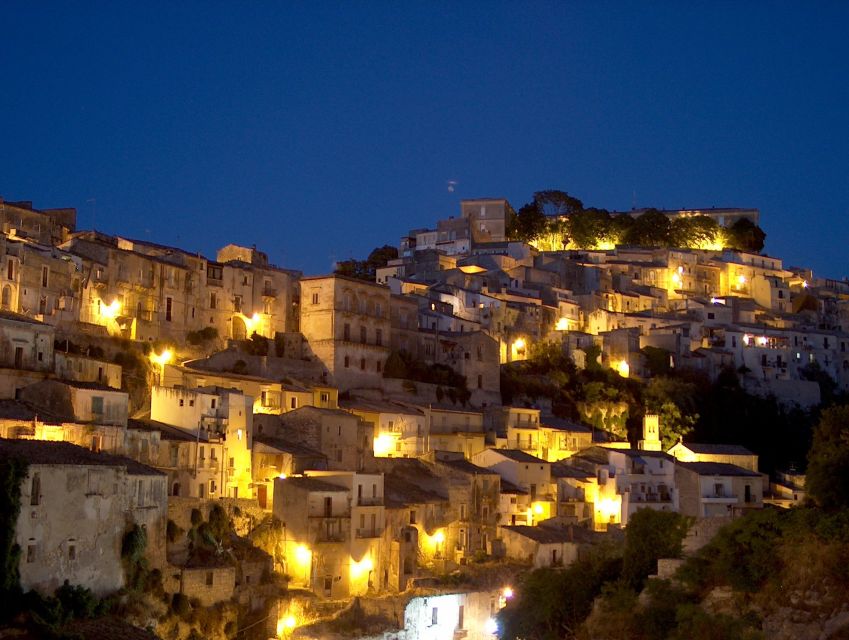
The baroque towns of Noto, Modica and Ragusa Ibla.
Noto: the Garden of Stone on Meti Hill
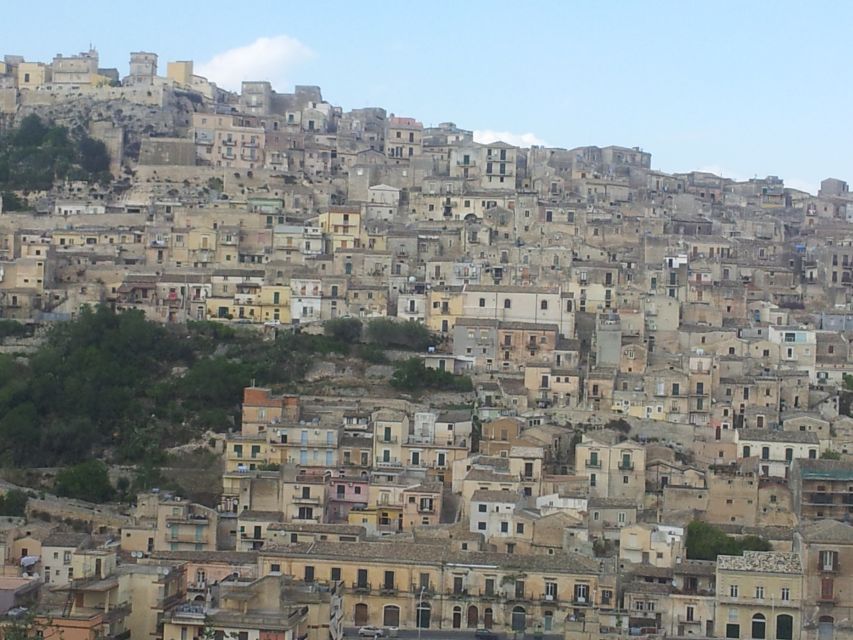
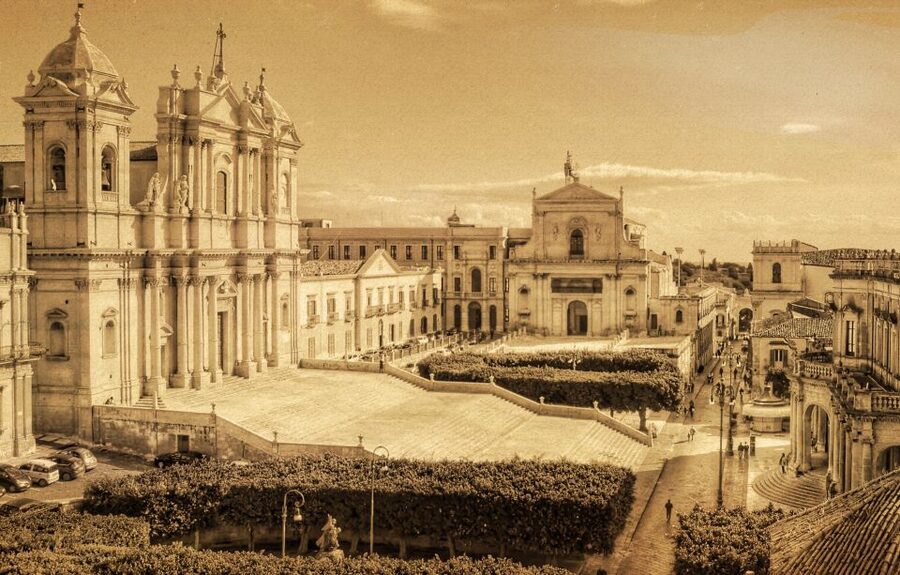
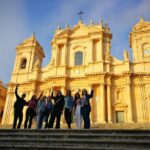
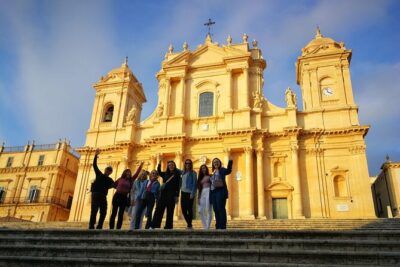
Noto is the “postcard Baroque” stop, and for good reason. After the earthquake, the town was rebuilt on Meti Hill, and the result is that cohesive, stone-on-stone skyline you’ll recognize immediately. You’ll also hear that Noto’s roots go back much further, to an Early Bronze Age origin—so the Baroque layer is only the latest chapter.
The tour includes a guided visit of about 1.5 hours in Noto, which is a smart length for a town like this. Enough time to get your bearings, spot key churches and facades, and understand why the rebuild is so influential. Then you can switch gears and explore more slowly—especially rewarding if you’re the type who likes side streets, not just main squares.
Practical tip: wear shoes with traction. Noto’s streets can be uneven and sloped, and you’ll be standing around for views and photos, even if it’s not scorching.
Modica: dry chocolate plus major church stops
Modica gives you two different pleasures in one stop: iconic architecture and a food moment that people genuinely plan their trips around. This tour specifically includes a visit to the oldest chocolate factory in Sicily—Antica Dolceria Bonajuto is the name that comes up again and again.
What makes Modica chocolate different is the texture. It’s known as a dry chocolate style, so it’s not your usual creamy bar. Expect tastings rather than a full production show, and use the break time to grab a drink or a simple bite nearby so you don’t arrive at the next viewpoint hungry.
On the architectural side, Modica is where the tour leans into “look up and notice.” You’ll see major landmarks tied to the town’s Baroque identity, including the cathedrals of San Giorgio and San Pietro, plus palaces like Palazzo Polara and Palazzo Napolino-Tommasi Rosso. The guided portion here lasts about 1.5 hours, which works well because the buildings have plenty of details—arches, stonework, and facades that you’ll miss if you’re rushing.
Weather note: Modica can bring heavy rain, and even then you’ll still get the structure of the day. In bad weather, I’d treat this as a chance to focus on facade details and cathedral exteriors rather than long outdoor wandering.
Ragusa: UNESCO late-Baroque monuments in a compact setting
Ragusa is the “finish with a wow” stop. This is the town where late-Baroque monuments earned UNESCO World Heritage status in 2002—a clear signal that the architectural quality here isn’t just local pride. It’s globally recognized.
You’ll get a guided visit of about 1.5 hours, designed to help you connect the big shapes (the churches and palaces) with what makes the style “late Baroque” rather than simply old. Expect to see the standout examples of the style, including cathedrals and palaces, and to learn enough context to read the facades like a visual map.
One thing I like about ending the day in Ragusa is how it changes your perspective. By the time you arrive, you’ve already seen Noto’s stone-city concept and Modica’s mix of monument and everyday life. Ragusa then feels like a focused summary—less about novelty, more about pattern recognition.
How the day flows from Catania: pickup, timing, and pacing
This is an 8-hour day trip, and the schedule is built around travel time between the towns. After pickup in the Catania area, you start with a longer van ride (around 75 minutes) to get you into the southeast zone without you doing the driving.
Pickup options are flexible inside the Catania territory, and there are two pickup/drop-off options involving Catania and Aci Castello. The van moves you between towns with short transfers (one segment is only about 15 minutes), which helps you keep energy for the walking parts.
The best part of the pacing is that it’s not a nonstop sprint. Many people enjoy the small group format because the guide can slow down when you’re curious. You’ll still have guided segments in each town, but there’s time to roam on your own rather than being locked to the guide’s footsteps the whole day.
Photo tip: listen for the suggestion to pause at viewpoints. On this kind of route, those distant angles are often the difference between flat photos and images that show the real Baroque effect—facades stacked against hills, domes and bell towers catching light.



Price and value: what you’re really paying for
At about $124.61 per person for the full day, this tour isn’t the cheapest option. But it often lands in the “good value” category when you factor in what’s included.
What you’re getting for the price:
- Pickup and drop-off at your accommodation or port of call (inside Catania territory)
- Air-conditioned transportation
- An English-speaking driver/guide (plus Spanish/Italian options)
- Parking fees and tolls, plus gas
What’s not included:
- Meals
- Tickets (not specified as required for each stop, but not included)
Where the value shows up in real life: you avoid the hassle and stress of driving and parking in multiple hill towns in one day. Even more important, you’re not just seeing buildings—you’re seeing them in sequence with context, which makes the time feel earned instead of “we stopped, we looked, we left.”
Also, the limit of 8 participants matters. It’s easier to hear the guide, easier to ask questions, and less chance you’ll feel like you’re stuck behind a crowd.
The guides make or break it
This tour stands or falls with the guide’s tone and the ability to balance facts with breathing room. The day you get can vary by departure, but you can feel the pattern in praised experiences: guides tend to explain clearly, drive safely, and keep the group from feeling herded.
Names that show up in the guide experience include Carmelo, Alessio, and Rustian. The consistent theme is not just history recitation. It’s practical care—helping with timing, getting you near the right spots for close-up photos, and keeping the day comfortable even when the roads get wet.
If you’re worried about a tour becoming rigid, take comfort in the repeated emphasis on a relaxed flow: short guided stops, then time to explore at your own pace.
What to bring (so the day feels easy)
This is a walking-and-standing day. You’ll be outside for viewpoints and facades, often in sun or rain depending on the season.
Pack for:
- Comfortable shoes (stone streets and slopes)
- A wide-brim hat if you’re going in summer heat
- An umbrella if the forecast looks iffy
- Sunglasses and water
If you’re sensitive to weather, aim for a light layer you can adjust quickly. That helps when you’re bouncing between airy hill-town streets and the air-conditioned van.
Who should book this Noto, Modica and Ragusa Baroque tour
I’d book this if:
- You want Baroque architecture with context, not just photos snapped from the sidewalk
- You’d rather pay for the logistics than spend the day figuring out driving and parking
- You like guided time that ends with room to explore on your own
I might pass if:
- You hate long days and want a slower pace per town
- You’re the kind of traveler who wants hours and hours in a single city rather than a “three-town story” format
It’s best suited to people who like structure but still want to wander.
Should you book this Baroque day trip?
Book it if you want a well-paced introduction to southeast Sicily’s late-Baroque identity—Noto’s stone-city drama, Modica’s chocolate stop plus church landmarks, and Ragusa’s UNESCO-recognized monuments—all with the stress removed from driving.
Skip it (or choose a different format) if your dream day is deep, slow exploration of just one town. With three stops in one day, you will feel time pressure at least a little. Still, the small-group setup, the guided orientation, and the practical transport make the overall experience feel efficient rather than rushed.
If you’re visiting Catania and you want one memorable architecture-and-food day without renting a car, this is a strong option.
FAQ
How long is the tour?
The total duration is 8 hours.
Which towns are included?
You’ll visit Noto, Modica, and Ragusa.
Is pickup and drop-off included?
Yes. Pickup and drop-off are included from your accommodation or port of call in the Catania territory (and other areas by demand, if available).
Are meals included?
No. Meals are not included.
What’s the group size?
It’s a small group limited to 8 participants.
Are tickets included?
Tickets are not included.
More Tours in Catania

More Tour Reviews in Catania
More Baroque Noto, Modica and Ragusa
After something different? More tours and day trips around Catania and eastern Sicily




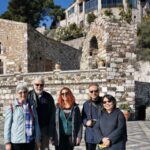
Baroque Towns: Noto, Modica & Ragusa, compared.
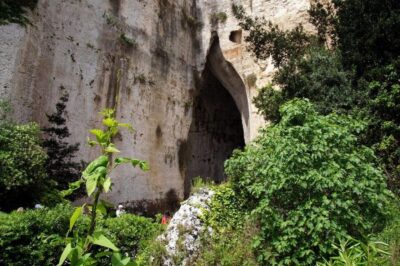 ★ 4.6Syracuse, Ortigia, and Noto Tour with BrunchFrom $112404 reviews
 ★ 5.0Syracuse, Ortigia and Noto walking tour from CataniaFrom $129273 reviews
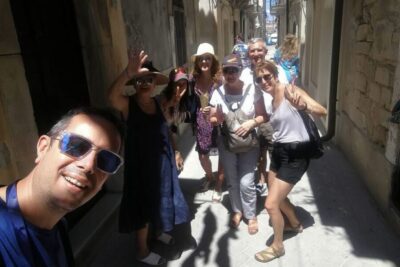 ★ 4.7From Catania: Neapolis of Syracuse, Ortygia, and Noto TourFrom $130234 reviews
 ★ 4.4From Catania: Syracuse and Noto Culture and History TourFrom $80232 reviews
 ★ 3.9From Catania: Syracuse, Ortygia, and Noto Tour140 reviews
 ★ 4.7From Catania: Syracuse, Ortigia and Noto Full-Day TourFrom $113133 reviews
 ★ 4.4Noto, Modica and Ragusa Ibla Baroque TourFrom $101106 reviews
 ★ 4.5Siracusa,Ortigia and Noto TourFrom $12082 reviews
Browse the lists this tour appears in