
Reviewed · SYRACUSE, ORTIGIA & NOTO DAY TRIPS
From Catania: Syracuse and Noto Culture and History Tour
Two Sicilian cities in one day.
I love the Archaeological Park of Neapolis and the walk through Ortigia’s 2000-year-old lanes. One thing to plan for: the Neapolis entrance ticket costs extra, and the site can be affected by on-site works that limit what you see.
This is a strong “big highlights” tour that links UNESCO Syracuse with Noto’s famous Sicilian Baroque. The guides are a big part of the appeal too. People doing the day with guides like Sylvia, Irene, Marzia, Teresa, Lorenzo, and Dan often highlight how well they handle stories and translation when multiple languages are in the group.
The one real watch-out is comfort and clarity. Some rides use older vans, and the in-car audio can be tough in traffic, so you’ll want to keep your own expectations flexible for pacing and sound.
In This Review
- Key things I’d zero in on before you go
- The real deal: why Syracuse plus Noto works so well
- Pickup from Catania: easy in theory, basic in practice
- Stop 1 and the drive: Province of Syracuse time happens early
- Archaeological Park of Neapolis: the best start, plus the biggest planning note
- What you’ll likely enjoy most
- Ortigia Island walk: alleys that really feel old
- How to use your free time well
- Noto: the stone garden feeling and Sicilian Baroque details
- A small time-management note
- The day’s pacing: vans, walking, and where time can slip
- Guide quality: the human engine of the tour
- Price and value: $80.89 makes sense only if you budget the extras
- Who should book this tour, and who might not love it
- Should you book this Syracuse and Noto Culture and History day trip?
- FAQ
- Where does the tour start and where does it end?
- How long is the Syracuse and Noto Culture and History Tour?
- What languages are the guides?
- Is the entrance ticket to the Archaeological Park of Neapolis included?
- Are food and drinks included?
- How does pickup work if my hotel is in a pedestrian area?
- Is there free time in Syracuse and Noto?
- Can I cancel for a refund, and is pay-later available?
Key things I’d zero in on before you go
- Neapolis first: you start at the archaeology park before Ortigia gets crowded.
- Ortigia free time: you get time to wander independently on the island’s historic lanes.
- Noto’s Baroque focus: expect the dramatic “stone garden” look when you arrive.
- Extra costs: entrance tickets for Neapolis are not included, and food isn’t either.
- Tour pacing can flex: if parts of the park are under work, the day may shift.
The real deal: why Syracuse plus Noto works so well
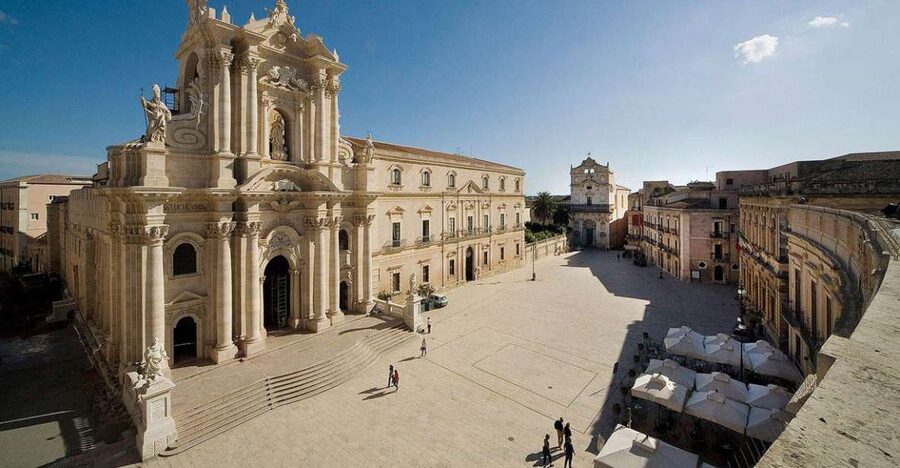
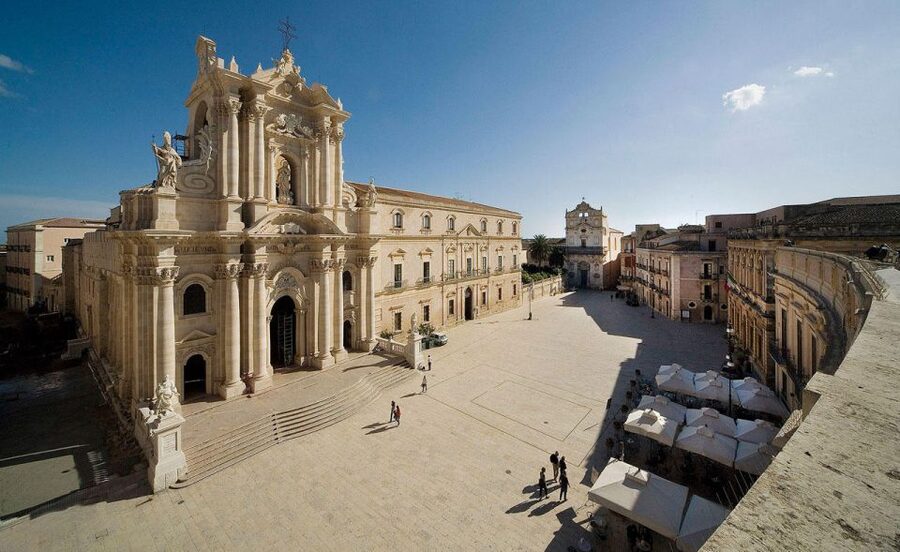
Syracuse and Noto are different flavors of Sicily, and that’s exactly why this day trip makes sense. Syracuse gives you the ancient layer first: you’re dealing with archaeological remains from multiple periods. Then you switch gears to the human-scale city life on Ortigia—small streets, big views, and a cathedral that anchors the whole island.
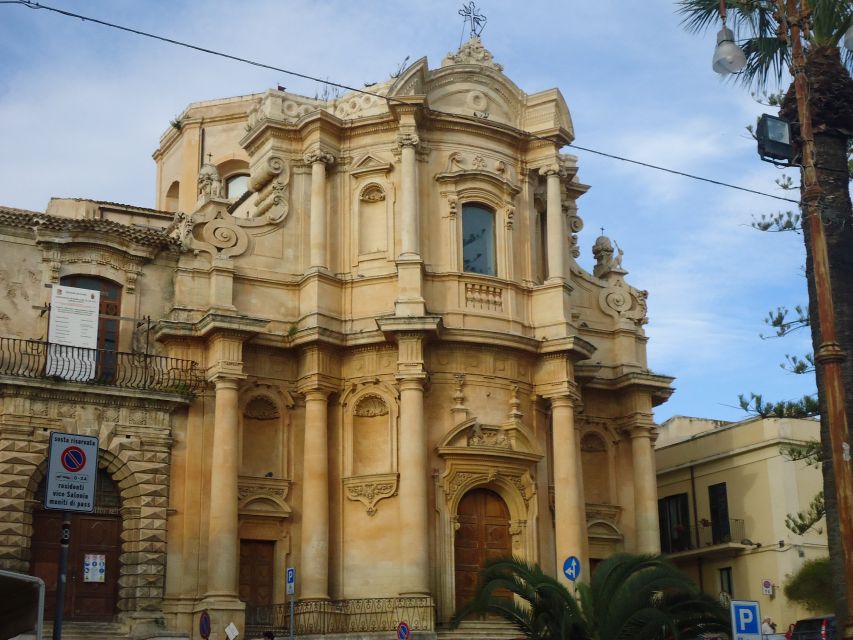
Noto is the contrast. It’s known for Sicilian Baroque, and the buildings look like they were designed for close-up sightseeing—corners, balconies, details. The tour’s rhythm (archaeology, then old-town walking, then Baroque town) helps you avoid the common problem of cramming two similar cities back-to-back.
I also like the structure because you’re not stuck in one long lecture. You get guided time, then you get free time in both Syracuse area and Noto, which is where you can actually make the day yours.
South to Syracuse, the island of Ortigia and golden Noto.


Pickup from Catania: easy in theory, basic in practice
The tour includes hotel pickup and drop-off and a transfer service. Pickup is from your accommodation in areas reachable by the vans, and if your place is in a pedestrian area, you’ll agree on a nearby meeting point. Pickup usually happens within 15 minutes of departure time, which is helpful if you’re juggling check-out and a tight morning.
Where “basic” comes in: some groups have had older mini-buses—think seats that aren’t great, no air conditioning on hotter days, and doors that can be noisy or a bit hard to manage. It doesn’t mean you shouldn’t book. It does mean you should pack for the ride like it’s a transport day, not a comfort cruise.
Also, car audio can get lost in city noise. If you’re the type who wants every spoken detail, sit where you can hear best, and don’t be shy about asking the guide to repeat something when you stop.
Stop 1 and the drive: Province of Syracuse time happens early
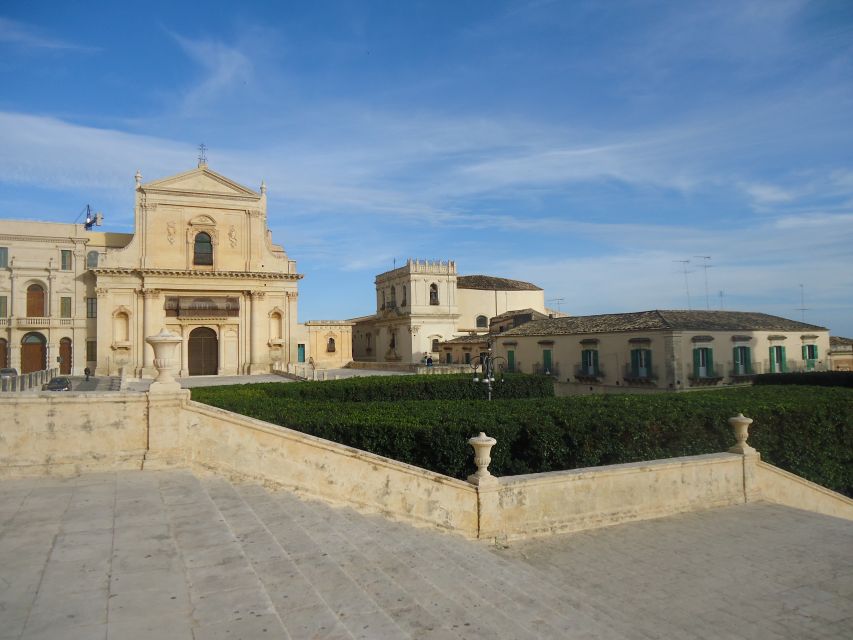
Right after pickup, you’ll ride toward the Syracuse area. Expect around an hour of van time before you reach the first major sightseeing window.
Then you enter the Syracuse province guided period, which includes time to explore and time to breathe. The schedule gives you roughly 2.5 hours in that first area. In plain terms, this is where you set your expectations: you’ll do the guided portion, but you’ll still want enough legs left for self-guided wandering later.
Archaeological Park of Neapolis: the best start, plus the biggest planning note
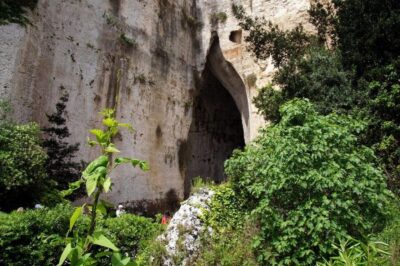
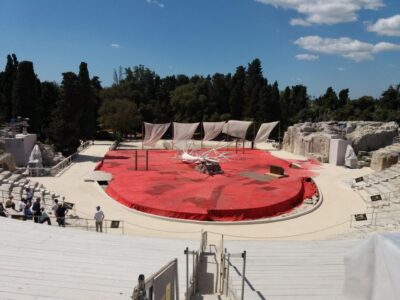
Neapolis is the heavyweight here. You’re looking at an archaeological zone with finds from several phases of Syracusan history. It’s the kind of place where you can see more than one era in a single walk, especially if you move at a steady pace instead of trying to read everything.
Two practical things matter a lot:
First, entrance tickets are not included. If you show up expecting everything to be covered, you’ll feel the pinch. Factor that extra cost into your day budget.
Second, the site may not always be fully on display. One day you might find certain areas limited because of works, and that can affect what you’re able to view. If you’re hoping for one very specific monument or theater view, be flexible. If the day shifts early, it’s usually because a visible section isn’t accessible the way it should be.
A tip that will save time: the ticket-area maps can be confusing. It’s easy to miss part of the park layout if you assume signage will do the job. If you want to cover the park efficiently, check the map closely at the start and ask the guide what route makes the most sense for your time.
Also, don’t assume every labeled spot is open year-round. One example shared from past runs: the so-called Tomb of Archimedes has been closed during certain visits. So, if you spot a name on a sign, treat it as a possibility, not a guarantee.
What you’ll likely enjoy most
- The feel of stepping into a multi-era archaeology area without needing a car or a checklist.
- The way the rest of the day clicks once you understand what Syracuse was before it became a modern city.
The baroque towns of Noto, Modica and Ragusa Ibla.




Ortigia Island walk: alleys that really feel old
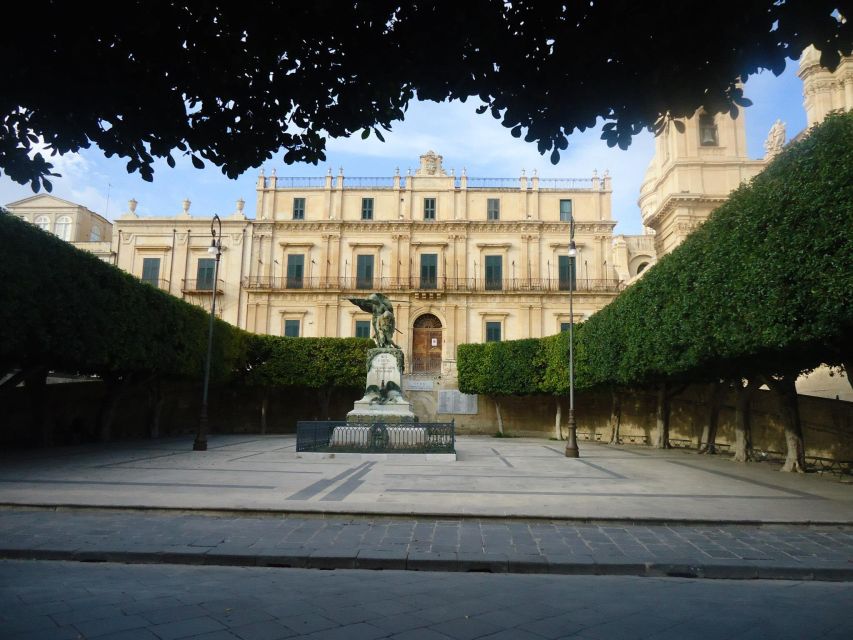
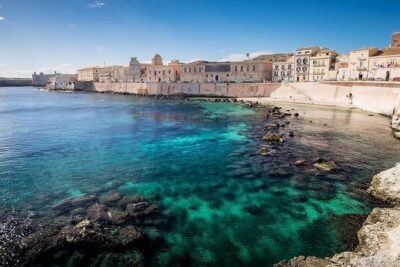
After Neapolis, you transfer toward Syracuse proper and then onto Ortigia Island, the historic center. This is the part of the day where the tour earns its keep for people who like to walk but don’t want to plan every turn.
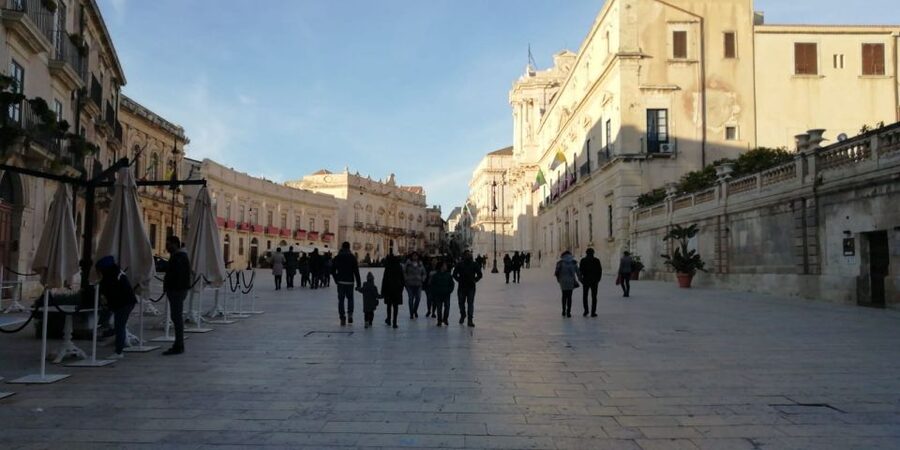
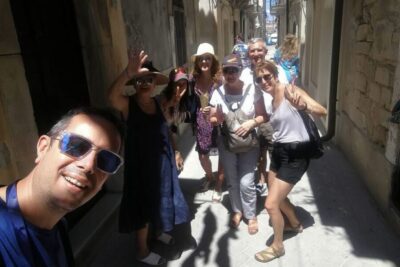
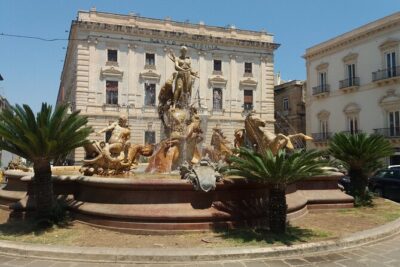
Ortigia is built around a web of narrow lanes, and this is where the “2000 years” idea isn’t just marketing. You move from street to street and the town feels layered—Roman-era echoes, medieval shapes, and newer storefront life all sharing the same space.
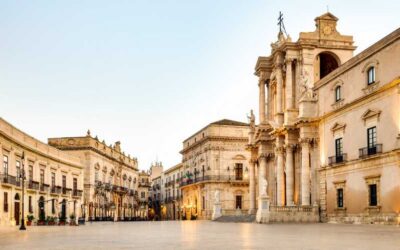
You’ll also see the spectacular cathedral. Even if you only catch it from the outside and in passing, it gives you a visual anchor for the walk. The tour timing typically supports stopping to look up, not just keeping pace.
How to use your free time well
Ortigia includes time on your own. That’s where I’d focus on three things:
- A slow wander through the lanes without trying to cover everything.
- Time to stop for photos at the best viewpoints (not just the first one you reach).
- A food-market moment if you find one open. One helpful suggestion from a past group: buying something from the food market on Ortigia can be a simple, memorable add-on.
One reality check: Syracuse can get busy, especially if there’s a big official event happening. One past day included a G7 ministers meeting, and that kind of event can mean more crowding and slower walking. If you end up with fewer chances to roam than you wanted, it’s usually not your fault—it’s the city doing city things.
Noto: the stone garden feeling and Sicilian Baroque details
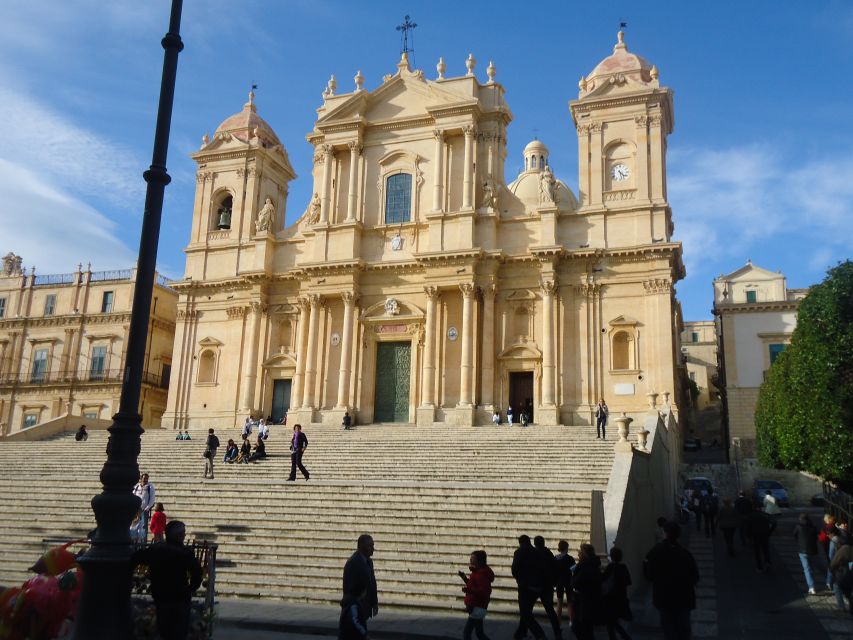
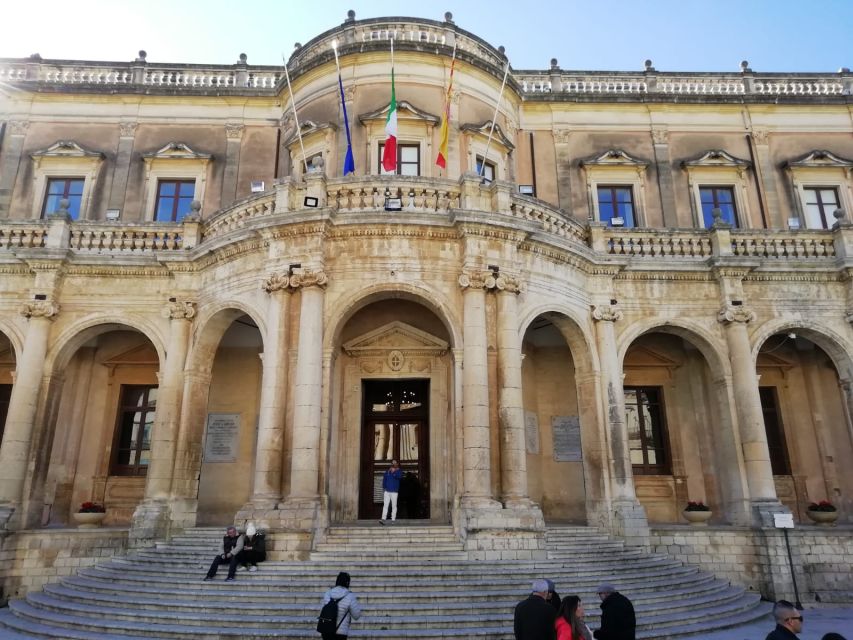
Next comes Noto, commonly described as the most beautiful showcase of Sicilian Baroque. The tour gives you about 2 hours of guided time plus free time, which is a good balance: you get the “why it looks like this” explanations, then you can slow down and enjoy what you came for—ornament, symmetry, and dramatic facades.
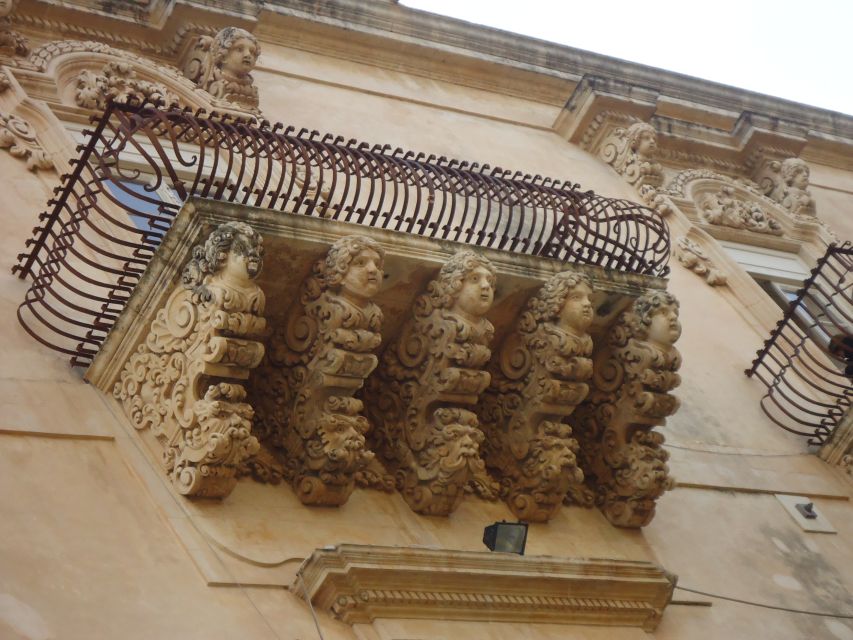
When people call Noto a stone garden, they’re pointing at how the architecture behaves like a sculpture. Look at corners. Look at balconies. Look at how the buildings sit in relation to each other. With Baroque towns, the best views often come from the small turns—standing in the right place matters as much as walking to the right street.
If your goal is photos, Noto is where you’ll likely feel the most rewarded. Past groups note plenty of photo opportunities, and that matches the way the town is laid out: even a short walk can give you a new angle.
A small time-management note
Noto is beautiful, but it’s also a day-trip schedule. That means you may not get to “linger” as long as you’d like in one specific spot. Use your free time to pick your own priorities—Baroque facades for photos, viewpoint stops, or a café break.
The day’s pacing: vans, walking, and where time can slip
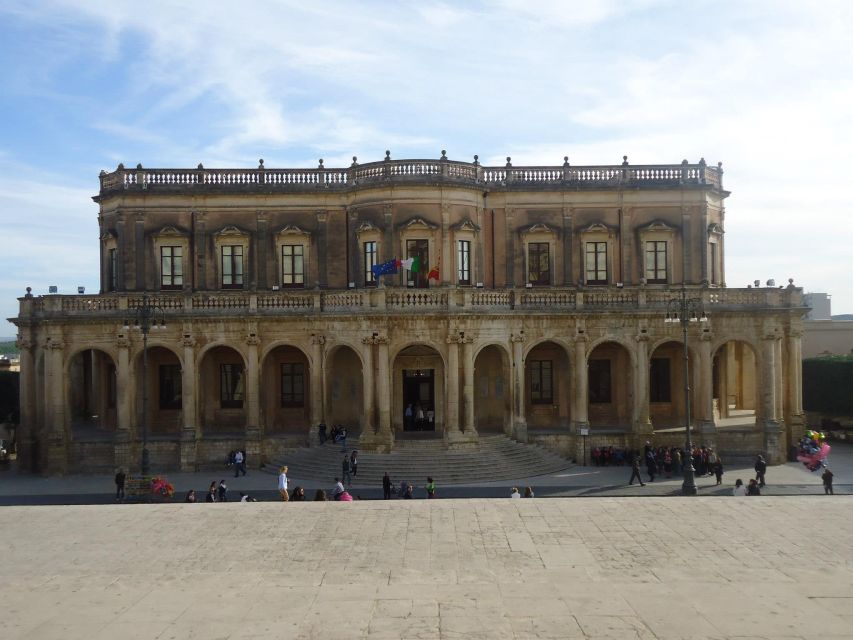
This tour is built around two major walking zones: Neapolis and Ortigia, then Noto. The van segments are part of the deal—about 40 minutes between the Syracuse province area and Noto, plus another hour to return toward Catania after Noto.
The upside: you’re not doing the long-distance driving yourself. The downside: you’re dependent on road traffic and on how the day unfolds at each stop.
A couple of past experience patterns are worth keeping in mind:
- If a site has limited access due to works, you may lose a chunk of sightseeing time at Neapolis.
- If sound in the vehicle is hard to hear, you might feel like the guided content is more repetitive on the move than you expected.
- Lunch logistics can affect your wandering time. One earlier run described frustration when lunch time was tied to a stop that felt overpriced. Your best defense is simple: decide in advance that you’re not going to let a lunch stop eat your whole “Ortigia wandering” window.
Guide quality: the human engine of the tour
The guide is included, and the tour runs with multilingual support: English, French, Italian, and Spanish.
From what’s been shared, the strongest compliments tend to be about two things:
- Guides who can juggle translation without turning the day into a stalled slideshow.
- Guides with humor and good story flow—meaning you don’t just “see” places; you understand how they connect.
Names you may run into include Sylvia, Marzia, Irene, Teresa, Lorenzo, and Dan. Different guides, same idea: someone who can explain what you’re looking at and keep the group moving.
One practical note you can use no matter who you get: when tickets are required at a stop that isn’t included in the price, it can get confusing if you’re waiting for instructions or translation. If you’re not fluent in Italian, ask the guide to stick with the group through the ticket-buying moment so nobody gets left guessing.
Also, sound quality in the van can be an issue if there’s no proper microphone. If you feel like you missed something in transit, ask again at the next stop when you’re standing still and can hear clearly.
Price and value: $80.89 makes sense only if you budget the extras
At $80.89 per person for about 8 hours, this tour is positioned as a mid-price way to cover two standout Sicilian destinations with pickup included.
What you do get:
- Hotel pickup and drop-off
- Transfer service
- A multilingual guide
What you don’t get:
- Entrance ticket to the Archaeological Park of Neapolis
- Food and drinks
That last part matters. If you add tickets and a reasonable meal plan, the true day cost is more than the base price. But even so, you’re paying for logistics you’d otherwise have to manage: transport, a guided route, and time that’s structured to reduce dead-ends.
So here’s the value test I’d use before booking:
- If you want a guided framework for Syracuse and Noto and you don’t want to drive yourself, the base price usually feels fair.
- If you’d happily take public transport and plan every stop solo, you might decide the tour is less necessary—especially if you’re comfortable navigating independently.
Who should book this tour, and who might not love it
This tour is a great fit if you:
- Want a one-day plan that hits Syracuse + Noto without juggling buses or rental cars.
- Like guided explanations but still want time to wander on your own.
- Enjoy major-picture highlights: archaeology, Ortigia lanes, then Baroque facades.
It may be less ideal if you:
- Hate paying extra for entrance tickets and meals after the fact.
- Have mobility limitations and find it difficult to get in and out of a minibus.
- Need very high audio clarity in transit or you’re the type who relies on spoken details while riding.
If you’re flexible, the tour can feel smooth. If you want everything to be perfectly timed and perfectly comfortable, you may find the day a bit rough at the edges.
Should you book this Syracuse and Noto Culture and History day trip?
I’d book it if your priority is seeing two of Sicily’s headline cities in one efficient day, with pickup and a guide handling the flow. The combination is strong: Neapolis gives you the ancient foundation, Ortigia gives you the real walking city experience, and Noto delivers Baroque visuals you can’t easily recreate without being there.
Skip—or at least reconsider—if you dislike extra costs for entry and food, or if you’re sensitive to imperfect vehicle comfort and possible on-site limitations at the archaeology park. In that case, you may prefer building your own day with more control.
If you do book, go in with the right mindset: this is a highlight route with some movement time baked in. Bring good walking shoes, keep some budget for Neapolis entry and lunch, and use your free-time blocks to slow down where your interests land.
FAQ
Where does the tour start and where does it end?
The tour includes pickup and drop-off from accommodations in Catania and the surrounding areas, and you return back to your pickup location at the end of the day.
How long is the Syracuse and Noto Culture and History Tour?
The tour duration is 8 hours (starting times vary, so you’ll need to check availability).
What languages are the guides?
The multilingual guide offers English, French, Italian, and Spanish.
Is the entrance ticket to the Archaeological Park of Neapolis included?
No. The entrance ticket to the Archaeological Park of Neapolis is not included.
Are food and drinks included?
No. Food and drinks are not included.
How does pickup work if my hotel is in a pedestrian area?
If your accommodation is in a pedestrian-only area, you’ll agree on a pickup address closest to your accommodation that’s reachable by the vans.
Is there free time in Syracuse and Noto?
Yes. You get free time in the Syracuse area (about 2.5 hours) and free time in Noto (about 2 hours).
Can I cancel for a refund, and is pay-later available?
Yes. You can cancel up to 24 hours in advance for a full refund, and there’s a reserve now & pay later option (pay nothing today).
More Tour Reviews in Catania






More Baroque Noto, Modica and Ragusa
More Syracuse and Ortigia Days
After something different? More tours and day trips around Catania and eastern Sicily








Syracuse, Ortigia & Noto Day Trips, compared.
 ★ 4.6Syracuse, Ortigia, and Noto Tour with BrunchFrom $112404 reviews
 ★ 5.0Syracuse, Ortigia and Noto walking tour from CataniaFrom $129273 reviews
 ★ 4.7From Catania: Neapolis of Syracuse, Ortygia, and Noto TourFrom $130234 reviews
 ★ 3.9From Catania: Syracuse, Ortygia, and Noto Tour140 reviews
 ★ 4.7From Catania: Syracuse, Ortigia and Noto Full-Day TourFrom $113133 reviews
 ★ 4.5Siracusa,Ortigia and Noto TourFrom $12082 reviews
 ★ 4.5Siracusa – Ortigia & Noto TourFrom $26471 reviews
 ★ 5.0Private Transfer from Catania Airport to Siracusa or TaorminaFrom $9449 reviews
Browse the lists this tour appears in