
Reviewed · ETNA VOLCANO TOURS FROM CATANIA
Etna North Sunset: Summit area & Craters of 2002
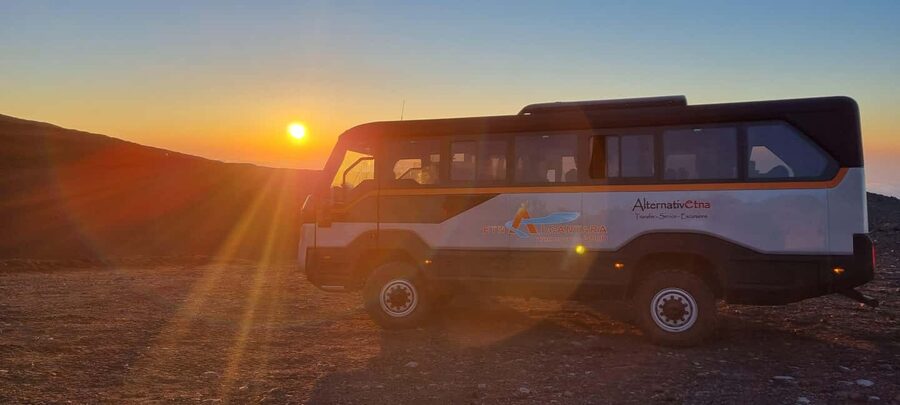
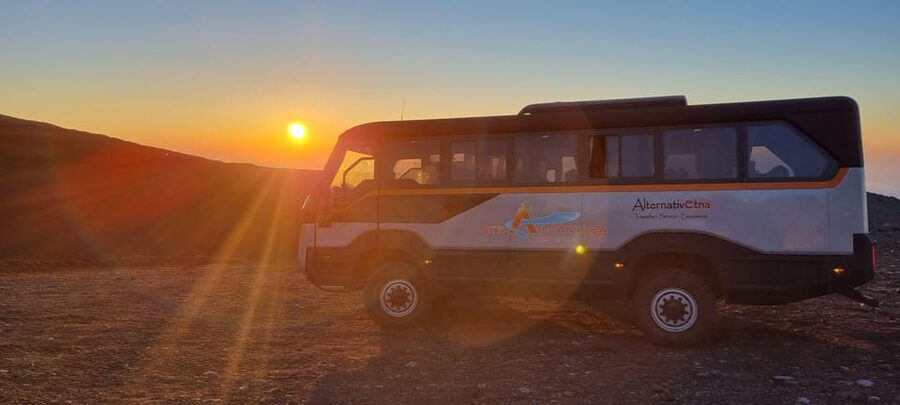
Sunset on Etna hits different. This 3-hour north-side trip pushes you up to around 2900 meters and then turns the Craters of 2002 into a front-row show. You follow mountain trails, roll in high-clearance 4×4 buses, and finish with big sky-and-volcano moments over Sicily.
I love how the 4×4 buses transport you to the summit zone without wasting the whole day. I also like the direct, hands-on setup: you see lava and volcanic sand along the 2002 rift, then walk up through scoria and bombs for views from the roof of Sicily.
One thing to factor in: the ride is off-road and can be pretty jolty, and guide English may be easier or harder to follow depending on the day. If you get carsick fast, plan accordingly.
In This Review
- Key things to know before you go
- Etna’s north side at golden hour: what makes this outing work
- Meeting point at the office and the start from Piano Provenzana
- The 4×4 bus ride: getting close fast on rough terrain
- The 2002 eruption rift: lava, volcanic sand, and the “why” of the scenery
- North-East crater zone and the observatory area
- The climb to the viewpoint: 300 m on scoria and bombs
- Waiting for the sunset from 2900 m: Lion and Bove in clear weather
- Ride comfort, language fit, and what to pack
- Comfort and motion
- Language and guide quality
- What to bring
- Wheelchair note
- Value for 3 hours: what you gain by going this way
- Should you book Etna North Sunset with ALTERNATIVETNA?
- FAQ
- How long is the Etna North Sunset tour?
- Where is the meeting point?
- What altitude does the tour reach?
- Is there walking involved?
- What should I bring?
- Are the guides available in English?
- Is the tour wheelchair accessible?
- Is free cancellation available?
- Can I reserve without paying right away?
Key things to know before you go
- North-side Etna at sunset: you time the day for crater views, not just a quick photo stop
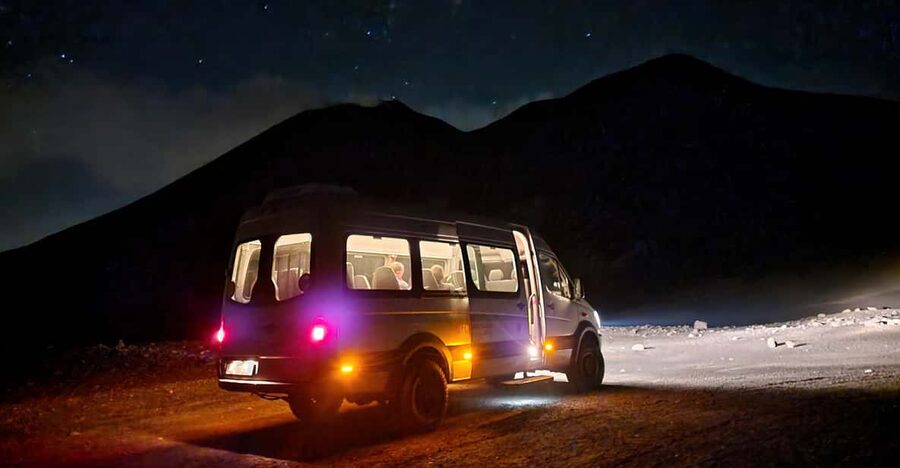
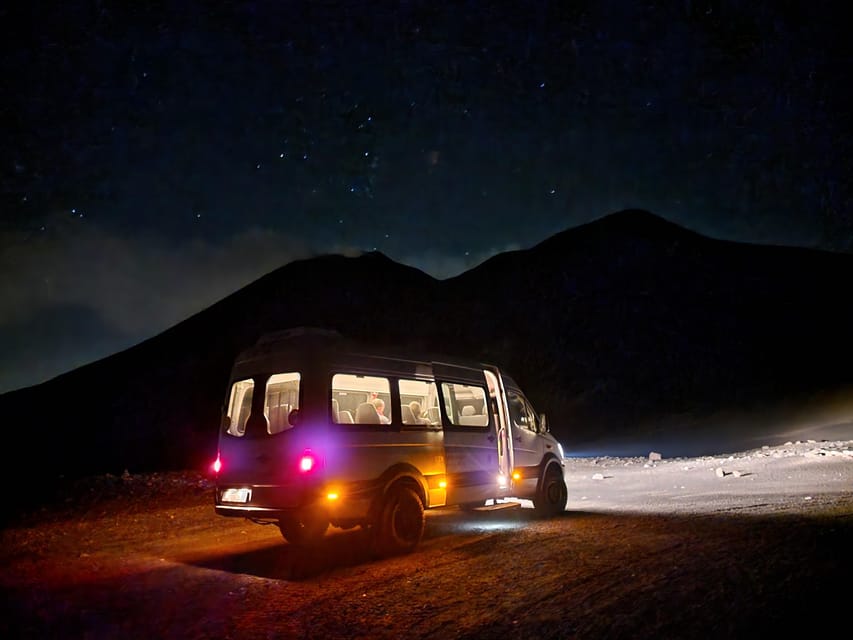
- 4×4 access to high altitude: off-road buses cut the travel time to the summit area
- Craters shaped by the 2002 eruption: lava and volcanic sand show the eruption’s impact up close
- Walk segment with a 300 m climb: you’ll head uphill on volcanic ground to a viewpoint
- Clear-weather views to Lion and Bove valleys: visibility can make the scenery jump a level
- English or Italian live guide: language support is available, but clarity can vary
Etna’s north side at golden hour: what makes this outing work
This is one of those Etna trips that feels built for real viewing, not just checking boxes. You’re going up to the summit area on a schedule that makes sense for light, so the volcano doesn’t just look dramatic. It looks readable.
What you’ll experience isn’t limited to geology nerd stuff. The tour is really about nature, scale, and how a living mountain changes the way you see everything around it. Volcanic ground isn’t uniform, and the rift, scoria, and crater area help you understand the mountain as a process, not a statue.
And because the format is only 3 hours, it’s a smart pick if you’re staying in eastern Sicily and want Etna without eating your whole day. You’ll be up high, you’ll walk a bit, and then you’ll watch the light settle over the craters.
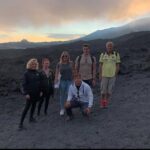
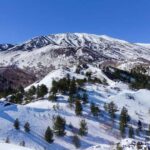
Back up the volcano, with Etna smoking above Catania.
Meeting point at the office and the start from Piano Provenzana
The tour meets at the activity office (coordinates 37.79744338989258, 15.03928279876709). From there, you head toward Piano Provenzana, which is the base point for this itinerary.
Once you’re there, you begin with a mountain trail segment at about 2900 meters. That early altitude matters. It’s not “we drive nearby and then think about the crater.” You’re already in the summit zone vibe, with wide views and volcanic terrain underfoot.
The practical win: your energy gets spent on viewing and walking, not on spending hours in transit. The tradeoff: you’ll feel the altitude and the terrain sooner than a low-elevation hike.
The 4×4 bus ride: getting close fast on rough terrain
One of the strongest parts of this experience is the transport. The itinerary uses off-road vehicles (the high-clearance kind) to reach steep, high mountain slopes and then push back up toward the crater zone.
On paper, that sounds efficient. In real life, it’s a big deal because it changes who the tour works for. If you don’t want to do a full summit hike from lower elevations, the 4×4 approach is what makes this feasible in just 3 hours.
The caution: this is not a smooth coach ride. Expect something rocky and jolty. If you’re prone to motion sickness, this is worth taking seriously. One rider specifically noted the ride is very rough and not ideal for people who get sick quickly.
The 2002 eruption rift: lava, volcanic sand, and the “why” of the scenery
After starting along the mountain trail at high altitude, you’ll reach a high slope framed by views of lava and volcanic sand. The key story here is the rift created in the 2002 eruption.
What I like about this section is that it connects the visuals to the landscape you’re standing on. You’re not just looking at impressive rocks. You’re looking at the scars and the materials left behind—lava and volcanic sand—so the eruption has a physical presence.
This is also where sunset starts to feel extra meaningful. At lower light levels, contrast changes. The different textures of volcanic material read more clearly, and the rift geometry becomes easier to appreciate from a distance.
A practical note: volcanic ground can be dusty and gritty. Wear shoes that are comfortable for uneven surfaces, and bring long pants (the tour asks for them for a reason).
North-East crater zone and the observatory area
You continue with the off-road vehicles up to about 2900 meters to reach the North-East crater, where the volcano observatory is located.
This crater area dominates the surroundings, and you can feel the difference between “looking at a volcano” and being near an active system. Even when there’s no dramatic eruption happening at that moment, the setting still looks intense—wide, stark, and real.
This stage is also a pacing transition. You’ve done the high-altitude approach by vehicle, and now the tour moves into walking mode. It’s a good point to take a breath, drink water if you’ve got it, and get your footing plan sorted before the climb.
Language tip you’ll appreciate: the tour includes a live guide in English and Italian, and the idea is that they help you connect what you see to what it means.
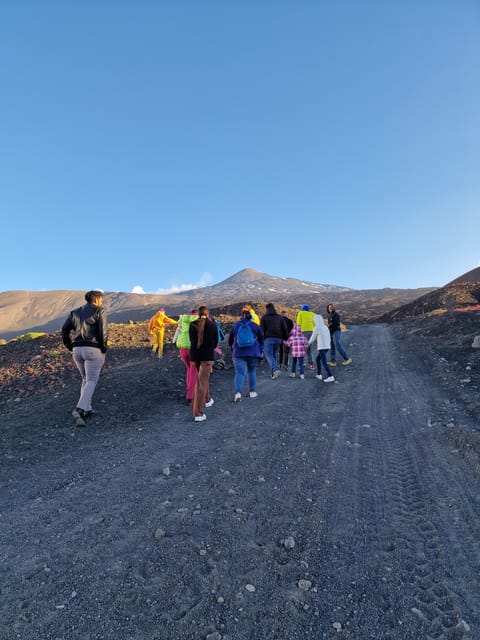
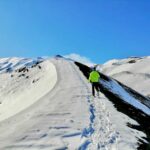
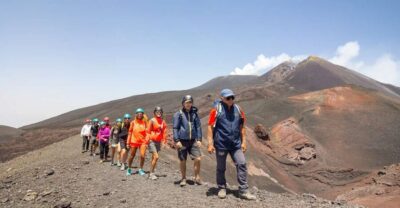
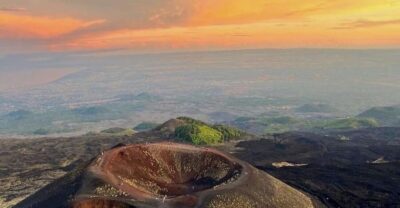
Higher up Etna on foot, towards the summit craters.
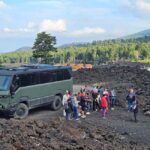
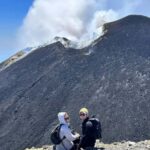
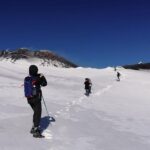
The climb to the viewpoint: 300 m on scoria and bombs
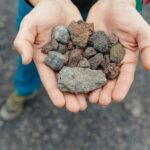
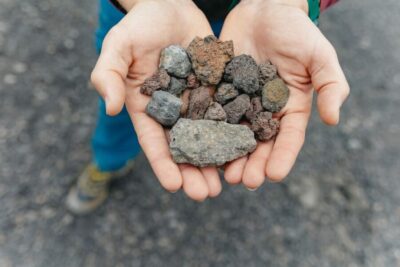
From the North-East crater area, the ascent starts on foot along a path surrounded by volcanic scoria and bombs.
The total climb is 300 meters. The itinerary then brings you to a viewpoint at about 2900 meters. That sounds like a small elevation change on paper, but the volcanic ground and the high altitude make it feel more physical than you might expect.
This is the segment where your shoe choice really matters. Comfortable footwear is listed for a reason, and long pants help with contact from volcanic grit. A daypack also makes sense because you’ll want a place for layers and essentials.
One more reality check: scoria and bombs are not smooth trail surface. You’re walking on volcanic material that can shift underfoot, so take it slow and keep your steps deliberate. If you rush, your feet will pay the price.
The payoff is big. You reach a spot where you can appreciate volcanic processes and the scale of what you’ve been climbing toward.
Waiting for the sunset from 2900 m: Lion and Bove in clear weather
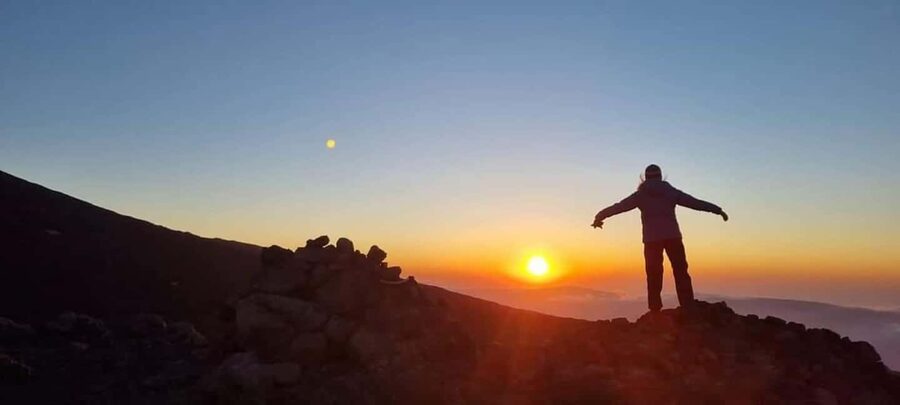
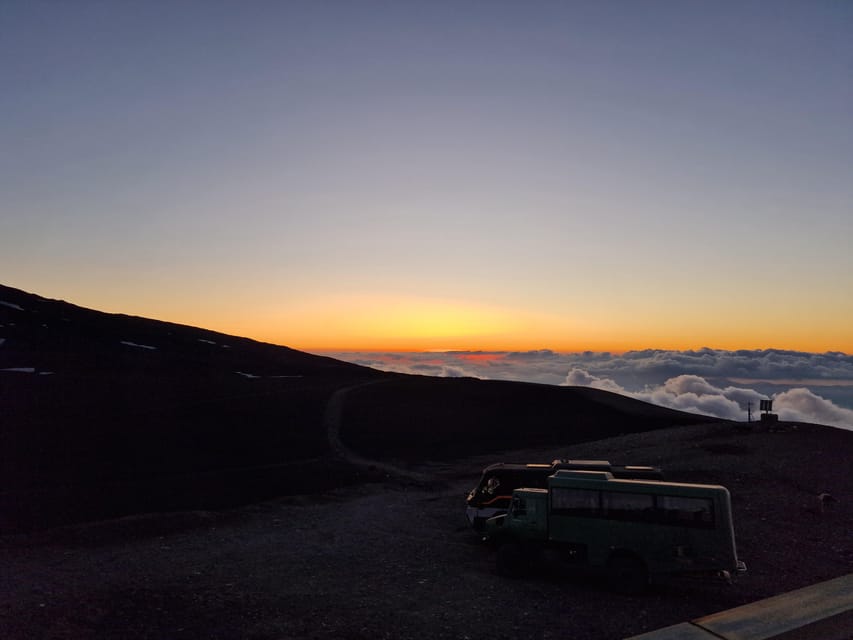
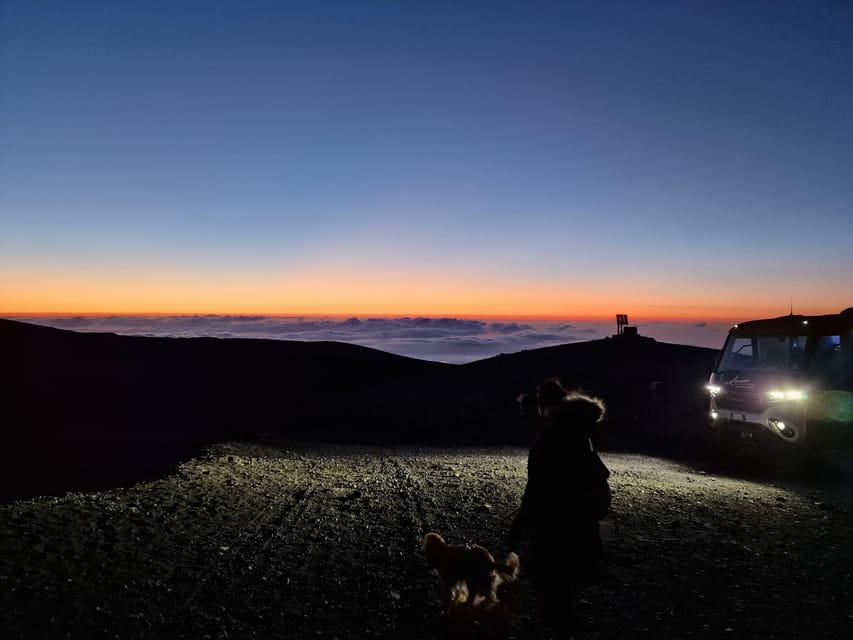
This tour’s main event is the crater-and-sunset viewing from the viewpoint. Once you’re up there, you stop to admire the uniqueness of the volcanic environment and the view from what’s often called the roof of Sicily.
Clear weather can bring two famous landmarks into view: the Lion and the Bove valleys. Even if you don’t see them, you’ll still get the wide Etna panorama effect—sweeping slopes, crater positions, and that layered sense of depth that only a mountain of this size can deliver.
This is also where the geology part becomes easier to understand emotionally. You’re not reading about a rift eruption. You’re watching the air turn warm while you stand on volcanic ground that relates to it.
If you like nature photography, you’ll probably want to spend a little extra time just looking, not photographing. The light changes fast at sunset, and your eyes adjust better if you give them a moment to settle.
Ride comfort, language fit, and what to pack
This outing is rated around a very specific kind of experience: high views, a bumpy off-road approach, and a short but real walk.
Comfort and motion
Because the itinerary uses off-road buses, the ride can be rough. One rider called out that it’s jolty and not for people who get carsick quickly. If you’re sensitive to motion, you should treat this as a planning point, not an afterthought.
Language and guide quality
The tour offers live English and Italian guidance, and the guide role is clearly part of what makes the experience memorable. Still, one review noted that English was difficult to follow on their date. That means your best bet is to be ready for a guide who speaks fast or uses a local style. If you’re fluent, you’ll likely be fine; if you rely on slow, clear English, you may want to set expectations.
What to bring
The tour is straightforward about supplies:
- Comfortable shoes
- Long pants
- Biodegradable sunscreen
- Daypack
I’d also add one practical mindset: on Etna, conditions shift. Pack like you’ll want layers even if it starts warm. And bring something to drink, even though water isn’t listed in your details.
Wheelchair note
The activity is listed as wheelchair accessible. At the same time, the itinerary includes a walk with a 300 m climb on volcanic terrain. So if wheelchair use is part of your needs, confirm how the walking portion is handled for your group on your specific date.
Value for 3 hours: what you gain by going this way
A lot of Etna tours either go full hiking or stay low and scenic. This one sits in a useful middle: vehicle access does the heavy lifting, and you get a summit-zone walk and crater viewing without spending the entire day.
In terms of value, the sweet spot is this sequence:
1) High-altitude access by off-road vehicle
2) 2002 eruption rift visuals (lava and volcanic sand)
3) North-East crater zone presence
4) A 300 m walk to a viewpoint
5) Sunset timing over crater country
If you’re the type who likes to see a place from multiple angles, you’ll appreciate that you’re not stuck in one viewing spot. You move through the eruption story as the day progresses, and then you end with the sky doing its best work.
If you’re strictly focused on geology theory, you might still enjoy it, especially because volcanic ground features are part of what you walk through. But the tour also works for people who just want the mountain’s scale in real time.
Should you book Etna North Sunset with ALTERNATIVETNA?
I think this tour is a good booking when you want Etna to feel big and close without doing a multi-hour hike from low altitude. It’s especially ideal if you love sunset views, natural settings, and you’re okay with an active, uneven walk segment.
You should probably pass or ask extra questions if:
- you get carsick easily (the off-road ride can be very rough)
- you need very smooth, easy walking terrain
- you’re counting on slow, very clear English narration no matter who the guide is
If you can handle a short uphill climb on volcanic ground, this is one of those “worth the effort” Etna options. The combination of 2900 m viewpoint time and the sunset over the 2002 craters is the reason to go.
And if the skies are clear, the chance to spot Lion and Bove adds a satisfying extra reward.
FAQ
How long is the Etna North Sunset tour?
The duration is 3 hours.
Where is the meeting point?
The meeting point is at the office near coordinates 37.79744338989258, 15.03928279876709.
What altitude does the tour reach?
The itinerary includes routes and stops around 2900 meters, including the trail segment and the crater area.
Is there walking involved?
Yes. You start an ascent on foot from the crater area, with a total climb of 300 meters before reaching the viewpoint.
What should I bring?
Bring comfortable shoes, long pants, biodegradable sunscreen, and a daypack.
Are the guides available in English?
Yes. The live tour guide is available in English and Italian.
Is the tour wheelchair accessible?
The activity is listed as wheelchair accessible. The itinerary does include a walk segment, so it’s worth checking how it works for your needs.
Is free cancellation available?
Yes. You can cancel up to 24 hours in advance for a full refund.
Can I reserve without paying right away?
Yes. It offers reserve now & pay later, so you can book and pay nothing today.
More Tour Reviews in Catania
More Etna Summit Hikes and Treks
More Etna Volcano Tours from Catania
After something different? More tours and day trips around Catania and eastern Sicily


Etna Volcano Tours from Catania, compared.
 ★ 4.8Mount Etna Morning or Sunset Day Trip with TastingFrom $704,028 reviews
 ★ 4.7Guided Volcano Summit Hiking Tour with Cable CarFrom $1243,784 reviews
 ★ 4.8Sunset Jeep Tour of Mount Etna and Lava Flow CavesFrom $712,113 reviews
 ★ 4.8Etna and Alcantara Gorges Full-Day Tour with LunchFrom $1051,766 reviews
 ★ 4.7Etna Volcano: South Side Guided Summit HikeFrom $671,545 reviews
 ★ 4.8Guided Trek 3,000 Meters to the SummitFrom $1131,407 reviews
 ★ 4.9Mount Etna Trekking Trip off the Tourist PathFrom $781,351 reviews
 ★ 4.8Etna Sunset Tour with Pickup and Drop-offFrom $711,348 reviews
Browse the lists this tour appears in