
Reviewed · ETNA VOLCANO TOURS FROM CATANIA
ETNA VOLCANO: Excursion to the Craters of 2002
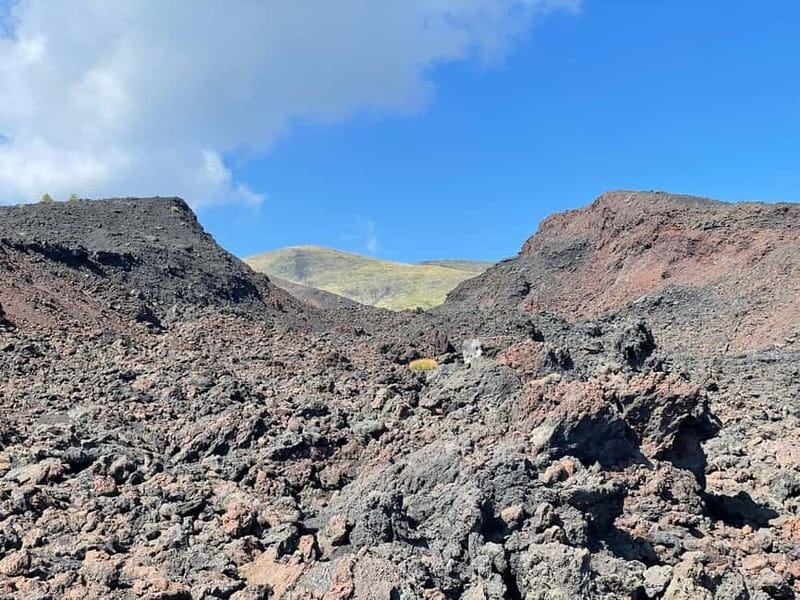
Etna can feel like a movie set until you’re standing on real lava. This 2-hour walk takes you across the 2002 eruption terrain, through a birch forest, and up to the edge of the last four inactive craters of that year—plus you get guide-led context on how it all works. I love the mix of geology and views, and I also like how hands-on it feels as you move through lava flows and a lava channel. One thing to consider: it involves a fair amount of physical effort and closed-toe shoes are mandatory.
You’ll start on the northern side of Etna at Piano Provenzana, then spend the day moving between dramatic volcanic features and photo-worthy overlooks of the Ionian coast. If you’re the type who likes your vacation with a bit of science and a lot of fresh mountain air, this one fits.
In This Review
- Key highlights and what they mean for you
- The walk starts on the Piano Provenzana lava ground
- Where you’ll walk: 2002 lava, old hotel ruins, and “readable” geology
- The birch forest interlude: calmer footing, big change of scenery
- Climbing toward the crater edge through a lava channel
- The main event: the last four inactive craters of 2002
- Timing and transfers: how the 2 hours really feel
- What’s included (and why the guide matters)
- Price: what $39.86 buys you on Etna (and what it doesn’t)
- What to bring so you don’t think about your gear
- Who this tour is best for (and who should skip it)
- My practical take: what you’ll remember after the walk
- Should you book ETNA VOLCANO: Excursion to the Craters of 2002?
- FAQ
- How long is the ETNA VOLCANO excursion to the Craters of 2002?
- Where does the tour start and end?
- What languages is the live guide available in?
- What should I bring for the walk?
- Is the tour suitable for everyone?
- How active is the hike?
Key highlights and what they mean for you
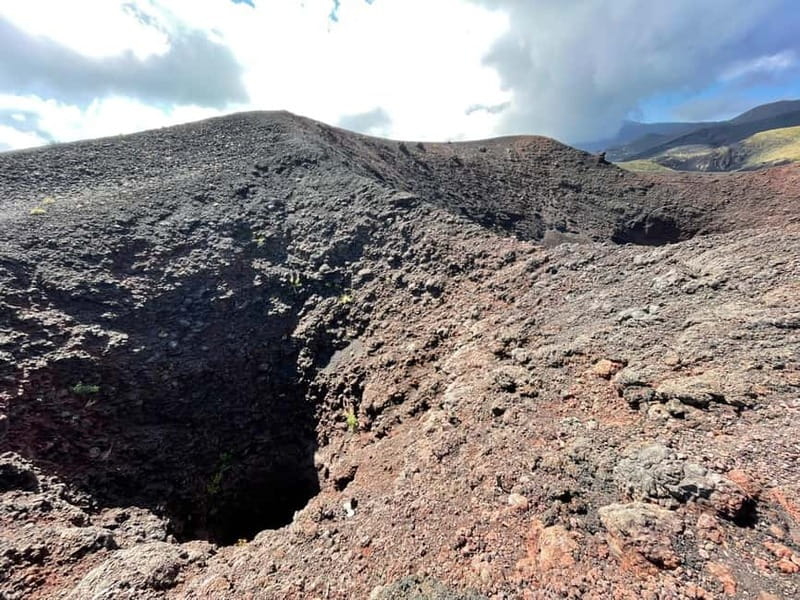
- Four inactive craters from 2002: Great for seeing the “after” version of a volcano up close.
- Walk on the 2002 lava flow: You get a feel for how eruption ground actually changes what’s possible on Etna.
- Etna birch forest: Shade, texture, and a calmer pace before the climb.
- Crossing a wide lava channel: You’ll understand the flow paths, not just hear about them.
- Ionian coast views: Giardini Naxos, Taormina, and even the direction toward Calabria can be visible from the viewpoints.
- A volcanological guide: Explanations make the scenery click into place.
The walk starts on the Piano Provenzana lava ground
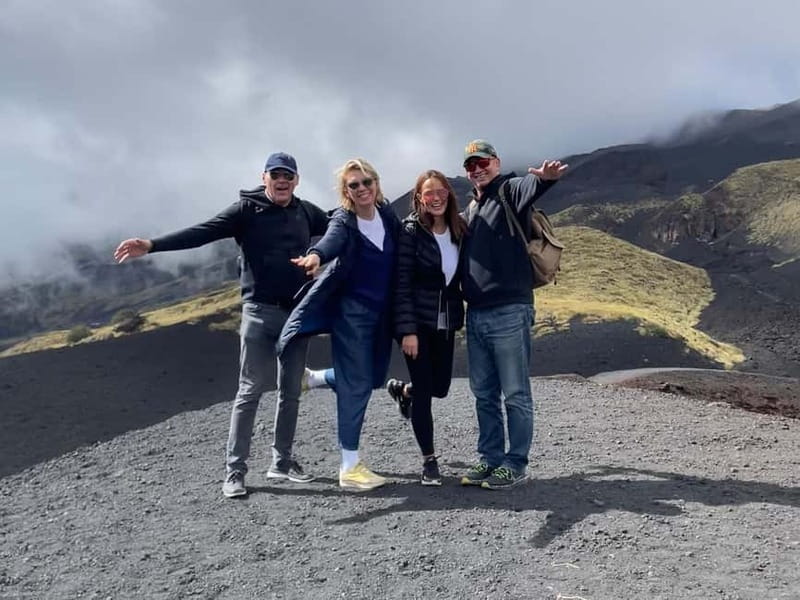
Your excursion begins at Piano Provenzana, on Etna’s northern side. The meeting point is in front of Chiosco bar Etna Nord, and you’ll start with a short briefing on what you’ll see and how the route is laid out.
This matters because Etna is not a museum. You’re walking on terrain shaped by an eruption, so a quick orientation helps you spot features later. You also learn what to watch for as you go—like where the lava hardened, where channels formed, and why the terrain looks the way it does once it cools.
The tour lasts about 2 hours, so it’s not a long grind. But it does require a fair level of physical preparation, so I recommend treating it as a brisk mountain walk rather than an easy stroll.
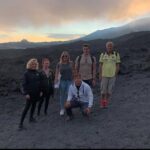
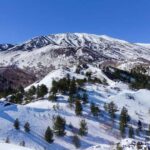
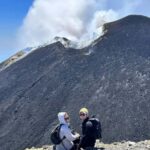
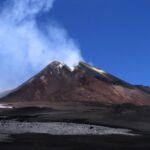
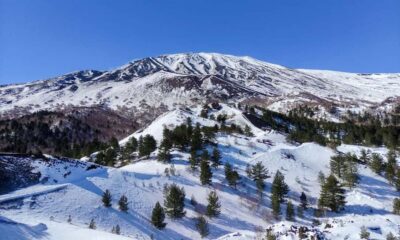
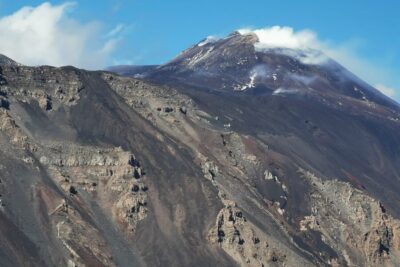
Back up the volcano, with Etna smoking above Catania.
Where you’ll walk: 2002 lava, old hotel ruins, and “readable” geology
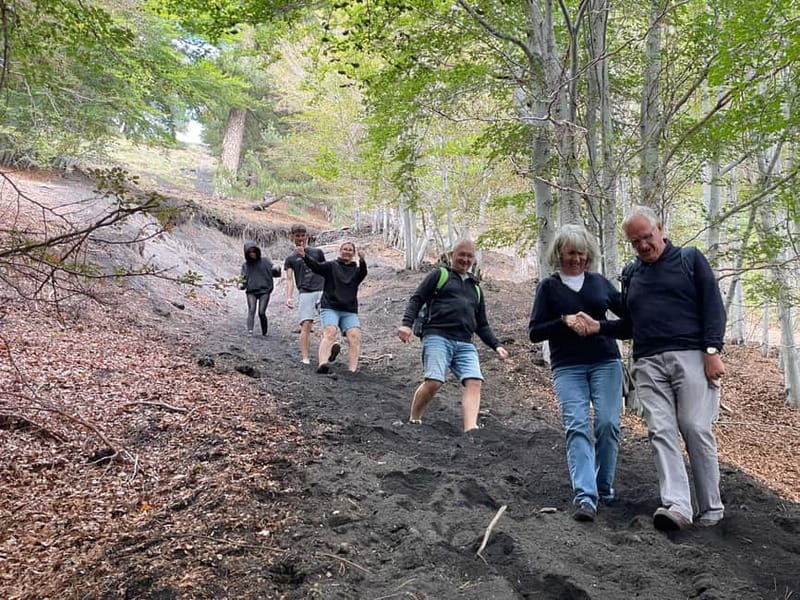
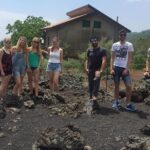
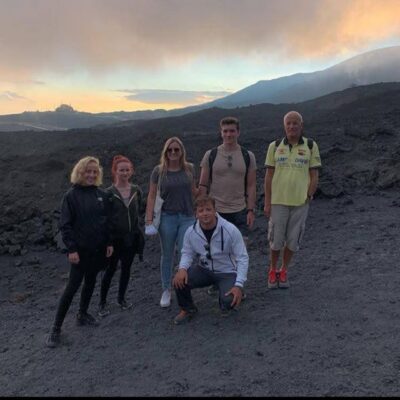
After a short transfer, you’ll get moving on the 2002 lava flow. The route is designed so you can see the eruption’s impact at walking distance—especially the contrast between hardened lava areas and the places where nature begins to return.
A standout stop happens after you’ve gone a few hundred meters: you’ll see the remains of an old hotel called Le Betulle, destroyed by the eruption. It’s not just a sad artifact. It’s an immediate, real-world reminder that when lava moves, it doesn’t negotiate. Seeing that ruin while you’re standing on what came after makes the volcano feel personal, not abstract.
If you like your sightseeing with cause-and-effect, this is where it clicks. Instead of “look at the mountain,” you get: look at the flow → look at what got covered → look at how the landscape changes after.
The birch forest interlude: calmer footing, big change of scenery
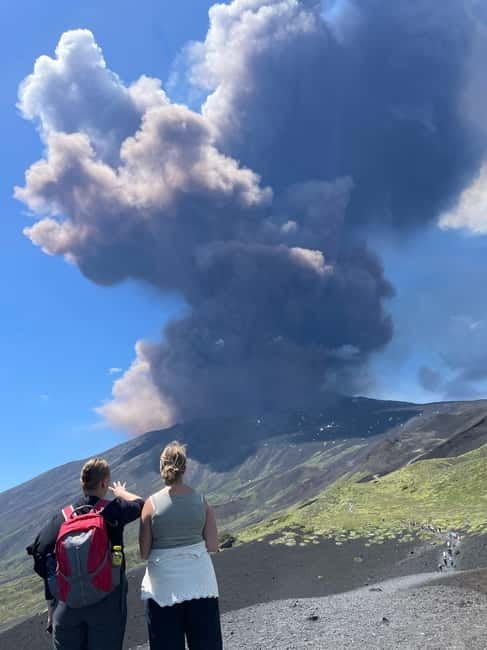
At some point on the route you’ll transition into a birch forest on Etna. This section is a breather. The trees break the glare, soften the route visually, and give your eyes a rest after the stark lava terrain.
Why I like this part for visitors: you’re still on Etna, but the experience shifts from “geology first” to “nature first.” That blend is rare on volcano tours. You end up with a fuller sense of how volcanic places aren’t only raw rock—they’re also ecosystems that adapt.
Also, a forest section can make the climb feel less punishing. Even if your pace stays similar, the mental reset helps you enjoy the walk more.
Climbing toward the crater edge through a lava channel
After the forest, the route keeps building. You’ll continue to climb passing through a lava channel that’s described as a few dozen meters wide. That detail is important: you’re not crossing a tiny groove. This is broad enough that it helps you picture how big-volume flows can carve paths.
Again, this is where the guide earns their place. When someone explains the flow logic while you’re standing near it, it’s easier to understand why certain stretches are more exposed and why the route follows the safest, most view-friendly path.
And yes—this is still a walking tour, not a rollercoaster. The incline is real, but the experience is built for people who can handle steady hiking at altitude, with pauses for photos and viewpoints.
The main event: the last four inactive craters of 2002
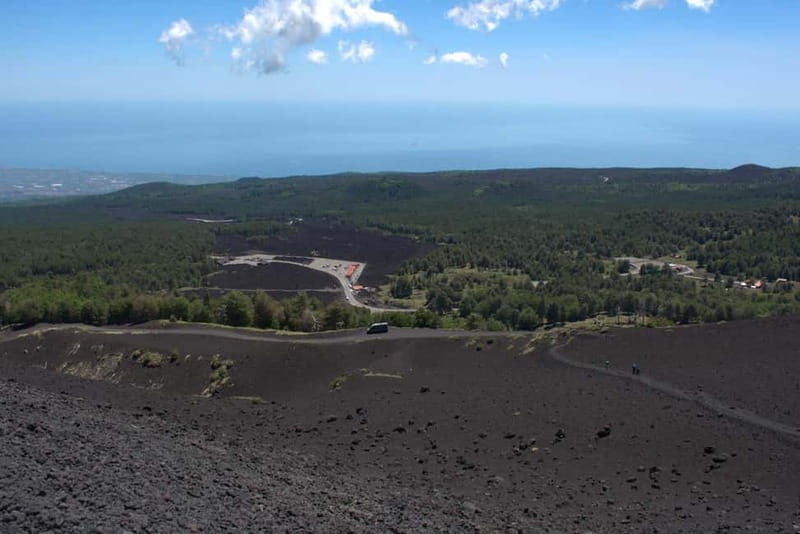
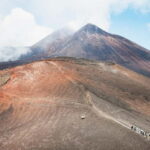
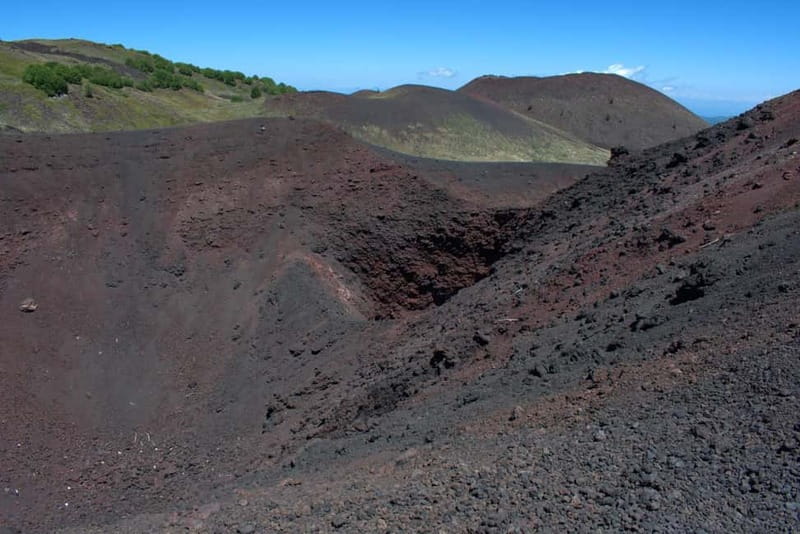
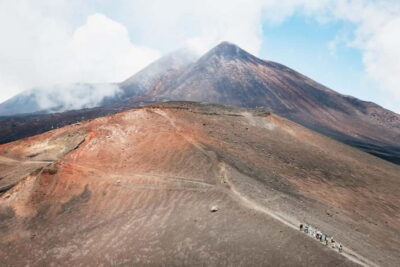
The big destination is reaching the edge of the last four majestic inactive craters of 2002. This is the part you came for: standing near crater rims gives you a sense of scale that photos can’t fully explain.
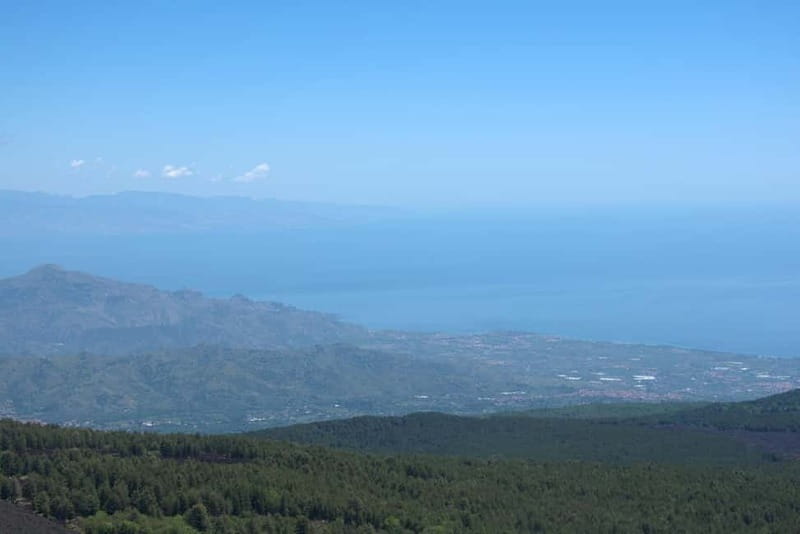
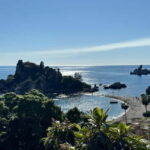
You’ll have time for some photos and guided commentary, then you’ll take in the viewpoint overlooks. From here, the scenery opens toward the Ionian coast, with views toward Giardini Naxos, Taormina, and the direction of Calabria’s tip—when conditions allow.
Practical note: the experience is short enough that weather and light matter. If you’re choosing a time slot, you’ll often enjoy it more when visibility is good and you can actually see across the coast.
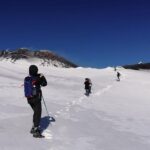
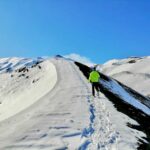
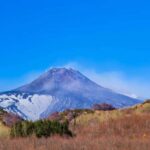
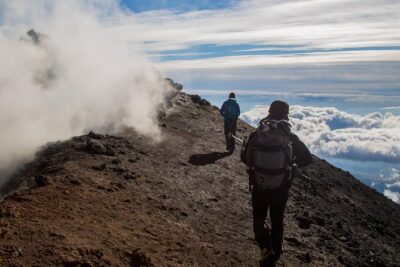
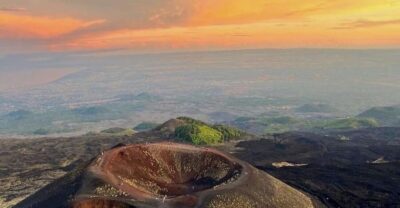
Higher up Etna on foot, towards the summit craters.
Timing and transfers: how the 2 hours really feel
The itinerary is structured with short movement legs and multiple viewpoint moments. You’ll do quick transfers between sections, then stop for photo time and guided explanation, and later return the same general way.
Even with transfers, you’re outside most of the time. That’s why the “bring what you need” list is not optional. Etna conditions can shift quickly—sun, wind, and cooler air at elevation. Plan for that, and you’ll keep the experience comfortable.
The total experience time is about 2 hours, but don’t ignore that you’ll spend part of that time climbing. It’s not a sit-down tour.
What’s included (and why the guide matters)
The tour includes a volcanological guide and a walking tour. For me, that combo is the difference between a scenic walk and an actually useful one. A guide doesn’t just point out sights—they help you understand the “why” behind what you see, like how lava channels guide movement and how crater formations relate to the eruption timeline.
From the feedback I’ve seen, people really appreciate the friendly, helpful guidance and the clear explanations of Etna’s history. That kind of context can turn a view into something you remember for years.
Also, since it’s a guided hike, you’re not left guessing which direction to walk or where the best viewing points are. That saves energy and time.
Price: what $39.86 buys you on Etna (and what it doesn’t)
At $39.86 per person for about 2 hours, you’re paying for a guided excursion on protected, sensitive terrain, plus professional volcanological interpretation. For Sicily, this is in the category of experiences where the guide makes the value obvious: without guidance, you might still enjoy the views, but you’d miss the eruption logic that makes the craters and lava flows meaningful.
What you’re not paying for: you’re not getting a full-day itinerary or transport that covers every stop across the whole region. This is a focused Etna segment—short, intense, and well-defined.
If you want an efficient volcano experience that’s not a half-day bus tour, this price can feel fair.
What to bring so you don’t think about your gear
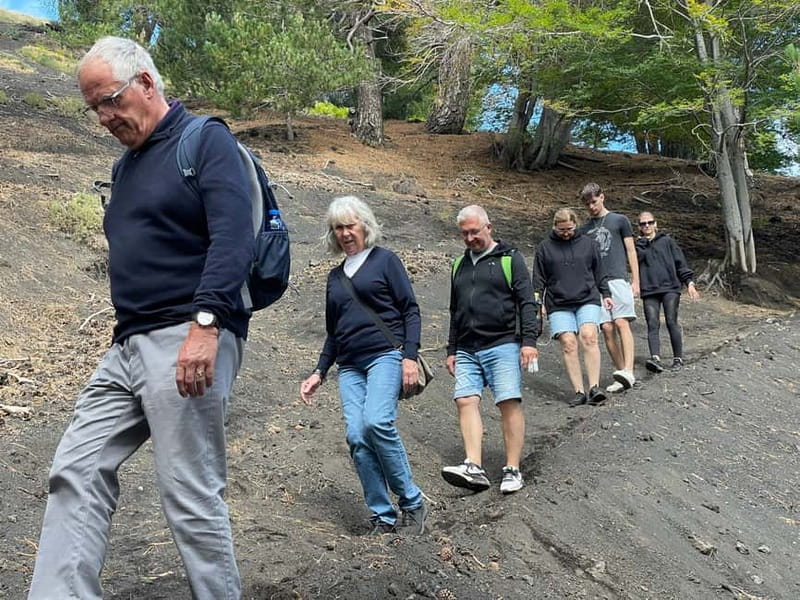
You’ll be happier if you show up ready for a mountain walk with volcanic surfaces. The basics that matter most:
- Closed-toe shoes (mandatory)
- At least 1 liter of water per person
- Long pants recommended
- Sunglasses + sun hat + sunscreen
- Jacket (because mountain weather can change)
- Snacks and food/drinks (bring them)
- Change of clothes and clothes that can get dirty
- Camera (the views and crater edges are made for photos)
You’ll also want to dress for a hike where you might get dust or grit. If you wear delicate fabric, you’ll regret it.
What’s not allowed includes swimwear, alcohol/drugs, and shoes indoors, plus no costumes. It’s a practical field walk, not a theme outing.
Who this tour is best for (and who should skip it)
This excursion is best for you if:
- You like walking with purpose, not just standing at a lookout
- You’re curious about how volcanic landscapes form
- You want a short, guided Etna experience with a strong view payoff
It’s also a good fit if you enjoy mixing raw geology with nature, since the birch forest adds contrast.
You should consider skipping it if you have medical limits. It’s explicitly listed as not suitable for people with heart problems or respiratory issues, and it also mentions altitude sickness concerns and people with pre-existing medical conditions or recent surgeries. There are also limits for people over 287 lbs (130 kg), and over 70.
If you’re unsure about your health situation, I’d treat this as a “check first” tour. Etna is high and physical, even though the duration is only about 2 hours.
My practical take: what you’ll remember after the walk
The biggest reason this tour sticks is that it teaches you how to look. By the time you reach the crater edge of the inactive craters of 2002, you’ve already walked over lava terrain, seen the impact on human structures (like Le Betulle), crossed a broad lava channel, and moved through a birch forest.
That sequence turns the experience into a story with a beginning, middle, and payoff:
- eruption ground
- nature’s return
- flow features you can physically understand
- crater views that put it all together
And the photos you take won’t just be pretty. They’ll be tied to what you learned while standing there.
Should you book ETNA VOLCANO: Excursion to the Craters of 2002?
Yes, if you want a focused, guided Etna walk that combines science explanations with real walking on eruption terrain. It’s short enough to fit into a Sicily schedule, but structured enough that you’ll come away with understanding, not just snapshots.
You might pass if you’re looking for something fully relaxed, because it does require physical preparation and includes walking on uneven volcanic surfaces. You also shouldn’t book if you fall into the listed medical or age/weight limitations.
If you’re a middle-ground traveler—comfortable walking, curious about how nature and volcanoes interact—this is a strong value way to see Etna at a level most people never reach.
FAQ
How long is the ETNA VOLCANO excursion to the Craters of 2002?
The tour lasts about 2 hours, with different starting times depending on availability.
Where does the tour start and end?
It starts in front of Chiosco bar Etna Nord and ends back at the meeting point.
What languages is the live guide available in?
The guide provides a live tour in Italian and English.
What should I bring for the walk?
Bring sunglasses, a sun hat, sunscreen, a jacket, closed-toe shoes, a camera, snacks, food and drinks, and at least 1 liter of water per person. A change of clothes is also recommended in case you get dirty.
Is the tour suitable for everyone?
It is not suitable for people with heart problems, respiratory issues, altitude sickness concerns, pre-existing medical conditions, recent surgeries, people over 287 lbs (130 kg), or people over 70.
How active is the hike?
The tour lasts about 2 hours and requires a fair amount of physical preparation. Long pants are recommended, and you should expect climbing and walking on volcanic terrain.
More Tour Reviews in Catania
More Etna Summit Hikes and Treks
More Etna Volcano Tours from Catania
After something different? More tours and day trips around Catania and eastern Sicily


Etna Volcano Tours from Catania, compared.
 ★ 4.8Mount Etna Morning or Sunset Day Trip with TastingFrom $704,028 reviews
 ★ 4.7Guided Volcano Summit Hiking Tour with Cable CarFrom $1243,784 reviews
 ★ 4.8Sunset Jeep Tour of Mount Etna and Lava Flow CavesFrom $712,113 reviews
 ★ 4.8Etna and Alcantara Gorges Full-Day Tour with LunchFrom $1051,766 reviews
 ★ 4.7Etna Volcano: South Side Guided Summit HikeFrom $671,545 reviews
 ★ 4.8Guided Trek 3,000 Meters to the SummitFrom $1131,407 reviews
 ★ 4.9Mount Etna Trekking Trip off the Tourist PathFrom $781,351 reviews
 ★ 4.8Etna Sunset Tour with Pickup and Drop-offFrom $711,348 reviews
Browse the lists this tour appears in