
Reviewed · ETNA VOLCANO TOURS FROM CATANIA
Mt Etna: Winter Trekking Tour with Optional Catania Transfer
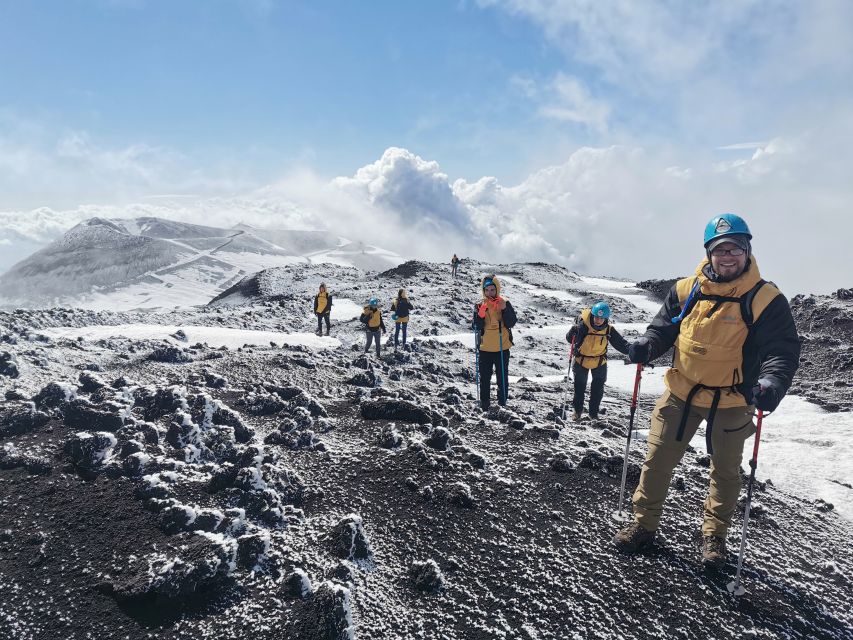
Etna in winter feels brutally real. This guided hike pairs big views from the Gulf of Catania to the Ionian Sea with a route through the Valle del Bove, plus a stop near active summit craters.
I really like how practical it feels once you’re moving: the guide, Alfredo, is praised for clear explanations and for making safety feel straightforward. I also love that winter walking gear is included, including snowshoes, hiking poles, and a wind jacket, so you’re not stuck improvising at 1850m.
One consideration: this is a cold, altitude hike and it’s not suitable for people with heart problems, high blood pressure, or wheelchair users, and it isn’t recommended for pregnant women.
In This Review
- Key things to know before you go
- Winter Etna from Rifugio Sapienza: the point of this 3-hour route
- Entering the black larch pine forest at 1850m
- The Gulf of Catania panorama: where to look for depth
- Southeast crater area: Strombolian eruptions and a changing crater
- Valle del Bove: the 10 km by 5 km lava basin you can feel
- The 2001 eruptive fracture at 2100m and the return via Silvestri craters
- Optional Catania transfer: when it’s worth paying for less hassle
- Gear, pace, and who this tour fits best
- Price and value: why $58 can be a smart deal
- Should you book this Mt. Etna winter trekking tour?
- FAQ
- How long is the Mt Etna winter trekking tour?
- Where does the trek start?
- Is pickup from Catania included?
- What gear is included?
- Are food and drinks included?
- What languages is the guide available in?
- Is the tour suitable for everyone?
- What should I bring?
- What is the cancellation policy?
Key things to know before you go
- Sea-to-summit panoramas: You get a view that stretches from the Gulf of Catania toward the Ionian Sea.
- Winter footing support: snowshoes, poles, and a wind jacket are part of the package.
- Black larch pine forest start: You begin at 1850m (Rifugio Sapienza) and walk through endemic plant zones like soapwort and Etna violets.
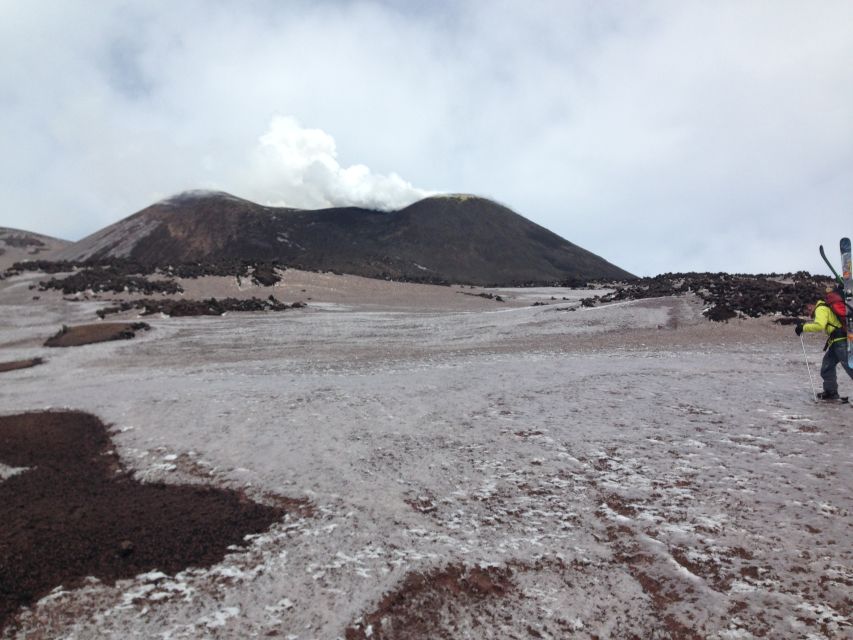
- Active-crater viewing focus: the southeast crater area can show Strombolian eruptions and lava flow that alters crater shape.
- Valle del Bove scale: the lava basin is about 10 km long and 5 km wide, acting like a natural channel during eruptions.
- Route variety on the return: you pass by the 2001 eruptive fracture at 2100m and then head toward the upper Silvestri craters.
Winter Etna from Rifugio Sapienza: the point of this 3-hour route
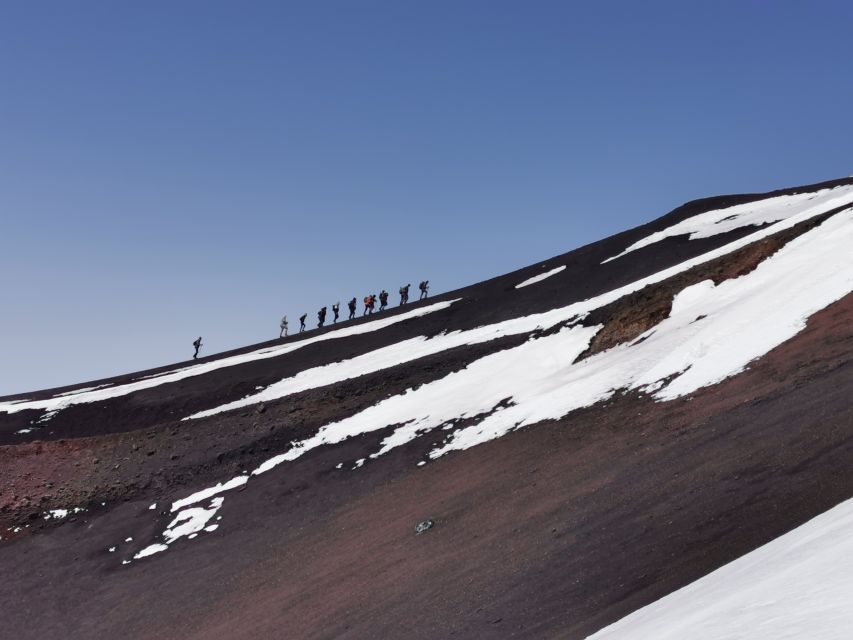
A winter hike on Mt. Etna isn’t about checking a box. It’s about seeing how the volcano behaves across very different zones, from quieter forest edges to active summit areas, all within a short window.
This tour gives you that “whole-system” feel. You start at Rifugio Sapienza (1850m), move through an area with endemic vegetation, and then spend real time looking toward (and walking near) eruptive parts of the mountain. The last bonus is that the views aren’t one-note. You’re not only looking at rock and smoke; you’re also pulling in the line of the sea.
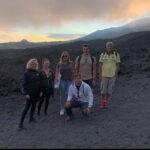
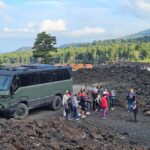
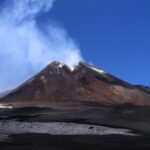
Back up the volcano, with Etna smoking above Catania.
Entering the black larch pine forest at 1850m
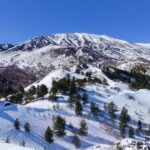
The walk begins around 1850m, and you start by moving along slopes and sandy ground. That combo matters in winter. Sandy footing can slide when it freezes, so the snowshoes and poles aren’t “nice to have.” They’re there to keep your steps confident.
You’ll also pass through a black larch pine forest with endemic vegetation. The tour specifically calls out plants like soapwort, low shrubs, and Etna violets. Even if you’re not a botanist, this part helps you understand why Etna isn’t just rock. The mountain supports a set of plants that have adapted to its volcanic conditions.
What to watch for: as you climb a bit, the air can feel sharper and drier. That’s where a wind jacket becomes more than a prop. If you’re the type to wear one thin layer, this is where you’ll wish you layered up.
The Gulf of Catania panorama: where to look for depth
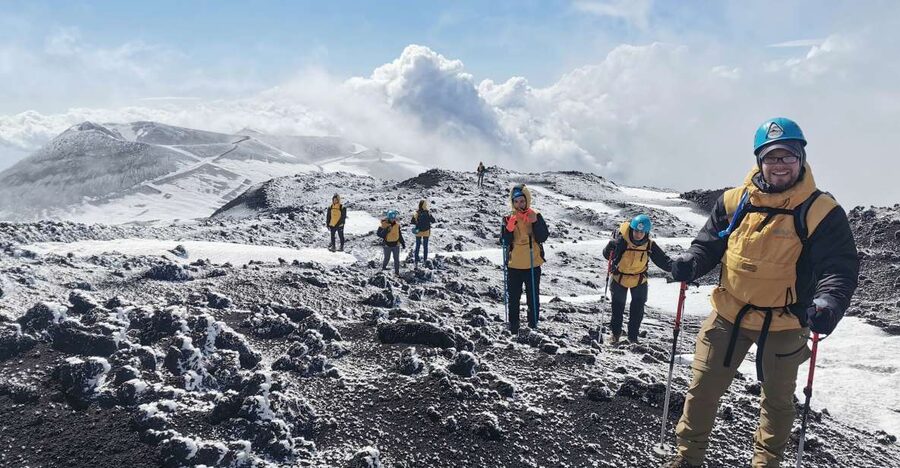
One of the most enjoyable parts of this kind of Etna hike is that your brain has to keep switching distances. Near you: vegetation, ground texture, and your next few steps. Far away: the big geometry of coast and sea.
The tour includes a panoramic point aimed at the Gulf of Catania and out toward the Ionian Sea. When the light is good, this view gives you scale. You can trace how the mountain rises above the coast and how the volcanic areas sit in the same frame as the coastline.
Practical tip: keep your water intake steady even when you’re cold. That sea view can trick you into thinking you’re not working. You are. Winter air often feels crisp but dry, and you’ll burn energy while walking.
Southeast crater area: Strombolian eruptions and a changing crater
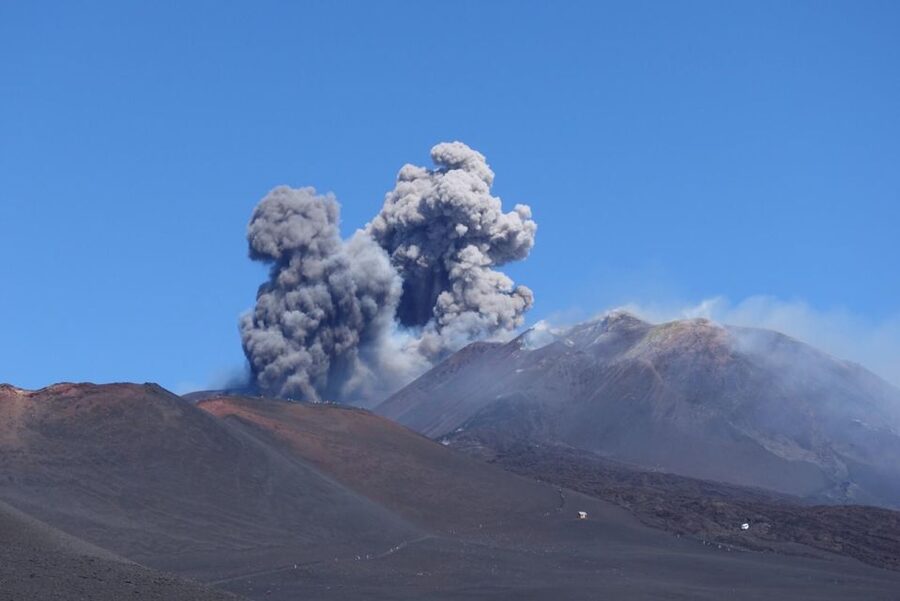
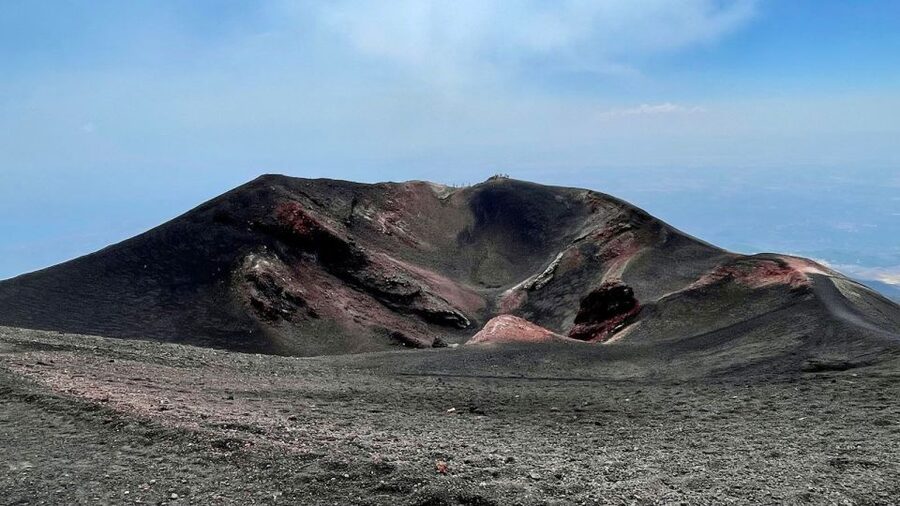
This is the part most people remember. The route is designed to bring you to the southeast crater area, where eruptive events have included Strombolian activity and lava flow that changes the crater’s shape.
There’s no promise of a constant show. Volcanic behavior varies. What the tour gives you is positioning and a guide who can connect what you’re seeing to what it means: Strombolian eruptions typically produce bursts, and lava flows can reshape the crater geometry over time. The descriptions also note intense events that occurred in 2021 and early 2022, so the tour is set up with the idea of recent activity in mind.
My advice: treat this as a viewing-and-understanding stop, not a guaranteed fireworks finale. The value is in the explanation, plus the fact you’re watching real volcanic dynamics from a hiking viewpoint.
Valle del Bove: the 10 km by 5 km lava basin you can feel
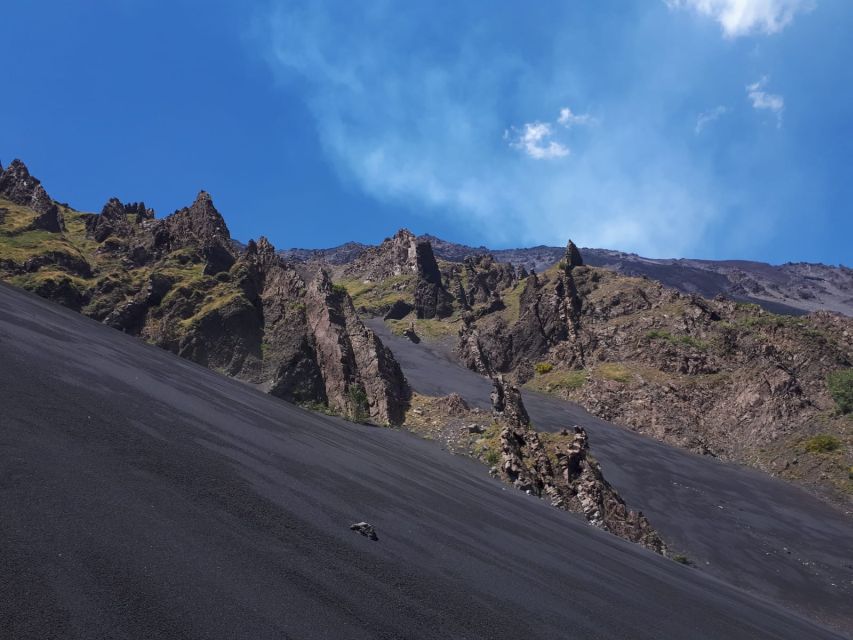
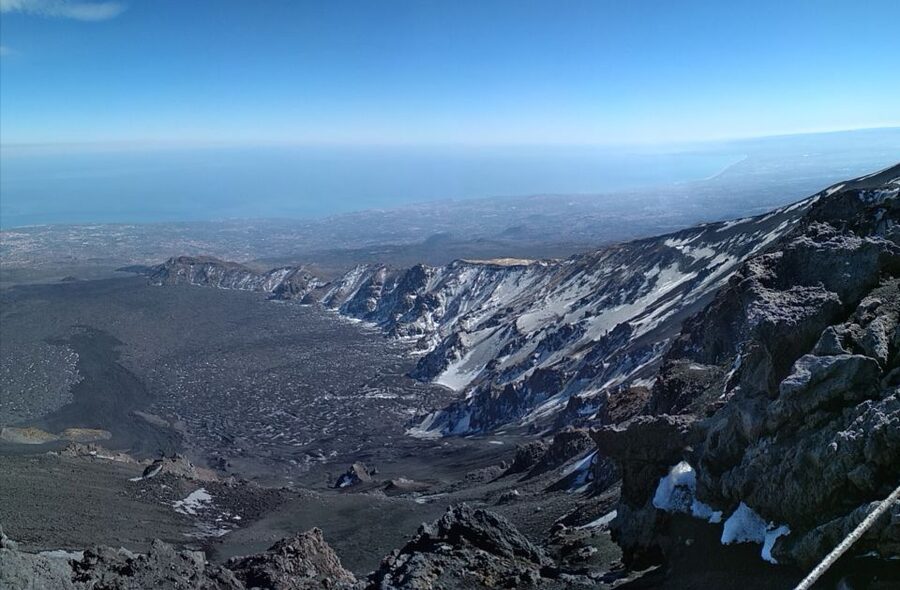
Next comes the walk along the south wall of Valle del Bove. This is a huge basin that contains lava from some of the most important and recent eruptions. The numbers matter because they tell you why this valley is so important during volcanic events: it stretches about 10 km long and 5 km wide.
The tour frames the valley as a natural barrier during eruptions, helping channel lava away from populated areas. Even without a science degree, you can understand the logic once you’re there. The basin shape is like a big bowl. In a crisis, gravity and terrain do a lot of the decision-making.
Why this stop is so valuable: it slows you down. You’re not just sprinting between points for photos. You’re walking along a wall that gives perspective on how lava moves and where it can pool. If you like geology, it’s satisfying. If you’re more into atmosphere, it’s also quiet and memorable in a different way than the crater viewpoint.
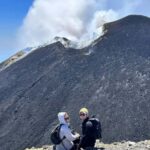
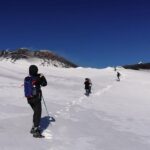
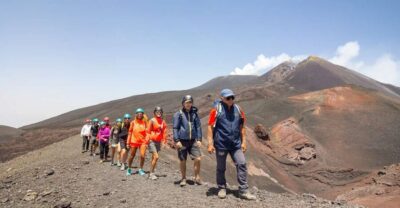
Higher up Etna on foot, towards the summit craters.
The 2001 eruptive fracture at 2100m and the return via Silvestri craters
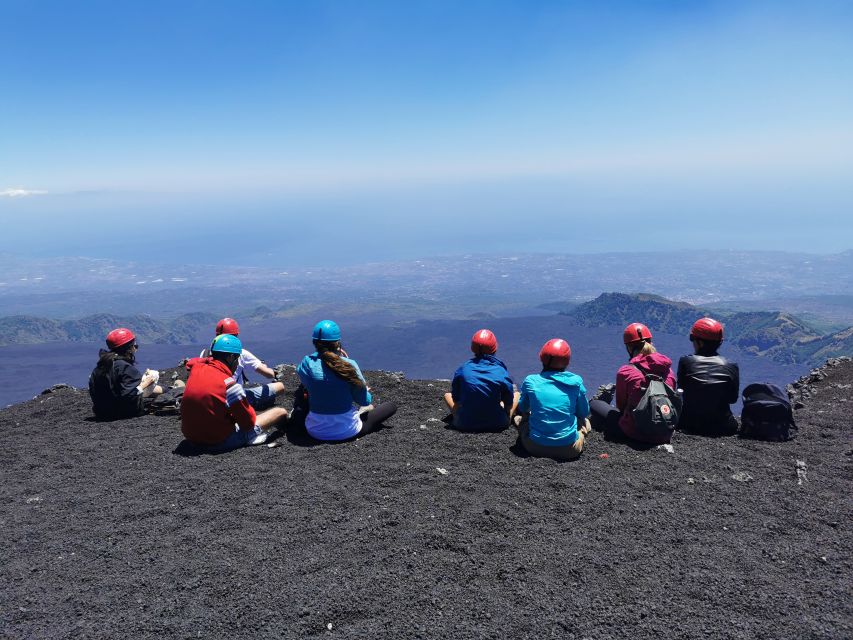
After a break and guided time near Valle del Bove, the route continues west to the 2001 eruptive fracture at around 2100 meters. This is one of those stops where you get a sense of how eruption patterns leave long-term scars on the mountain.
Then you head toward the upper Silvestri craters before working your way back to the starting point. The payoff here is variety. You go from a big, open lava basin feeling (Valle del Bove) to a more fractured, eruption-specific zone (2001 fracture), and finally to a crater area with its own visual language.
If you’re someone who likes understanding the “why” behind routes, the sequence helps. You’re not only looking at active areas; you’re also tracing how earlier events shape what you walk past later.
Optional Catania transfer: when it’s worth paying for less hassle
You can do this tour with pickup/drop-off from Catania, and the experience also mentions drop-off options including Catania and Monte Gebel depending on the setup.
For many people, the Catania transfer option is the difference between a calm plan and a stressful scramble. Mt. Etna is not exactly on a city bus line, and winter timing can feel unforgiving. If you’re visiting without a car, the transfer is an easy win.
A small practical note: drivers will wait no longer than 5 minutes after the scheduled pickup time. That means you’ll want to be ready at your pickup point on time, dressed, and standing by.
Gear, pace, and who this tour fits best
This is a guided winter hike, about 3 hours total. The focus is walking, viewing, and learning, not a leisurely stroll. The included wind jacket, hiking poles, and snowshoes are built for winter conditions around the Sapienza area.
What you should bring:
- Warm clothing
- Water
That’s it on the official bring list, but I’d treat it as minimums. You’ll be happier with a real layering system (warm base layer, insulating mid layer, and a windproof outer layer under the provided jacket if needed). Your hands and feet are often what get cold first on volcanic slopes.
This tour also lists clear limits. It’s not suitable for:
- Pregnant women
- People with heart problems
- Wheelchair users
- People with high blood pressure
If you’re unsure about fitness or medical fit, take that list seriously. Cold air, altitude, and sustained effort can change how your body handles exertion.
Price and value: why $58 can be a smart deal
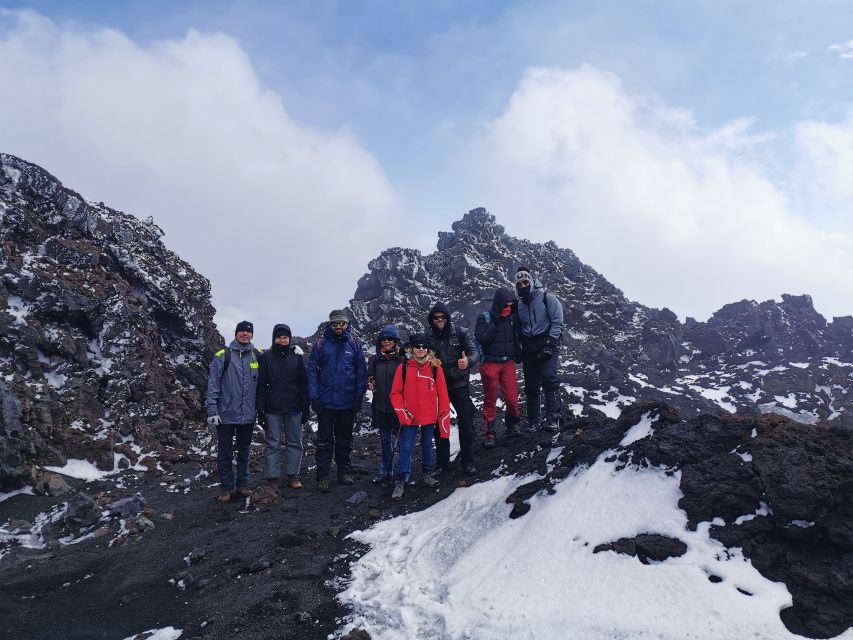
At $58 per person for a 3-hour guided winter trek, the value comes from what’s included. You’re not just buying access to a viewpoint. You’re getting:
- A multilingual guide (English and Italian)
- Hotel pickup and drop-off in Catania (if you choose that option)
- Safety and comfort gear for winter: wind jacket, hiking poles, snowshoes
Food and drinks are not included, so you’ll need to plan your meals separately. Still, compared to tours that charge extra for winter gear or guides, this price can feel fair, especially if you’re staying in or near Catania and you don’t want to rent a car for a short Etna outing.
Should you book this Mt. Etna winter trekking tour?
Book it if you want an Etna experience that balances big views, active-crater context, and a route that includes Valle del Bove and the Silvestri craters. You’ll get the sea-to-volcano perspective, plus the explanation that helps the terrain make sense.
Skip it if winter hiking at altitude is a poor match for your health needs, or if you’re looking for a fully comfortable, low-effort outing. Also, since food and drinks aren’t included, plan to eat before or after so you’re not rushed or hungry during breaks.
If you like being guided and you appreciate learning while you walk, this tour is a strong choice for a short Etna day.
FAQ
How long is the Mt Etna winter trekking tour?
The duration is 3 hours.
Where does the trek start?
It starts at 1850m (Rifugio Sapienza).
Is pickup from Catania included?
Pickup and drop-off at Catania are included if you choose the option. The tour also mentions possible drop-off locations including Catania and Monte Gebel.
What gear is included?
The tour includes a wind jacket, hiking poles, and snowshoes.
Are food and drinks included?
No, food and drinks are not included.
What languages is the guide available in?
The guide is available in English and Italian.
Is the tour suitable for everyone?
It is not suitable for pregnant women, people with heart problems, people with high blood pressure, and wheelchair users.
What should I bring?
Bring warm clothing and water.
What is the cancellation policy?
You can cancel up to 24 hours in advance for a full refund.
More Catania Airport Transfers





More Etna Summit Hikes and Treks
More Etna Volcano Tours from Catania
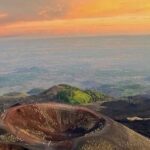
After something different? More tours and day trips around Catania and eastern Sicily


Etna Volcano Tours from Catania, compared.
 ★ 4.8Mount Etna Morning or Sunset Day Trip with TastingFrom $704,028 reviews
 ★ 4.7Guided Volcano Summit Hiking Tour with Cable CarFrom $1243,784 reviews
 ★ 4.8Sunset Jeep Tour of Mount Etna and Lava Flow CavesFrom $712,113 reviews
 ★ 4.8Etna and Alcantara Gorges Full-Day Tour with LunchFrom $1051,766 reviews
 ★ 4.7Etna Volcano: South Side Guided Summit HikeFrom $671,545 reviews
 ★ 4.8Guided Trek 3,000 Meters to the SummitFrom $1131,407 reviews
 ★ 4.9Mount Etna Trekking Trip off the Tourist PathFrom $781,351 reviews
 ★ 4.8Etna Sunset Tour with Pickup and Drop-offFrom $711,348 reviews
Browse the lists this tour appears in