
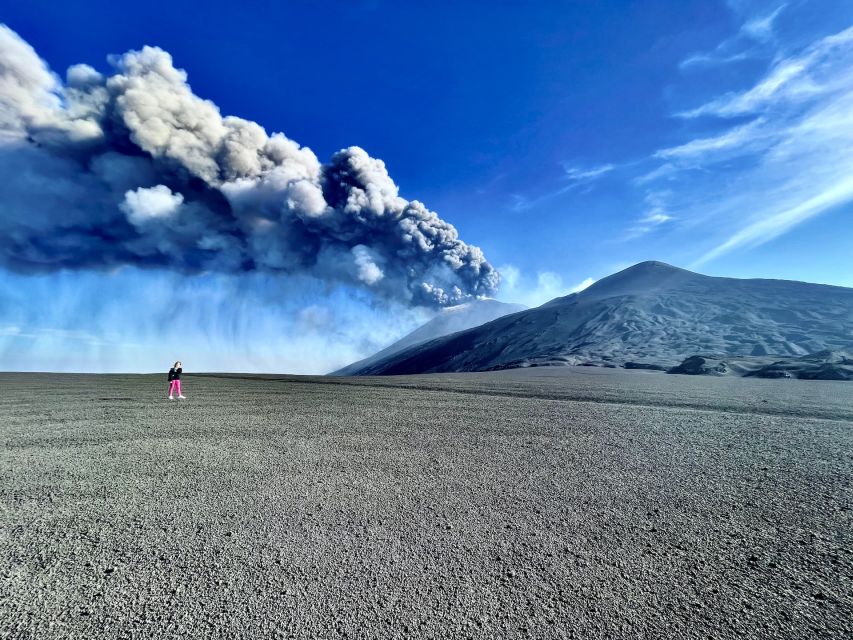
Reviewed · ETNA VOLCANO TOURS FROM CATANIA
Special trekking on the most authentic and wild side of Etna
Etna feels different on the north side. You get authorized volcanological guidance and a walk through craters, fractures, and lava features most tourists never see. I like that the route is built around what’s safest and open, so you still reach the highest permitted point. One thing to consider: it’s high-altitude hiking with crater edges, and the climb/terrain can trigger dizziness for sensitive folks.
This trek is designed to be more than a scenic stroll. You ride up by 4×4 (yes, over rough ground), pause at a high-altitude volcanological observatory, then walk along crater rims and down ash slopes that make the geology feel close and real. I also like the pace: you’ll get explanation stops and helmet moments without turning it into a marathon.
If you want hands-on volcanic science on Etna’s active ground, this is a great match. It’s not the best choice if you hate heights, dislike enclosed spaces, or have altitude or breathing concerns, because the route can involve both steep edges and tight-feeling structures. You’ll have the gear you need for safety, but you still need the right mindset for being on a living volcano.
In This Review
- Key things that make this Etna trek worth it
- North Etna’s wild side: crater edges and real volcanic features
- Price and value: the €50 4×4 add-on changes the math
- Where to start at Chiosco Bar Mareneve (and why timing matters)
- The 4×4 ascent to 2,800 m: where the day really begins
- First walk: panoramic stop with summit views (weather decides a lot)
- Observatory to crater hike: the route shifts from scenic to hands-on
- The Feb 24, 1947 cone and the chimney entry with helmets
- Rift fractures, lateral eruption craters, and what your guide points out
- Views toward Taormina and the Aeolian Islands: good day energy
- What’s included vs. what you must bring (don’t skip this)
- Who this trek suits (and who should pass)
- Safety approach: how risk levels shape what you get to see
- Should you book the Etna North-Side trek?
- FAQ
- What’s the duration of the Etna north-side trek?
- Where do we meet?
- Is transportation to 2,800 meters included in the price?
- What’s included in the trek?
- What should I bring for the day?
- What’s not included?
- Does the tour still happen if summit craters are closed?
- Who is this trek not suitable for?
Key things that make this Etna trek worth it
- North slope, fewer crowds on a side of Etna that’s less visited than the main tourist routes.
- Crater-edge walking at safe altitudes even if the summit areas are closed due to volcanic risk.
- Helmeted entry into an intact volcanic cone tied to the Feb 24, 1947 eruption (no sightseeing-only energy).
- Rift fractures and “lava mouths” give you a clearer map of how Etna makes and moves magma.
- Panoramas toward Taormina and the Aeolian Islands on clear days, with visibility that can change fast.
- Smaller, language-sorted groups to help keep the hike from feeling like a stampede.
North Etna’s wild side: crater edges and real volcanic features
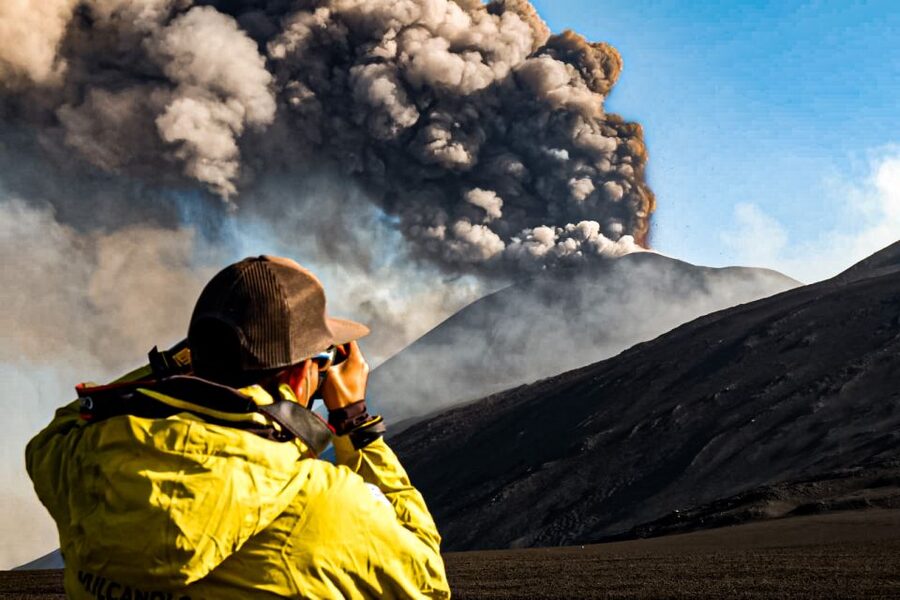
Etna on the north side has a different mood. Instead of aiming for the most famous viewpoints, this trek focuses on the ground forms that tell the story: cracks in the rock (the north-side rift), explosive craters, ash slopes, and evidence of eruptions spread across time.
The goal is simple: walk where you can actually see volcanic processes at work. You’ll reach high elevation, then spend the longer part of the experience on foot near the edges of large craters. That’s where you get the dramatic sense of scale—without it turning into a risky free-for-all, because the route is planned around safety altitudes.
What I like here is how the terrain itself does the teaching. Lava-flow “mouths,” crater rims, and chimney-like volcanic structures make the science feel physical. You’re not just looking at Etna—you’re stepping into the geometry of past eruptions.
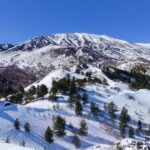
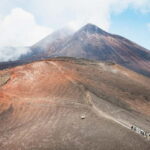
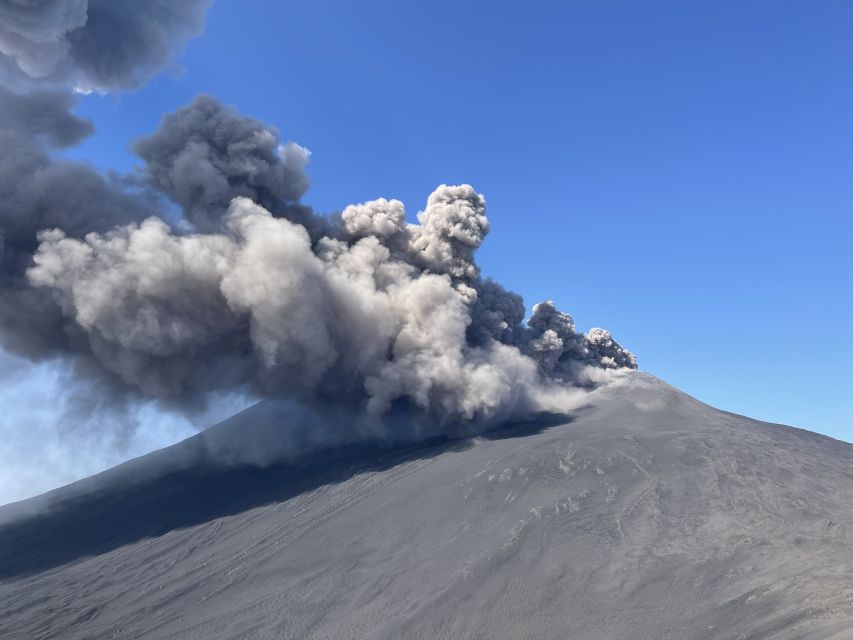
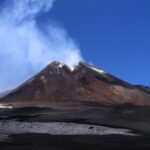
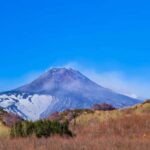
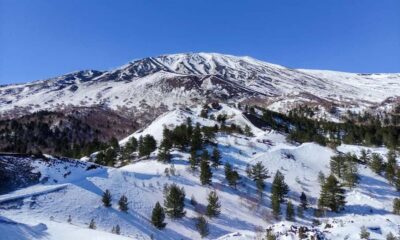
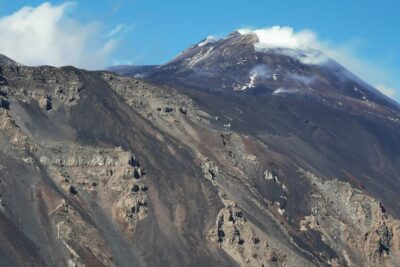
Back up the volcano, with Etna smoking above Catania.
Price and value: the €50 4×4 add-on changes the math
The listed price is $62.63 per person, and that’s the guide service cost. The big extra is transport by 4×4: you pay €50 per person on the spot for the vehicle rides from about 1,800 m up to 2,800 m, and then another vehicle segment from 2,800 m down to 2,500 m.
So your realistic budget is closer to:
- Guide + included hiking gear (built into the $62.63)
- Plus the €50 4×4 payment on site
- Plus a small €3 parking ticket you pay after the excursion
Why this is still good value: you’re not just buying a walk. You’re getting an authorized volcanological guide, trekking poles, helmets, insurance coverage, and serious weather-ready basics (warm jackets, extra socks, trekking shoes, plus a backpack). If you factor those safety items and the specialist guide, the cost starts to make sense—especially for a route that includes protected areas and features where plain walking tours usually can’t go.
Where to start at Chiosco Bar Mareneve (and why timing matters)
You meet at the Chiosco Bar Mareneve near the chairlift used by skiers in winter. In the parking lot, it’s the second house out of four. Show up a bit early. Not because you’ll be idle, but because your group needs to check in, get organized, and match gear before the day’s altitude and crater-edge walking.
Parking is simple: you’ll pay the €3 parking ticket after the excursion, so you don’t need to stress it at the start. Also note the tour includes trekking shoes and a warm jacket, but you’re still responsible for your own basic clothing choices and packed items (more on that below).
The 4×4 ascent to 2,800 m: where the day really begins
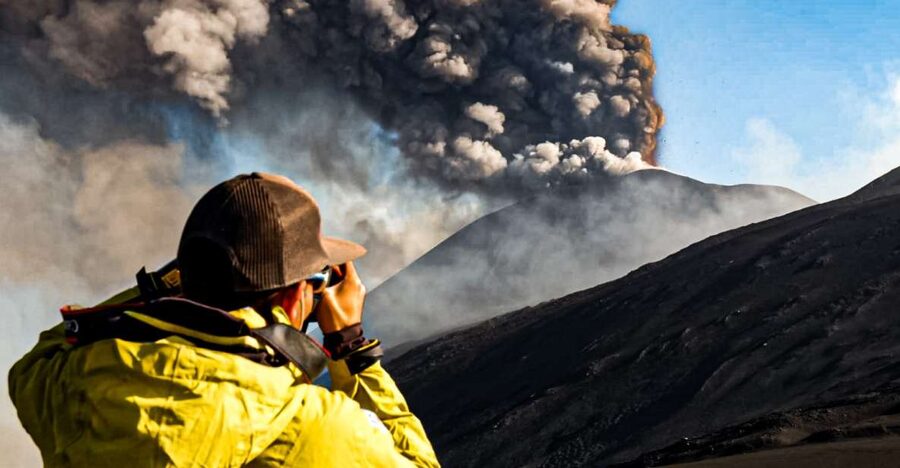
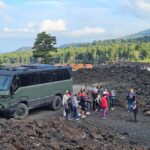
This trek starts with a serious climb by 4×4. You move from about 1,800 m to 2,800 m (around 8 km of road over rough terrain), with your volcanological guide explaining the plan while you’re still in transit.
That vehicle time matters. It saves your energy for the longer on-foot sections, and it gets you to the higher altitude where the geology becomes easier to read. It also means the day has a rhythm: climb by vehicle, then walk with purpose.
When you arrive, you reach the Volcanological Observatory located at high altitude. From there, you begin the first short walk, which brings you to around 2,900 m.
First walk: panoramic stop with summit views (weather decides a lot)
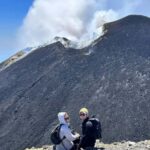
From 2,800 m up to about 2,900 m, you do a lighter-paced segment designed for views and orientation. You stop at a panoramic point looking toward the summit craters, recent lava flows, and Sicily from above. Visibility can vary based on weather, so this is the part of the day where you’ll want clear skies.
This stop is also a morale boost. It gives you a “big picture” view before you head to the north-side craters where you’ll be close to the action. If the weather is hazy, you’ll still get the route—but the drama of the summit views may be muted.
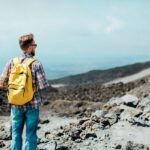
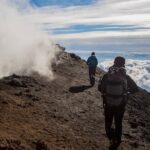
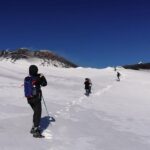
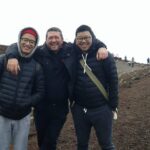
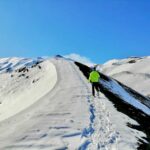
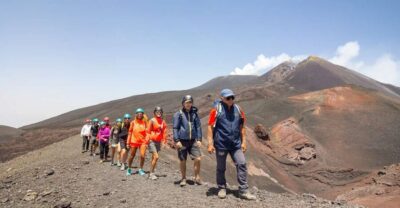
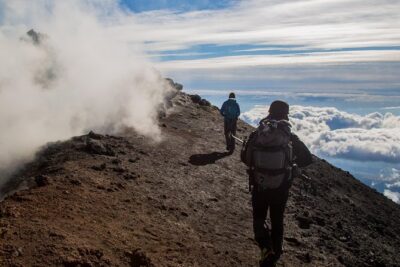
Higher up Etna on foot, towards the summit craters.
Observatory to crater hike: the route shifts from scenic to hands-on
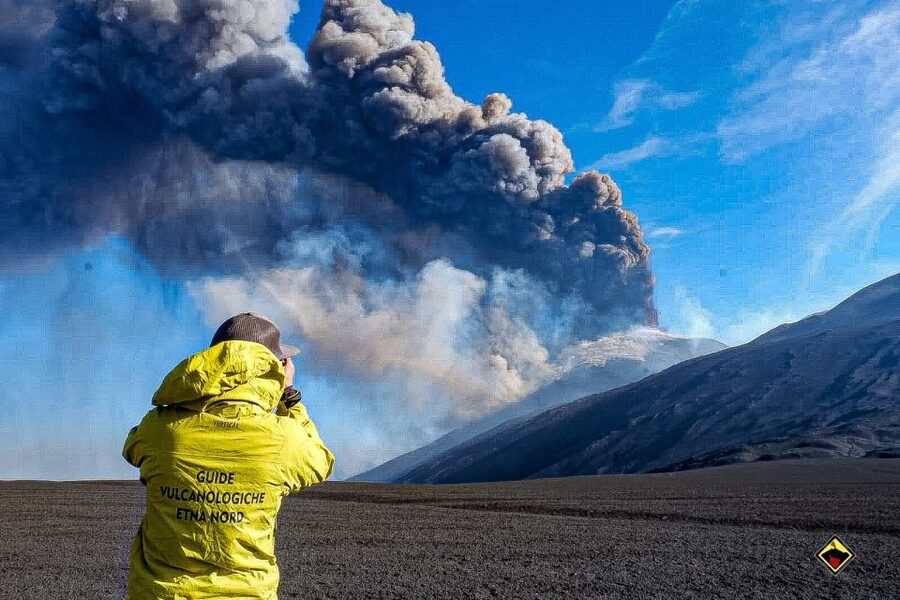
After the panoramic segment, you head back onto the 4×4 for the longer crater-side walking part. The vehicle takes you to the north side area near one of Etna’s large craters, and then the real work begins: walking from the starting point on foot to Piano Provenzana, covering about 6 km on foot as part of the full route.
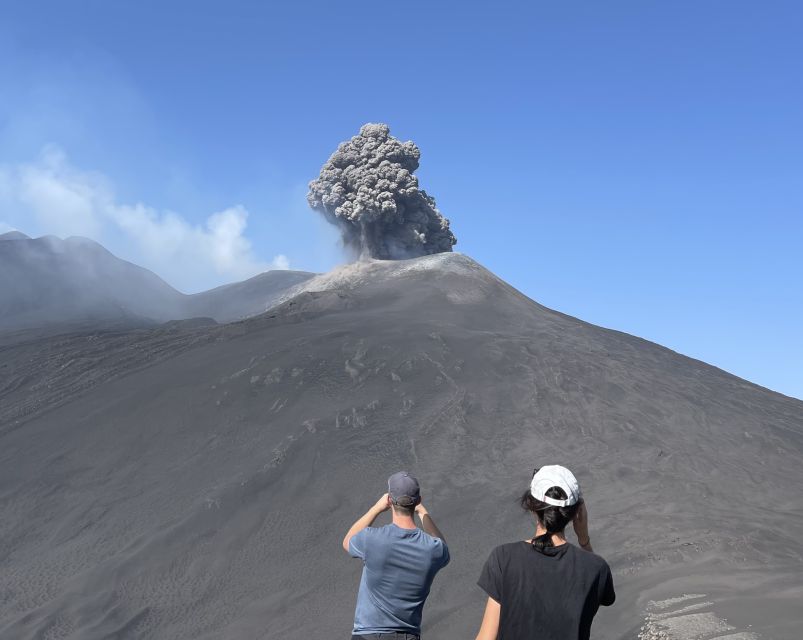
This is where the tour earns its “wild north side” reputation. You’ll walk along edges of large explosive craters and navigate descents made of volcanic ash. The ground can be uneven and loose in places, so trekking poles help, and stable footwear is non-negotiable.
And yes, you’ll be surrounded by evidence of multiple eruptions. The route includes crater areas linked to eruptions such as 1914/24, 1809, 1874, 1879, 1911, 1923, and 1974/75, plus activity more recent than 2002—so even if you only catch glimpses here and there, the whole trail feels like a timeline etched into the mountain.
The Feb 24, 1947 cone and the chimney entry with helmets
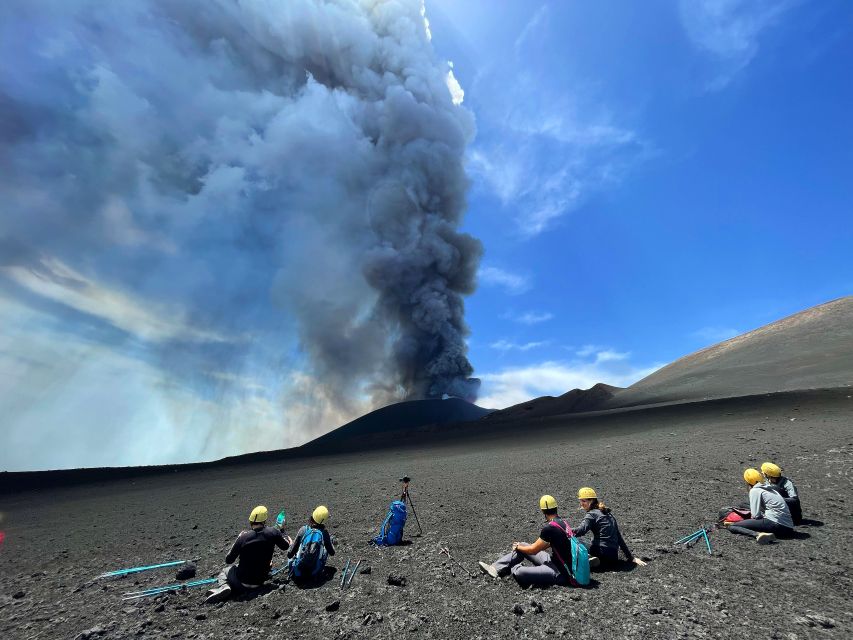
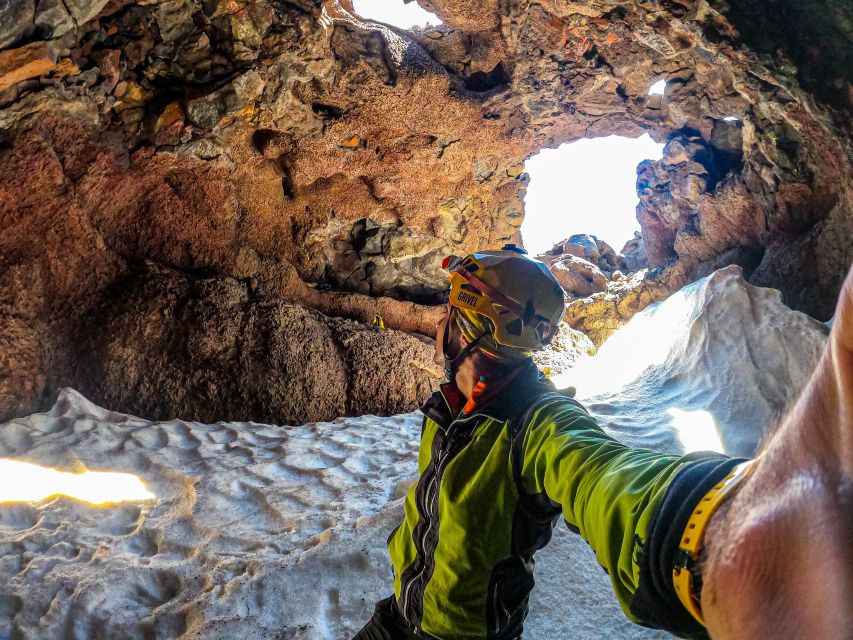
One of the most memorable parts of this trek is the visit to the craters connected to the eruption of February 24, 1947. You don’t just stand near it—you use protective helmets and enter the chimney of a perfectly intact volcanic cone.
That matters for two reasons:
- The physical space helps you understand how volcanic material moves and vents.
- It turns geology into something you can experience with your body, not just your eyes.
You’ll also enter the “mouths” that produced lava flows. It’s the kind of stop that feels slightly surreal at first, then suddenly makes sense when the guide connects what you see to how Etna behaves.
This is also where I’d watch your comfort level. If you’re claustrophobic or strongly bothered by enclosed spaces, this is not the tour for you. The good news is the tour is designed and guided with volcanic safety rules in mind—so it’s structured, not a chaotic walk into unknown dark corners.
Rift fractures, lateral eruption craters, and what your guide points out
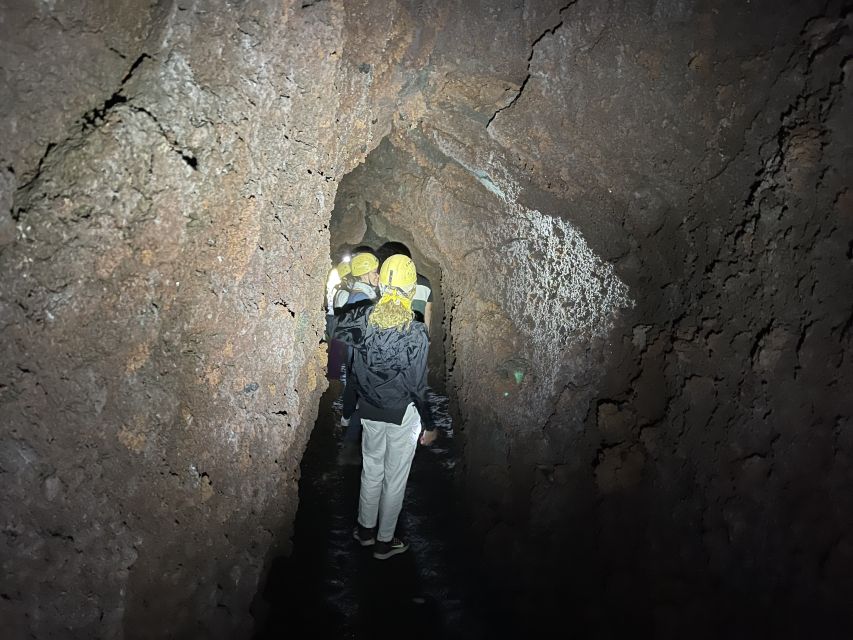
Etna’s north side has a distinctive story. You’ll visit the Rift on the north side of the volcano—cracks and structural breaks that help explain why eruptions don’t always happen the same way or in the same place.
Then you move through areas showing the results of lateral eruptions—events where activity breaks out away from the main central areas. That’s why the trail includes craters from many different years. It’s not random hiking. It’s a route that helps you build a “pattern recognition” map of how Etna’s ground changes.
Your guide’s job is to connect the visible forms—fractures, cavities, crater edges, and lava traces—to the volcanic mechanics behind them. When the guide explains things during transit in the 4×4 and again on the walk, it helps everything click faster. On past outings, guides such as Ciccio have been especially strong at mixing scientific and historical context into the route, so you’re not just hearing facts—you’re seeing them.
Views toward Taormina and the Aeolian Islands: good day energy
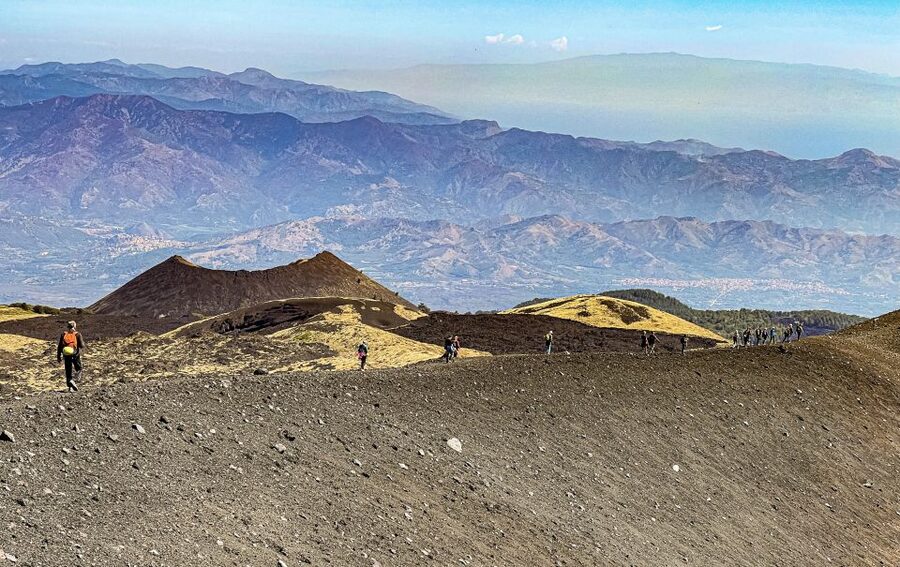
You get a panoramic trail with views toward Taormina and the Aeolian Islands. This is one reason the day feels more than instructional. Even though the focus is geology, Etna at elevation opens the world around it.
The key warning: visibility is weather-dependent. If the day is clear, you’ll likely get dramatic sightlines. If clouds or haze move in, you may still enjoy the hike, but expect more “close-up” volcano focus instead of wide-open island views.
What’s included vs. what you must bring (don’t skip this)
Included gear is solid for active volcano trekking:
- Trekking poles
- Protective helmets
- Accident insurance
- Trekking shoes
- Warm jackets
- Extra socks
- A backpack
- Authorized volcanological guide
Still, you need to bring your own:
- Windbreaker
- Sunglasses
- Sunscreen
- Snacks and drinks (and ideally a packed lunch, since lunch isn’t included)
- Comfortable clothes and long pants
- Hiking-ready layers for colder, windy high-altitude air
- Your own jacket/wind protection (even if you’re provided warmth, layers help)
Also be aware of what’s not allowed: no alcoholic drinks in the vehicle, and no high heels, sandals, flip-flops, or open-toed shoes.
And one small catch: a K-way rain jacket is not included, so if rain is likely, plan to bring a real rain layer.
Who this trek suits (and who should pass)
This trek is for hikers who can handle moderately trained routes at high altitude. It’s also not for everyone. The tour isn’t suitable for:
- People with back problems
- Mobility impairments
- Claustrophobia
- Heart problems
- People afraid of heights
- Vertigo
- Respiratory issues
- Epilepsy
- Altitude sickness concerns
- People without experience
- Low level of fitness
- People with recent surgeries
- People over 95 years
Also keep in mind: the route runs along crater edges, which may cause dizziness for susceptible individuals. If you’re unsure, be honest with yourself first. This is not the time to “push through” discomfort just to prove a point.
On the plus side, the group format helps. Groups are organized by guide and language to reduce large crowd sizes, so the hike tends to feel controlled rather than chaotic.
Safety approach: how risk levels shape what you get to see
A big part of why this trek feels responsible is the safety framework. The volcanological guides are authorized to lead tourists on active volcanoes and carry out the excursion based on Civil Protection communications and the current volcanic risk level.
Practically, that means the route can act as a valid alternative to the summit crater areas if those are closed to the public. If summit craters are off-limits due to risk, you’ll still go as high as safely reachable with the guides, so you don’t lose the whole day.
In other words, you’re buying access to volcanic terrain under real-world constraints, not a promise that every crater will be reachable at all times. On a dynamic volcano like Etna, that’s the sensible way to plan.
Should you book the Etna North-Side trek?
Book this if you want:
- A guided walk on Etna’s less-frequented north side
- Close-up volcanic features (rift fractures, explosive craters, lava-related structures)
- Helmeted entry into volcanic cone areas tied to eruptions like Feb 24, 1947
- A plan that still works when summit craters close
Skip it (or choose a different option) if:
- You fear heights, have vertigo, or get uneasy near crater edges
- Claustrophobia is a hard no
- You have heart, breathing, or serious altitude-related concerns
- You’re looking for an easy, low-effort hike
Finally, do the math in advance. Factor in the €50 4×4 add-on and the on-the-spot €3 parking. Once you do, it’s easier to see the real value: you’re paying for a specialist guide, safety gear, insurance, and a route that’s built for volcanic ground—on days when Etna decides how much it will let you see.
FAQ
What’s the duration of the Etna north-side trek?
The tour duration is listed as 4 hours (starting times vary by availability).
Where do we meet?
You meet at Chiosco Bar Mareneve near the winter chairlift. It’s the second house of the four in the parking lot.
Is transportation to 2,800 meters included in the price?
The guide price includes only the guide service. The 4×4 vehicle rides (from about 1,800 m to 2,800 m, and from 2,800 m to 2,500 m) are paid on the spot as a €50 per person fee.
What’s included in the trek?
Included items are an authorized volcanological guide, trekking poles, protective helmets, accident insurance, trekking shoes, warm jackets, extra socks, and a backpack.
What should I bring for the day?
Bring a windbreaker, sunglasses, sunscreen, snacks and drinks, long pants, comfortable clothes, and hiking shoes. A packed lunch is also recommended since lunch isn’t included.
What’s not included?
Not included: transport service from your accommodation, the €50 4×4 vehicle cost, lunch, bottled water, snacks, K-way rain jacket, and the €3 parking ticket (paid after the excursion).
Does the tour still happen if summit craters are closed?
Yes. The route is described as a valid alternative if the summit craters (sommital craters) are closed due to volcanic risk, and guides take you to the highest point safely reachable.
Who is this trek not suitable for?
It’s not suitable for people with claustrophobia, vertigo, fear of heights, heart problems, respiratory issues, altitude sickness, epilepsy, recent surgeries, mobility impairments, back problems, or for people with low fitness/no hiking experience.
More Tour Reviews in Catania
More Etna Summit Hikes and Treks
More Etna Volcano Tours from Catania
After something different? More tours and day trips around Catania and eastern Sicily


Etna Volcano Tours from Catania, compared.
 ★ 4.8Mount Etna Morning or Sunset Day Trip with TastingFrom $704,028 reviews
 ★ 4.7Guided Volcano Summit Hiking Tour with Cable CarFrom $1243,784 reviews
 ★ 4.8Sunset Jeep Tour of Mount Etna and Lava Flow CavesFrom $712,113 reviews
 ★ 4.8Etna and Alcantara Gorges Full-Day Tour with LunchFrom $1051,766 reviews
 ★ 4.7Etna Volcano: South Side Guided Summit HikeFrom $671,545 reviews
 ★ 4.8Guided Trek 3,000 Meters to the SummitFrom $1131,407 reviews
 ★ 4.9Mount Etna Trekking Trip off the Tourist PathFrom $781,351 reviews
 ★ 4.8Etna Sunset Tour with Pickup and Drop-offFrom $711,348 reviews
Browse the lists this tour appears in